
Attracting and Retaining Farm Labour: A Guide to Building a Sustainable Workforce
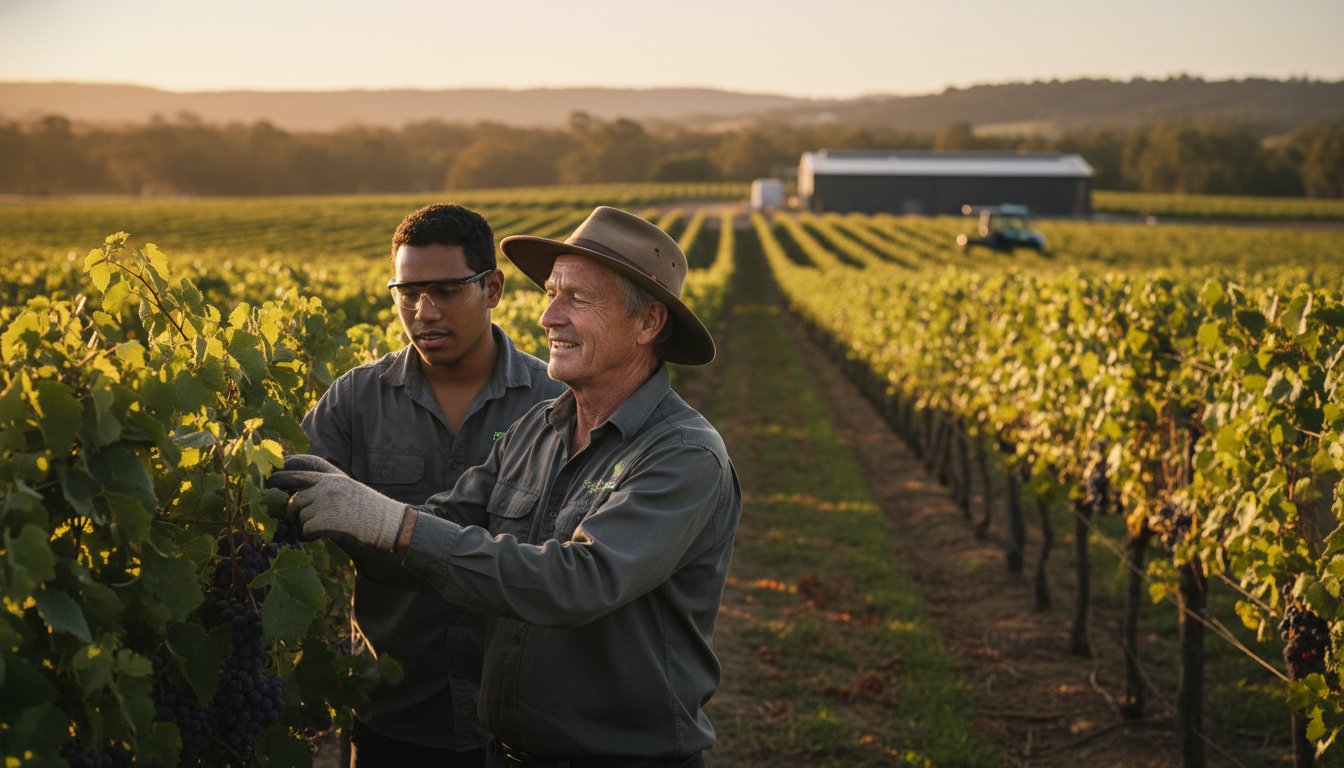
What if the secret to a more profitable harvest isn't just better machinery, but a workforce that actually returns year after year? In a climate where the reputation of the agricultural sector is under constant scrutiny, attracting and retaining farm labour requires more than just a competitive wage; it demands a visible commitment to ethical excellence. You've likely felt the sting of high recruitment costs and the frustration of losing skilled workers to the farm next door just when the season peaks.
We understand that managing Horticulture Award compliance and Fair Work requirements can feel like an overwhelming administrative burden. This article provides a clear pathway to help you build a sustainable team through structured HR support and ethical standards. You'll discover how implementing robust retention strategies and social compliance certification can reduce your training expenses, secure your supply chain, and give you the peace of mind that comes with being a truly compliant, high-standard employer.
Key Takeaways
- Understand how the shift from a surplus labour market to a competitive talent landscape makes your "Social Licence to Operate" a critical business asset.
- Gain a distinct advantage in attracting and retaining farm labour by transforming ethical standards from a compliance task into a powerful recruitment tool.
- Evaluate the long-term cost benefits of building a stable, returning workforce compared to the high overheads of constant seasonal recruitment.
- Learn how to conduct a "Workplace Health Check" to identify and resolve friction points in your onboarding and induction processes.
- Discover how specialised HR support and certification pathways can help you demonstrate your commitment to fair treatment and industry leadership.
The New Landscape of Attracting and Retaining Farm Labour
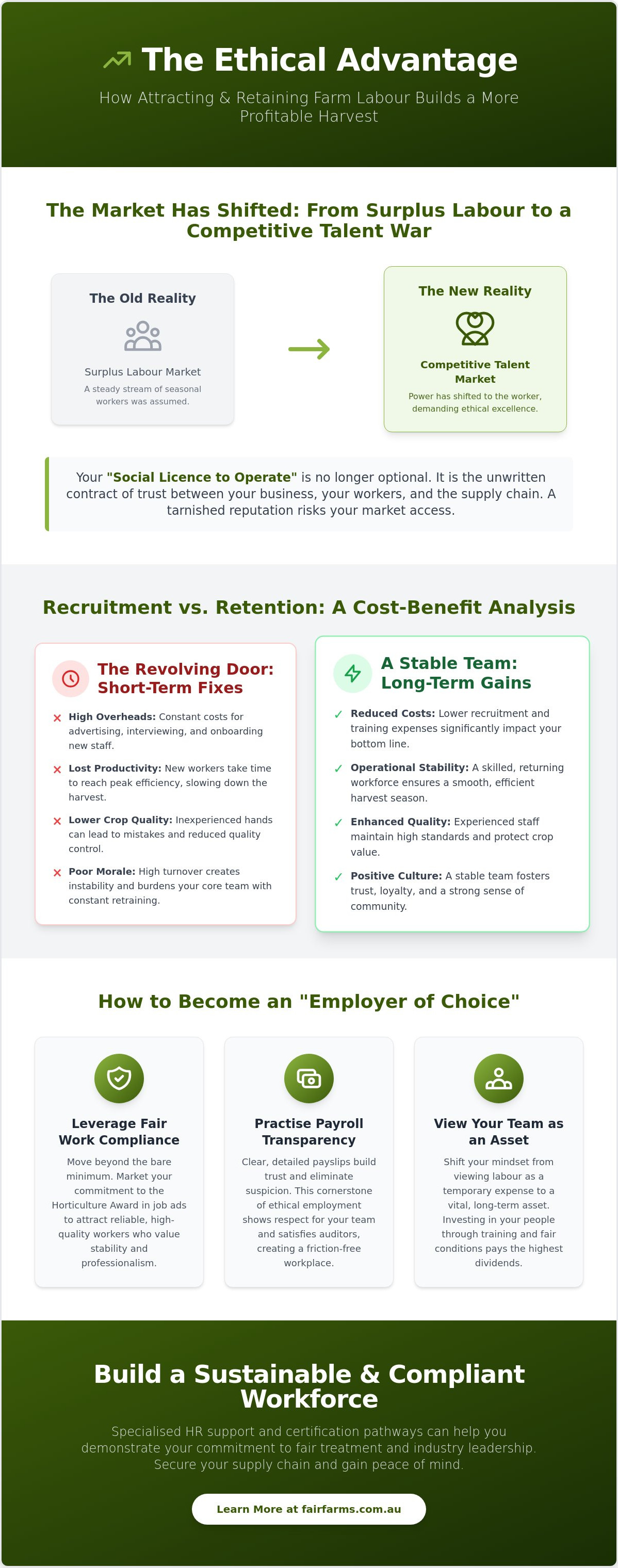
The Australian agricultural sector has reached a significant turning point. For decades, the industry operated on the assumption of a surplus labour market where a steady stream of seasonal workers was almost guaranteed. That reality has changed. We are now in a competitive talent market where the power has shifted toward the worker. This means that attracting and retaining farm labour is no longer just about filling a roster; it's about protecting your social licence to operate. This licence is the unwritten contract of trust between your business, your community, and the wider industry.
Growers face increasing pressure from major retailers and conscious consumers who demand proof of ethical sourcing. If your farm's reputation is tarnished by poor labour practices, you risk losing more than just your staff; you risk your place in the modern supply chain. Professionalising your employer brand is the only way to stand out. It's time to move beyond casual word of mouth recruitment and embrace a more structured, principled approach that reflects your commitment to fair standards.
The Evolving Expectations of the Modern Workforce
Workers now arrive on-site with more information than ever before. Digital connectivity allows seasonal and migrant workers to vet potential employers through social media groups and community forums long before they set foot on your property. This Farmworker overview highlights the diverse challenges faced by the global workforce; in Australia, those challenges are met with high expectations for transparency and accountability. Safety and fair pay are no longer viewed as competitive advantages. They are the baseline. To build trust, you must be clear about hours, conditions, and Award compliance from the very first interaction.
The Cost of High Turnover in Horticulture
High turnover is a silent profit killer in horticulture. Every time a worker leaves mid-season, you aren't just losing a set of hands. You're losing the time spent on their induction, the administrative cost of their onboarding, and the efficiency they gained over several weeks of experience. Constant staff changes disrupt the flow of your harvest and often lead to lower crop quality as new staff learn the ropes. Perhaps most importantly, a revolving door of staff creates a ripple effect of poor morale among your permanent team. They are the ones who must pick up the slack and retrain new arrivals, which often leads to burnout and further departures. Investing in retention is a fundamental strategy for operational stability.
Building an "Employer of Choice" Brand Through Ethical Standards
Becoming an employer of choice in the Australian horticultural sector requires a fundamental shift in perspective. It's about moving from a mindset of bare-minimum compliance to one of active industry leadership. In our regional context, an ethical employer is one who views their team as a vital long-term asset rather than a temporary seasonal expense. While local conditions are unique, USDA farm labour data shows a global trend where rising costs and shifting demographics make worker loyalty a primary economic driver. By adopting formal ethical standards, you create a principled point of difference that assists in attracting and retaining farm labour in a competitive market.
Transparent payroll practices are the cornerstone of this loyalty. When workers receive clear, detailed payslips that accurately reflect the Horticulture Award, it removes the friction and suspicion that can undermine workplace culture. This transparency does more than just satisfy an auditor; it builds a foundation of trust. Integrity pays dividends. It also serves as a vital filter for your business partners. High-quality labour hire providers are increasingly seeking out farms with clear ethical credentials to reduce their own exposure to risk.
Leveraging Fair Work Compliance as a Marketing Tool
Compliance is not just a regulatory hurdle; it's a badge of honour that you can use to attract top-tier talent. When you draft your recruitment advertisements, lead with your commitment to Fair Work standards. Explicitly stating your adherence to the Horticulture Award and providing clear, written employment agreements from the first day signals to prospective staff that your farm is a professional and secure environment. This level of clarity often attracts the most reliable workers who value the stability of a compliant workplace.
The Role of Training in Worker Retention
Workers are far less likely to leave for the farm next door when they see a genuine investment in their professional growth. Providing opportunities for upskilling makes your team feel respected and increases their overall efficiency on the ground. By utilising Fair Farms Online Training, you can ensure your staff are well-versed in their rights and safety protocols. This structured approach encourages seasonal workers to return for subsequent harvests, as they feel part of a community that values their contribution. Developing a returning workforce is the most cost-effective way of attracting and retaining farm labour over multiple seasons. If you're looking to strengthen your workforce strategy, becoming a Fair Farms member provides the tools needed to lead with integrity.
Recruitment vs. Retention: Comparing Short-term Fixes and Long-term Gains
Many growers treat recruitment as a constant fire-fighting exercise. They focus on "filling the gap" rather than "keeping the person." This reactive approach is one of the most expensive ways to manage a business. While recruitment agencies serve a purpose, the real return on investment comes from building an internal culture that makes workers want to stay. When you prioritise attracting and retaining farm labour as a unified strategy, you stop the cycle of constant re-training and start building operational momentum.
Identifying your "churn points" is a vital first step. Do workers leave after the first week of heavy picking? Do they drop off when the weather turns? Pinpointing these moments allows you to intervene with better support or clearer communication before the resignation happens. It's also where labour hire licensing plays a role. Using licensed, ethical providers protects your farm's reputation from the fallout of third-party non-compliance. A tarnished reputation makes future recruitment significantly harder and more costly.
The True ROI of a Returning Workforce
Efficiency gains are immediate when at least 50% of your crew are returnees. These workers already understand your quality standards and paddock layouts. They aren't just faster. They're safer. Experienced staff are involved in fewer safety incidents and cause less equipment damage because they're familiar with your specific machinery and protocols. They also act as informal mentors for new arrivals. This reduces the management load on your permanent supervisors and ensures your culture of safety is passed down naturally.
Evaluating Your Labour Hire Partners
Blind trust in your supply chain is a significant business risk. You need to ask your labour hire providers tough questions about their employment standards and Horticulture Award compliance. Ethical labour hire might seem more expensive upfront, but it's far cheaper than the legal penalties and brand damage associated with Fair Work audits. You should verify their licensing and ask for evidence of their payroll transparency. Investing in a Supply Chain Membership can help you align with partners who share your commitment to fair treatment and industry integrity.
5 Steps to Implement a Retention-Focused Farm Culture
Culture is not a vague concept. It is the result of deliberate, consistent actions that signal to your team that they are valued participants in your farm's success. A systematic approach to attracting and retaining farm labour ensures that your business remains resilient regardless of seasonal fluctuations. When you move from reactive hiring to proactive culture building, you create an environment where workers feel secure, respected, and motivated to return. For growers seeking tailored assistance, our HR Support for Growers provides the practical tools needed to professionalise your workplace culture.
Step 1 & 2: Assessment and Onboarding
Begin with a Workplace Health Check to identify existing friction points. This involves using anonymous surveys to discover the real reasons workers leave; often, it is not the pay, but a lack of clear communication or poor supervisor conduct. Once you understand these gaps, professionalise your arrival process with a comprehensive "Welcome Pack." This document should set clear expectations regarding safety, Horticulture Award rates, and workplace standards from the very first day. It is equally vital to ensure all supervisors are trained in basic HR principles, as they are the primary point of contact for your seasonal staff and the biggest influence on their daily experience.
Step 3, 4 & 5: Culture and Continuous Improvement
Sustaining a positive culture requires ongoing effort and open channels of communication. Consider implementing the following practices:
- Toolbox Talks: Organise regular, brief meetings to listen to worker concerns and provide updates on safety or harvest goals.
- Grievance Procedures: Establish clear, fair lines of communication for disputes to prevent issues from escalating and causing reputational damage.
- Recognition Programmes: Implement a simple system to acknowledge high-performing seasonal staff, which significantly boosts morale and encourages return visits.
- Compliance Auditing: Regularly audit your own payroll and compliance systems to ensure you are meeting all legal obligations.
Reviewing your Fair Farms Certification pathway is an excellent way to identify any remaining gaps in your management systems. This structured evaluation helps you maintain the high standards required to remain an employer of choice while giving you the peace of mind that your business is fully compliant with Fair Work requirements.
How Fair Farms Supports Your Labour Strategy
Building a sustainable workforce is a complex undertaking that requires more than just good intentions; it requires a robust, industry-recognised framework. Fair Farms serves as a supportive partner for growers, providing the structure needed to turn ethical principles into operational reality. By joining a community of like-minded agricultural stakeholders, you gain access to the collective knowledge of a sector committed to communal progress. This collaborative environment is a powerful asset in attracting and retaining farm labour, as it signals to the market that your business operates with integrity and long-term vision.
Our programme simplifies the often-confusing relationship between growers and major retailers. As consumer demand for ethical sourcing grows, certification becomes a vital shorthand for trust. It demonstrates that your farm meets rigorous social compliance standards, reducing the need for multiple, overlapping audits from different supply chain partners. This formalised framework provides the peace of mind that your business is prepared for Fair Work scrutiny, allowing you to focus on the practicalities of your harvest rather than the anxiety of potential non-compliance.
Membership as a Strategic Business Investment
Transitioning from reactive "firefighting" to proactive workforce planning is the primary benefit of joining our initiative. Fair Farms Members are positioned as industry leaders who recognise that equitable treatment is a prerequisite for commercial success. Membership provides access to specialised HR support for growers, tailored specifically to the unique challenges of the horticulture sector. This isn't just about ticking boxes; it's about being part of an industry-led movement that protects the reputation of Australian agriculture while providing a clear competitive edge in the search for reliable staff.
Taking the First Step Toward a Stable Workforce
We understand that the prospect of implementing new standards can feel daunting during a busy season. Our process is designed to be methodical and educational, ensuring you can begin the journey toward certification without disrupting your daily operations. We provide guidance at every stage, from the initial self-assessment to the final audit process. This steady, reliable approach ensures that your transition to a more ethical workforce model is both manageable and permanent. If you're ready to address the challenges of attracting and retaining farm labour with a principled, professional strategy, contact the Fair Farms team today to discuss your specific needs and how we can support your business growth.
Securing Your Farm's Future Through Ethical Leadership
Building a sustainable workforce is a journey that moves from reactive recruitment to proactive leadership. By professionalising your onboarding and committing to transparent, ethical standards, you transform your farm into a destination of choice for the most reliable workers. This shift doesn't just reduce your recruitment costs; it builds a resilient business culture that can withstand the pressures of a competitive market.
Effective strategies for attracting and retaining farm labour are most successful when supported by a formalised framework. As an industry-led initiative developed by Queensland Fruit & Vegetable Growers (QFVG) and supported by federal funding, Fair Farms provides the tools you need to succeed. Our members benefit from comprehensive HR support and specialised online training modules designed to ensure national standards are met with ease.
It's time to move beyond the cycle of seasonal turnover and invest in long-term stability. Join Fair Farms and secure your workforce’s future to demonstrate your leadership in the Australian agricultural community. Together, we can build a stronger, more equitable future for your farm and the entire horticulture sector.
Frequently Asked Questions
What is the best way to attract local Australian workers to farm labour?
Professionalising your farm brand is the most effective way to attract local talent. Local workers often seek stability and clear career progression rather than just seasonal income. By leading with a commitment to ethical standards and transparent payroll, you differentiate your business from more casual operations. This approach builds a regional reputation that naturally encourages local participation in the agricultural workforce.
How does ethical certification help with retaining seasonal staff?
Ethical certification serves as a visible promise of fair treatment, which is a powerful tool for attracting and retaining farm labour. When seasonal staff see that a farm has undergone independent verification of its labour practices, it builds immediate trust. This trust reduces the likelihood of workers leaving mid-season for the farm next door, as they value the security and respect of a certified workplace.
What are the main reasons workers leave farms during the harvest season?
Workers typically leave during harvest due to poor communication or a lack of transparency regarding their pay and conditions. While physical demands are expected, feeling undervalued or unsafe is the primary driver of high turnover. Identifying these friction points through exit interviews or anonymous surveys allows you to address the root causes of seasonal churn before it impacts your harvest efficiency.
Is it better to hire directly or use a labour hire provider for retention?
Retention depends on the quality of the employment relationship rather than the hiring model itself. Direct hiring allows for closer culture building, while using a reputable labour hire provider can professionalise your recruitment process. If using a provider, ensure they hold a valid licence and share your commitment to ethical standards to protect your farm's reputation and operational stability.
How can I compete with higher-paying industries for labour?
You can compete with higher-paying industries by offering a superior workplace culture and clear return pathways. Many workers value respect, safety, and reliable hours as much as their hourly rate. By investing in professional onboarding and recognition programmes, you create a sense of belonging that higher-paying but more impersonal industries often fail to provide.
What role does the Horticulture Award play in worker retention?
The Horticulture Award provides the essential legal framework for fair pay and conditions. Full compliance with the Award is the baseline for building worker loyalty. When payroll is transparent and accurate, it eliminates the suspicion and disputes that often lead to staff departures. It's the foundation upon which all other retention strategies are built.
How much does it cost to implement a retention strategy on a farm?
The cost of a retention strategy is primarily an investment in management time and operational systems. While there are administrative costs associated with professionalising your onboarding or auditing your payroll, these are significantly lower than the expense of constant recruitment and re-training. A structured approach to attracting and retaining farm labour ultimately pays for itself through improved harvest efficiency.
Can online training really improve my farm’s labour stability?
Online training improves labour stability by ensuring every team member understands their rights, responsibilities, and safety protocols from day one. When workers are well-trained, they feel more competent and valued, which increases their job satisfaction. This professionalisation reduces the management burden on supervisors and creates a more cohesive, stable team that is more likely to return for future seasons.