
The Critical HR Responsibilities of an Australian Farm Manager in 2026
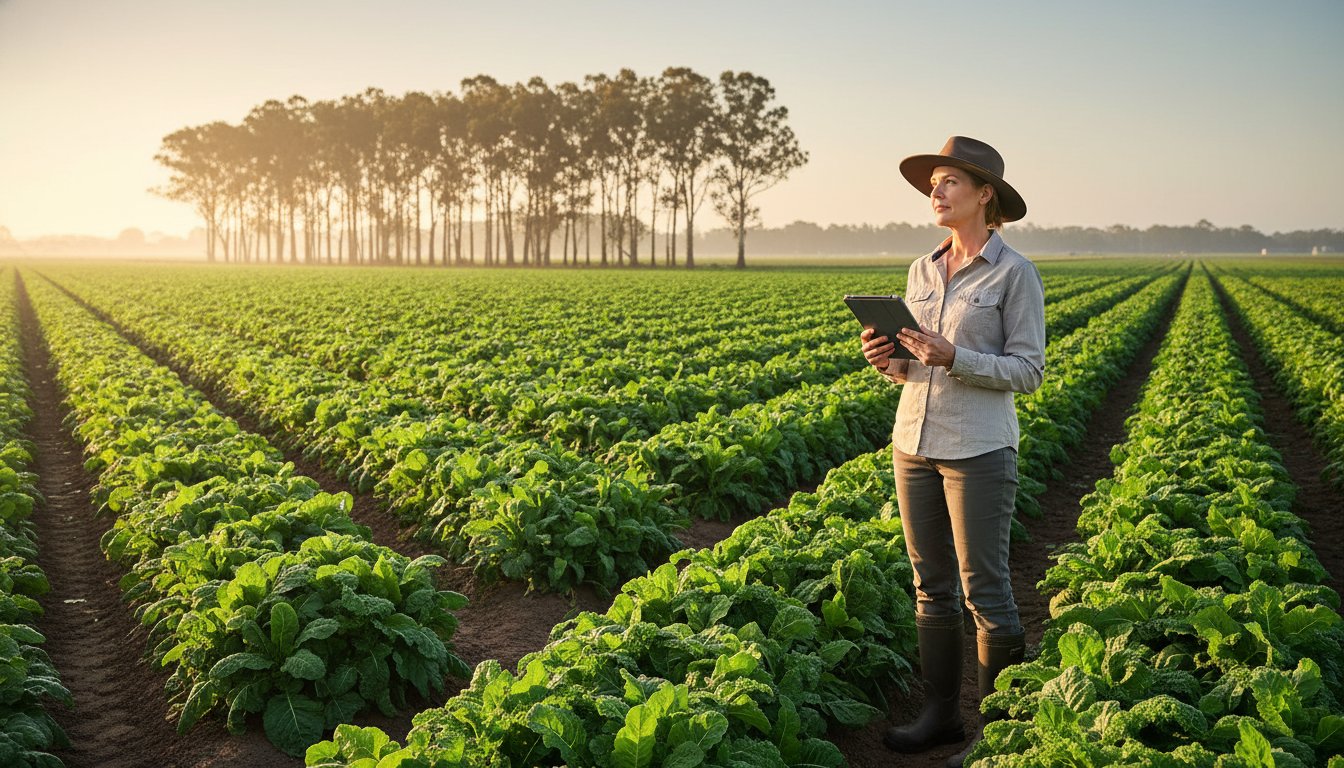
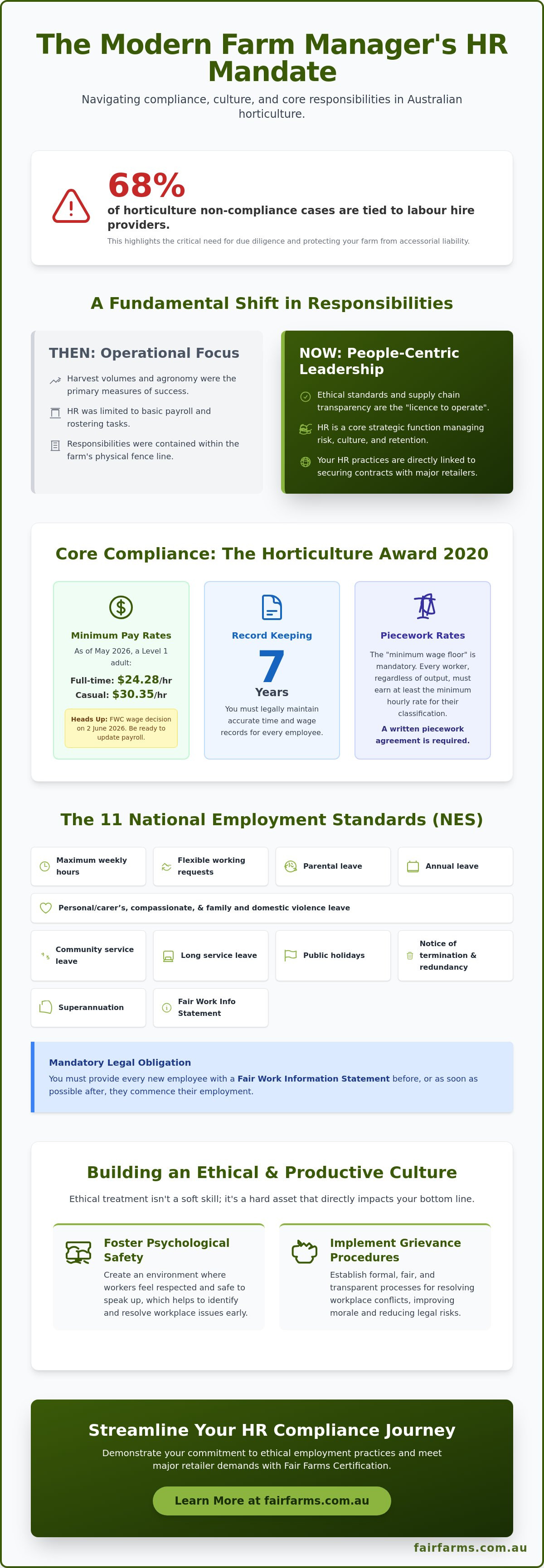
What if your farm's success in 2026 was measured not by the tonnes you harvest, but by the transparency of your employment records? With a June 2025 Fair Work Ombudsman report showing that 68% of non-compliance cases in horticulture were tied to labour hire providers, farm manager HR responsibilities have evolved into a high-stakes guardian role. You are now the protector of your farm's ethical "licence to operate," balancing the daily needs of your team with the rigid compliance demands of major retail supply chains.
It's understandable if you feel the weight of managing the Horticulture Award or the pressure of the upcoming Fair Work Commission wage decision on 2 June 2026. This article provides the clarity you need to handle these obligations with quiet confidence. You'll gain a practical roadmap for maintaining compliance, reducing the risk of legal penalties, and fostering a culture of ethical leadership that keeps your best workers from moving on. We'll explore everything from PALM scheme requirements to the specific checklists that ensure your operations remain principled and productive.
Key Takeaways
- Understand how farm manager HR responsibilities have shifted from basic payroll to the comprehensive oversight of ethical standards and supply chain transparency.
- Master the technicalities of the Horticulture Award 2020, including the mandatory requirement to maintain accurate time and wage records for seven years.
- Protect your operation from accessorial liability by conducting thorough due diligence on labour hire providers and verifying their current licences.
- Improve staff retention by fostering psychological safety and implementing formal grievance procedures that resolve workplace conflicts early.
- Discover how structured training and industry membership can streamline your compliance journey and upskill your management team in ethical leadership.
Defining the Modern Farm Manager's HR Mandate in Australia
In 2026, the boundaries of a farm manager's role have expanded well beyond the physical fence line. While technical expertise in agronomy or livestock remains vital, the modern farm manager HR responsibilities now encompass the strategic oversight of the entire employee lifecycle. This mandate requires a principled approach to recruitment, onboarding, daily management, and eventual offboarding, all while operating within a rigorous legal framework. It's no longer just about getting the crop in; it's about how you manage the people who make it happen.
We've seen a decisive shift from purely operational management to people-centric leadership. This transition isn't merely about being a "fair boss." It's a fundamental requirement for long-term farm productivity. Ethical treatment isn't a soft skill; it's a hard asset that directly impacts your bottom line. When farm manager HR responsibilities are handled with integrity, staff turnover drops, efficiency rises, and the farm builds a reputation that attracts high-quality talent in a competitive market.
Beyond the Paddock: Why HR is Now a Core Function
Labour represents the largest variable cost and the most significant risk factor in modern horticulture. As the Agriculture in Australia sector continues to professionalise, social compliance has become a non-negotiable ticket to play. Major retailers like Coles, Woolworths, and Aldi now demand transparency throughout their supply chains. This means your HR practices are directly linked to your ability to secure and maintain lucrative contracts. Many growers now utilise Fair Farms Certification to demonstrate this compliance to buyers. You are the primary point of contact for workplace culture. If that culture is fractured, the risk of non-compliance and legal exposure grows exponentially.
The Regulatory Landscape: Fair Work and National Employment Standards
The Fair Work Ombudsman serves as the regulator for Australian workplace laws, ensuring that all participants play by the same rules. Central to this are the 11 National Employment Standards (NES), which provide a safety net for all farm workers regardless of their specific award or agreement. These standards cover essential areas including:
- Maximum weekly hours
- Requests for flexible working arrangements
- Parental leave and related entitlements
- Annual leave
- Personal/carer’s leave, compassionate leave, and family and domestic violence leave
- Community service leave
- Long service leave
- Public holidays
- Notice of termination and redundancy pay
- Superannuation
- The right to a Fair Work Information Statement
As a farm manager, you have a strict legal obligation to provide every new employee with a Fair Work Information Statement before, or as soon as possible after, they commence their employment.
Core Compliance Responsibilities: Awards, Pay, and Records
Compliance is the non-negotiable foundation of ethical farming. In 2026, farm manager HR responsibilities hinge on a precise understanding of the Horticulture Award 2020. This industry-specific award dictates everything from minimum hourly rates to the technicalities of overtime. As of May 2026, a Level 1 full-time adult employee must receive at least $24.28 per hour, while casuals receive $30.35 per hour, including the 25% loading. With the Fair Work Commission set to announce the annual wage decision on 2 June 2026, you must be prepared to update your payroll systems for the first full pay period on or after 1 July.
Getting the numbers right is only half the battle. Every pay slip you issue must be a transparent record of the work performed. Under Australian law, a pay slip must include the employer’s name and ABN, the employee’s name, the pay period, the gross and net amounts, and any loadings, allowances, or superannuation contributions. The Fair Farms program provides a robust framework for managing these requirements, helping you move beyond guesswork into verified compliance.
Navigating the Horticulture Award and Piecework Rates
The introduction of the "minimum wage floor" for pieceworkers has fundamentally changed how seasonal labour is managed. You can still use piecework to reward high productivity, but every worker must earn at least the hourly rate for their classification for the time they worked. This requires a written piecework agreement for every individual. When assessing agreements, the "better off overall test" (BOOT) is your guiding principle; it simply means the worker must be financially better off under the agreement than they would be under the base Award rates. Growers often find that becoming a member provides the ongoing support needed to navigate these technicalities without risk.
Record-Keeping: The Shield Against Fair Work Audits
In the event of a surprise Fair Work audit, your records are your only defence. Australian law requires you to keep time and wages records for seven years. These records must be legible, in English, and cannot be altered. Transitioning to digital record-keeping systems isn't just a modern convenience; it's a risk mitigation strategy that ensures data integrity. Your compliance checklist should include:
- Daily start and finish times, including unpaid break durations.
- Specific records for casual employees showing hours worked.
- Copies of all written agreements, including piecework and overtime averaging.
- Evidence of superannuation contributions and the dates they were paid.
- Records of any deductions made from an employee's pay.
Managing these farm manager HR responsibilities with precision protects your business from heavy penalties and reinforces your standing as a principled employer in the regional community.
Managing Seasonal Labour and Labour Hire Providers
The seasonal nature of Australian agriculture often necessitates a rapid scale-up of the workforce, frequently through third-party labour hire providers. However, a common misconception is that outsourcing recruitment also outsources the risk. In reality, farm manager HR responsibilities extend to every individual working on your land, regardless of who signs their paycheque. Under the principle of "accessorial liability," the Fair Work Ombudsman can hold host employers accountable if they are involved in or benefit from a provider's breach of workplace laws.
Ensuring ethical treatment in this "shadow" workforce is a matter of both legal survival and supply chain integrity. You must remain vigilant about the on-farm treatment of these workers, monitoring their conditions as closely as you would your permanent staff. This oversight ensures that your operation isn't compromised by the poor practices of an external partner, protecting your farm’s reputation and its standing with major retailers.
Due Diligence: Your Responsibility for Third-Party Labour
Before entering any agreement, you must verify that a provider is legally fit to operate. In many Australian states, including Queensland, Victoria, and South Australia, labour hire providers must hold a valid licence. Using an unlicensed provider can result in significant fines for the farm manager and the business. Beyond the licence, you should ask five critical questions to any prospective firm:
- Do you hold a current labour hire licence for this specific state?
- Can you provide evidence that you are meeting the 120-hour work guarantee for PALM scheme participants?
- How do you calculate and verify the minimum wage floor for piecework arrangements?
- Are you currently Fair Farms members or certified to demonstrate ethical standards?
- What is your internal process for managing and reporting worker grievances?
Checking for Fair Farms certification is a practical way to ensure a provider has undergone a rigorous assessment of their employment practices, reducing your exposure to compliance risks.
Inductions and On-Boarding for Seasonal Crews
A robust induction is your first opportunity to set clear expectations and ensure safety. For a diverse seasonal workforce, including Working Holiday Makers on 417 or 462 visas, this process must be comprehensive. It should cover Work Health and Safety (WHS), food hygiene standards, and a clear explanation of worker rights and pay rates. Given the diversity of the workforce, using multilingual resources is essential to ensure that safety instructions and rights are fully understood by all participants.
Part of your farm manager HR responsibilities includes verifying the "Right to Work" for all international staff. Even when using a labour hire firm, you should request confirmation that Vevo checks have been conducted. This is particularly important in 2026 as visa regulations evolve, such as the June ballot registrations for certain subclass 462 applicants. Finally, your induction should address the new Workplace Exposure Limits for airborne contaminants, such as grain dust, ensuring workers are aware of safety protocols well before the stricter standards take effect in December 2026.
Fostering an Ethical Workplace Culture and Performance
Culture in a horticultural setting is often seen as an intangible concept, yet it remains the primary driver of productivity and staff retention. A principled approach to farm manager HR responsibilities requires moving beyond mere compliance to create an environment of psychological safety. This means workers, whether they are permanent residents or seasonal backpackers, must feel secure enough to speak up about safety concerns or pay discrepancies without fear of retribution. In 2026, regulatory focus has intensified on managing psychosocial hazards, such as stress and bullying, making a healthy workplace culture a legal necessity rather than a choice.
When you prioritise ethical treatment, you naturally reduce the high "churn" rates that plague the sector. High staff turnover is a significant drain on resources, requiring constant re-induction and training. By fostering a culture of integrity and communal progress, you build a loyal workforce that is invested in the farm's success. This stability provides a competitive advantage, especially in a tight talent market where experienced professionals prioritise alignment with their personal values.
Moving Beyond 'Employer of Choice' to Ethical Leader
Ethical leadership is demonstrated through your daily routine and the small, visible decisions you make on the packing line or in the field. It involves modelling fairness in task allocation, ensuring that "easier" rows or more comfortable shifts aren't reserved for favourites. Transparency is equally vital. If your farm uses bonuses or productivity incentives, the calculation methods should be clearly explained and accessible to all. This openness builds trust and ensures that every team member understands how their hard work translates into rewards. To formalise this commitment to your team, many managers choose to undergo Fair Farms Certification, which provides a structured framework for ethical leadership and social compliance.
Resolving Grievances and Managing Performance Fairly
Conflict is inevitable in high-pressure environments, but its resolution defines your leadership. Implementing a formal, three-step grievance procedure allows you to catch and resolve issues before they escalate into Fair Work claims or mass resignations. This process should involve a formal meeting to hear the worker's concerns, an impartial investigation of the facts, and a documented resolution.
Managing underperformance requires a similar commitment to "procedural fairness." If a staff member isn't meeting standards, you must provide a valid reason for your concern, offer them a genuine opportunity to respond, and allow them the right to a support person during formal discussions. Documenting these performance conversations is a critical part of farm manager HR responsibilities; it protects the business against unfair dismissal claims while providing the worker with a clear path to improvement. This methodical approach ensures that every participant is treated with the gravity and respect they deserve.
Streamlining HR Compliance with Fair Farms Support
Managing farm manager HR responsibilities in 2026 is a complex undertaking that requires more than just good intentions. It demands a systematic approach to compliance that satisfies both legal regulators and commercial buyers. Fair Farms acts as a supportive partner, providing the structural framework needed to navigate the intricacies of the Horticulture Award without the constant fear of a Fair Work audit. By moving from a reactive to a proactive stance, you protect your business and your people simultaneously.
This systematic approach is vital for maintaining the gravity required in a standards-setting industry. When your HR processes are organised and transparent, you build trust with your workforce and your supply chain partners. This isn't about rigid enforcement; it's about creating a principled environment where everyone understands their rights and obligations, leading to communal progress across the regional agricultural sector.
The Pathway to Certification and Market Access
For many growers, the most significant benefit of the Fair Farms certification pathway is the streamlining of market access. Major Australian retailers increasingly recognise this certification as a primary indicator of ethical sourcing. By achieving certification, you effectively reduce the audit burden that often comes from dealing with multiple buyers, as one rigorous assessment can satisfy various retail requirements.
The journey begins with the Self-Assessment Questionnaire (SAQ). This tool serves as a comprehensive HR gap analysis, allowing you to evaluate your current practices against Australian workplace laws and industry standards. It helps you identify specific areas for improvement before an external audit occurs. Being part of this national movement doesn't just secure your contracts; it positions your farm as an industry leader dedicated to fair employment practices.
Practical HR Resources for Busy Managers
Training is a cornerstone of ethical responsibility and long-term risk mitigation. Upskilling your supervisors and middle managers through targeted education ensures that the principles of fairness are applied consistently across every crew. Fair Farms provides the training resources needed to transform your management team into principled mentors who can handle daily farm manager HR responsibilities with quiet confidence.
You also gain access to a library of practical resources designed for the unique needs of the Australian farming community. These include templates for employment contracts, workplace policies, and compliant pay slips that meet all Fair Work requirements. These tools take the administrative guesswork out of your day, allowing you to focus on the operational success of your farm. If you encounter a specific hurdle that requires more than a template, you can contact Fair Farms for tailored support. We invite you to join our community of growers who are committed to doing the right thing by their people while securing the future of their agribusiness.
Securing the Future of Your Agribusiness Through Ethical Leadership
The landscape of Australian agriculture in 2026 demands a shift from reactive problem-solving to proactive, principled management. By mastering the technicalities of the Horticulture Award and maintaining impeccable records, you move beyond the risk of non-compliance and into the role of a trusted industry leader. Managing your farm manager HR responsibilities with transparency doesn't just protect you from Fair Work audits; it builds a resilient workforce and secures your place in the ethical supply chains of major retailers.
You don't have to navigate these regulatory complexities alone. As an industry-led initiative by Queensland Fruit & Vegetable Growers (QFVG), Fair Farms provides the tools and community support you need to excel. Our comprehensive online training modules and certification pathways are recognised by major Australian retailers, ensuring your commitment to fair employment is visible to the market. This supportive framework allows you to focus on growth while we help you maintain the highest standards of workplace equity.
Become a Fair Farms Member to access expert HR support and training today. Investing in your people is the most reliable way to ensure the long-term success and reputation of your farm.
Frequently Asked Questions
What are the most common HR mistakes farm managers make in Australia?
Mistaking worker classifications and failing to update rates after annual wage decisions are frequent errors. Many managers also neglect the requirement to issue written piecework agreements or fail to document performance discussions. These oversights often lead to preventable disputes and costly back-pay claims. Maintaining a principled approach to documentation is the best way to avoid these common pitfalls.
Can I be held responsible if my labour hire company underpays its workers?
Yes, you can be held legally responsible under accessorial liability provisions if you are involved in or benefit from a provider's breach of workplace laws. The Fair Work Ombudsman actively pursues host employers who fail to perform due diligence on their labour hire partners. This makes verifying licences and ethical standards a core part of farm manager HR responsibilities.
How do I ensure my farm is ready for a Fair Work audit in 2026?
Preparing for an audit involves conducting a thorough internal review of your time and wage records to ensure they are accurate and complete. You should have seven years of records organised and ready for inspection. Using a self-assessment tool, like the one provided through Fair Farms, helps identify any compliance gaps before an official inspector arrives at your gate.
What is the difference between a farm manager and an HR manager in horticulture?
A farm manager oversees daily operations and the entire employee lifecycle, whereas a dedicated HR manager focuses specifically on the administrative and strategic aspects of personnel. In many regional agribusinesses, the farm manager absorbs these HR duties. This makes it essential to have access to external support and structured training to ensure ethical standards are maintained consistently across the paddock.
Is it mandatory for farm managers to provide a Fair Work Information Statement?
It is absolutely mandatory for all employers to provide every new employee with a Fair Work Information Statement. This must be given before, or as soon as possible after, the worker commences their role. Failing to provide this document is a breach of the Fair Work Act and is a common focus point during government compliance checks.
How does Fair Farms certification help with my HR responsibilities?
Certification provides a structured framework that verifies your employment practices meet Australian legal standards and ethical expectations. It helps streamline farm manager HR responsibilities by offering clear checklists and training for supervisors. This third-party verification also satisfies the ethical sourcing requirements of major retailers, ensuring your continued access to premium Australian markets.
What records must I keep for seasonal workers who only work for a few weeks?
You must keep the same detailed records for short-term seasonal workers as you do for permanent staff. These records, which must be kept for seven years, include start and finish times, break durations, and evidence of superannuation payments. Even if a picker is only on-site for a few days, the legal requirement for accurate record-keeping remains exactly the same.
What is the 'minimum wage floor' for pieceworkers in 2026?
The minimum wage floor ensures that every pieceworker earns at least the minimum hourly rate for their classification under the Horticulture Award for the hours they worked. For a Level 1 casual employee in May 2026, this floor is $30.35 per hour. If their piecework earnings fall below this amount, you must top up their pay to meet the hourly minimum.