
Terminating a Farm Employee Lawfully: A Guide for Australian Growers

Did you know the Fair Work Commission receives more than 14,000 unfair dismissal applications every year? For an Australian grower, the process of terminating a farm employee lawfully can feel like navigating a legal minefield, particularly when you're balancing the Horticulture Award's specific requirements with the pressure of seasonal harvest cycles. It's natural to feel a sense of unease regarding the Small Business Fair Dismissal Code or the risks associated with managing casual worker exits.
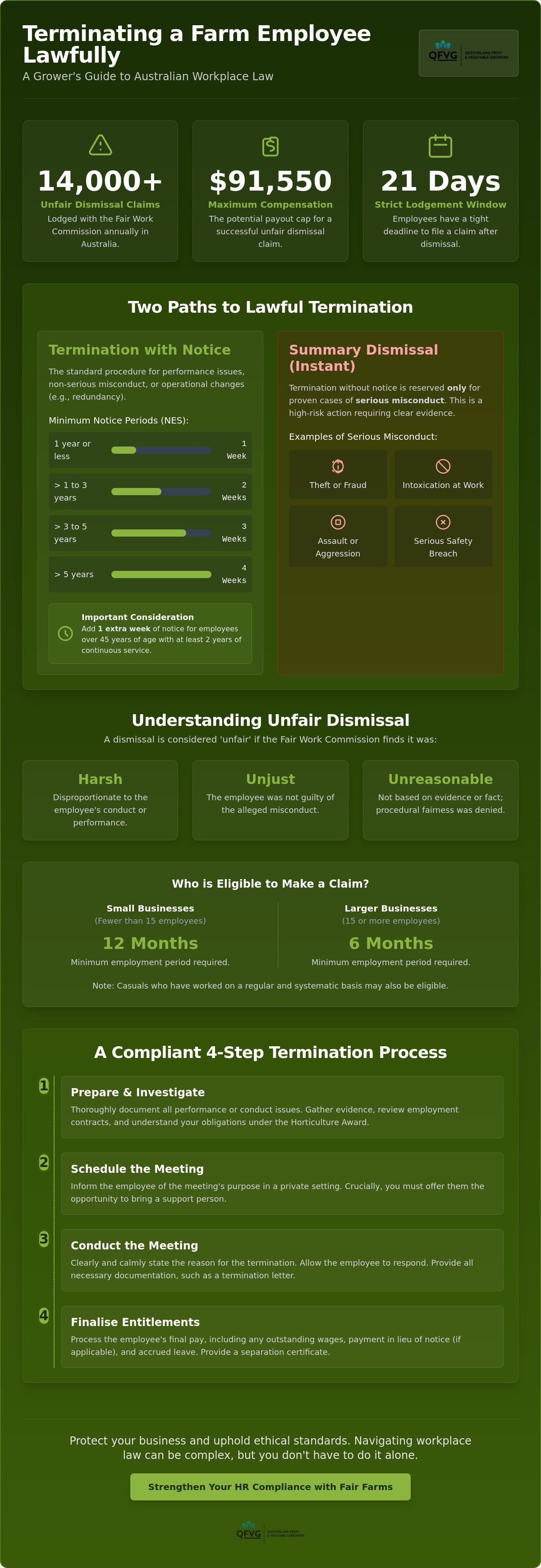
We understand that your priority is running a productive, ethical business where every person is treated with respect. This guide will help you master the essential steps to manage terminations legally and ethically, ensuring you protect your farm from claims that can reach a compensation cap of $91,550. We will provide a clear, step-by-step framework that builds your confidence in meeting modern workplace standards. From understanding the strict 21-day lodgement window to following proper procedural fairness, you'll gain the tools to handle difficult conversations with professional integrity and legal certainty.
Key Takeaways
- Identify how the National Employment Standards and the Horticulture Award 2020 dictate your specific obligations regarding notice periods and redundancy.
- Distinguish between immediate summary dismissal for serious misconduct and the essential requirements for terminating a farm employee lawfully when providing notice based on service length.
- Navigate the complexities of unfair dismissal eligibility and learn how to apply the "harsh, unjust, or unreasonable" test to your internal performance management processes.
- Implement a robust step-by-step procedure for termination meetings, ensuring you maintain meticulous evidence and respect the employee's right to a support person.
- Strengthen your farm’s long-term resilience and compliance by utilising HR Support for Growers and the ethical frameworks provided through Fair Farms membership.
Understanding the Legal Framework for Farm Termination
For any Australian grower, the journey of terminating a farm employee lawfully begins with a deep understanding of the National Employment Standards (NES). These standards provide the non-negotiable baseline for all workers, regardless of the size of your operation or the specific crop you harvest. However, the unique nature of regional work means the Horticulture Award 2020 often dictates the finer details. This modern award contains specific provisions for notice periods and redundancy that differ significantly from other agricultural sectors. Maintaining compliance isn't just about avoiding a legal dispute; it's about upholding the ethical labour standards that underpin our industry's reputation.
The legal framework surrounding Unfair Dismissal in Australia is governed primarily by the Fair Work Act 2009. This legislation ensures that even casual workers, who are often perceived as having fewer protections, may be eligible for claims if they have worked on a regular and systematic basis for the minimum employment period. For a small business with fewer than 15 employees, this period is 12 months. For larger enterprises, it's six months. Failing to recognise these thresholds can leave a business vulnerable to expensive litigation and significant disruption.
The Horticulture Award vs. General Employment Law
The Horticulture Award 2020 carries distinct obligations that set it apart from the Pastoral Award. One critical area is the treatment of piecework agreements. When terminating a farm employee lawfully who is engaged on a piecework basis, growers must ensure all final payments are calculated in strict accordance with the latest minimum wage guarantees introduced in recent years. Additionally, seasonal workers who return for consecutive harvests may be considered to have "continuous service." This status can trigger requirements for notice or redundancy pay that a grower might not expect if they view the worker as purely temporary.
The Consequences of Unlawful Termination
The stakes for getting this wrong have never been higher. As of January 1, 2025, new laws impose criminal penalties for intentional wage theft, which can include the mishandling of termination entitlements. Companies can face fines of up to $7.825 million, while individuals risk up to 10 years' imprisonment. Beyond these legal threats, there is a significant commercial risk. Major retailers and wholesalers now prioritise suppliers who can demonstrate a commitment to social responsibility. Losing your Fair Farms Certification due to a breach of termination protocols can result in the immediate loss of lucrative supply contracts and long-term damage to your brand's standing in the regional community.
Summary Dismissal vs. Termination with Notice
When the time comes to end an employment relationship, growers must choose the correct path based on the specific circumstances. This choice usually falls between termination with notice or summary dismissal. While the former is the standard procedure for performance or operational changes, the latter is reserved for the most extreme situations. Understanding the difference is vital for terminating a farm employee lawfully and avoiding costly disputes. Guidance from the Fair Work Ombudsman provides the technical foundation, but applying these rules in a paddock or packing shed requires a nuanced approach.
Notice periods are determined by the length of an employee's continuous service under the National Employment Standards (NES). For most workers, this ranges from one week for those with less than a year of service to four weeks for those who've been with the business for five years or more. There's also a specific "additional week" rule for employees over 45 years of age who have completed at least two years of service. This extra time acknowledges the potential difficulty older workers might face when seeking new employment in regional areas. Whether the reason is performance-based, conduct-related, or due to operational requirements like a change in crop focus, these timelines must be respected.
What Constitutes Serious Misconduct on a Farm?
Summary dismissal is termination without notice only in cases of proven serious misconduct. On a farm, this isn't just about general bad behaviour; it involves actions that cause a serious and imminent risk to the health and safety of others or the reputation and viability of the business. Examples include deliberate breaches of biosecurity protocols that could endanger livestock or crops, theft of farm equipment, or physical assault. Even in these high-pressure cases, don't act impulsively. You must conduct a fair investigation and give the employee a chance to respond to the allegations before making a final decision.
Determining the Correct Notice Period
If you're ending employment for reasons like poor performance, you must provide the correct notice or provide "payment in lieu of notice." This second option allows the employee to leave immediately while receiving the wages they would've earned during the notice period. This is often the preferred route for growers who want to maintain workplace morale or ensure a clean break. If you're unsure about the specific tiers for your staff, exploring Membership for Growers can provide the resources needed to calculate these entitlements accurately and ethically. Every decision should be backed by clear documentation to prove that the reason for termination was lawful and the process was fair.
Navigating Unfair Dismissal and the Small Business Code
The prospect of an unfair dismissal claim often causes significant anxiety for agricultural employers. However, the law provides clear boundaries regarding who can actually lodge a claim. To be eligible, an employee must have completed a minimum employment period. For businesses with 15 or more staff, this period is six months. For small business employers with fewer than 15 employees, the threshold is 12 months. Understanding these timelines is a fundamental part of terminating a farm employee lawfully. If a claim does reach the Fair Work Commission, the "harsh, unjust, or unreasonable" test is used to determine if the dismissal was fair, looking at both the reason for the exit and the process followed.
It's vital to distinguish between unfair dismissal and "general protections" claims. While an employee might not be eligible for an unfair dismissal claim due to their length of service, they are protected from unlawful termination from day one. This means you cannot dismiss a worker for discriminatory reasons, for exercising a workplace right, or for participating in union activities. These protections apply to every farm in Australia, regardless of size. Ensuring your decisions are based purely on capacity or conduct helps mitigate the risk of these complex legal challenges.
Compliance with the Small Business Fair Dismissal Code
The Small Business Fair Dismissal Code provides a simplified framework for growers with fewer than 15 staff. If you follow this code, the dismissal is deemed fair. A key requirement is providing the employee with a clear warning, preferably in writing, that they are at risk of dismissal. You must also give them a genuine opportunity to improve their performance or conduct. During any formal meeting where termination is discussed, you should allow the employee to have a support person present if they request one. Documenting these steps is essential, as it provides the evidence needed to prove you acted with procedural fairness.
Common Pitfalls in Farm Dismissals
Even with the best intentions, certain mistakes can undermine your efforts in terminating a farm employee lawfully. A frequent error is attempting to dismiss a worker while they are on a temporary absence for illness or injury, which is generally prohibited under the Fair Work Act. Another pitfall is failing to provide written notice. Even if you have a verbal conversation, the law requires the termination notice to be in writing to be effective. Finally, be wary of "constructive dismissal." This occurs when an employer's conduct makes the workplace so difficult that the employee feels they have no choice but to resign. The Commission often views these forced resignations as dismissals, potentially opening the door to a claim.
A Step-by-Step Procedure for Lawful Termination
Ending an employment relationship is a significant management action that requires a methodical approach. It's not merely about the final conversation; it's about the steps taken before, during, and after that meeting to ensure the process is defensible. By following a structured chronological checklist, you can move forward with the confidence that you're terminating a farm employee lawfully while upholding the ethical standards of your business. This professional rigour protects your reputation among the local workforce and ensures your farm remains a preferred place of employment.
Documentation and Evidence Gathering
In the eyes of the Fair Work Commission, if it isn't documented, it didn't happen. Verbal warnings are rarely enough to support your case in a dispute because they lack a verifiable record of what was said and when. Instead, maintain a clear paper trail of performance reviews, formal warning letters, and detailed incident reports. Many successful growers now use farm management software or dedicated digital logs to record specific performance data and conduct issues in real time. If an incident occurs in the packing shed or out in the paddock, ensure you collect witness statements and keep contemporaneous diary notes of all relevant conversations. This evidence forms the backbone of a fair process.
The Formal Meeting and Right of Reply
Once you've gathered your evidence, you must invite the employee to a formal meeting. This invitation should be in writing and clearly state the purpose of the discussion. You're legally required to notify the employee of their right to bring a support person to the meeting. During the session, present the reasons for the proposed termination clearly and calmly. Most importantly, you must allow the employee a genuine "right of reply." Listen to their explanation and consider any mitigating circumstances before making a final decision. If you need expert guidance on how to structure these sensitive conversations, our HR Support for Growers provides tailored assistance to help you navigate the complexities of the meeting room.
Final Pay and Entitlements
After a decision is reached, you must issue a formal termination letter and settle all outstanding financial obligations. This includes calculating accrued annual leave, any applicable annual leave loading, and pro rata long service leave for staff who have met the relevant service thresholds. All final payments must be made within the timeframe specified by the Horticulture Award. Errors in final pay are a common trigger for Fair Work investigations, so double-check your calculations against the latest award rates to ensure every cent is accounted for.
The Exit Interview and Handover
The final step is the exit interview. While it might feel uncomfortable, this is a valuable tool for identifying systemic issues on your farm that could be contributing to staff turnover. Use this time to facilitate a professional handover of farm keys, specialised equipment, and any provided accommodation. Maintaining a professional tone during this exit helps protect your brand's standing in the regional community. A respectful departure reduces the likelihood of post-employment friction and demonstrates your commitment to equitable labour standards.
Strengthening Your HR Compliance with Fair Farms
Compliance is more than just a legal checklist; it's a commitment to the long-term health and reputation of the Australian agricultural sector. While the steps for terminating a farm employee lawfully are clearly defined by the Fair Work Act, the practical application in a busy farm environment often presents unique challenges. Fair Farms serves as a principled mentor in this space, providing growers with the resources needed to move beyond basic legal obligations toward true industry leadership. By adopting a mission-driven approach to workplace relations, you can ensure that every exit is handled with the integrity and gravity required to protect both your people and your business.
Our program is designed to empower growers through education and structured support. Accessing specialised training allows farm managers to upskill in complex areas of employment law, ensuring that everyone from the packing shed supervisor to the business owner understands their role in maintaining equitable labour standards. This collective knowledge reduces the likelihood of costly errors and builds a resilient workforce capable of navigating the fluctuations of the agricultural market with confidence.
HR Support for Growers and Labour Hire
Navigating the nuances of the Horticulture Award 2020 requires precision, particularly when managing complex termination scenarios like seasonal redundancies or performance-based exits. Accessing Fair Farms HR support provides you with a direct line to experts who understand the regional context of your work. This specialised guidance is a core benefit for our members, offering clarity when you need it most. Furthermore, following the Fair Farms certification pathway offers a comprehensive framework for risk mitigation. This process helps you identify gaps in your current HR systems and provides the tools to address them before they lead to a Fair Work Commission dispute. Membership also ensures you stay updated on rapid changes to workplace regulations, such as the upcoming "Payday Super" requirements or adjustments to the high-income threshold.
Building a Culture of Compliance
Ethical employment practices serve as a powerful tool for attracting and retaining high-quality labour in a competitive market. When workers see that a farm operates with transparency and fairness, it fosters a sense of trust that permeates the entire team. Transparent HR policies ensure that every staff member understands what is expected of them, which naturally reduces the friction that often leads to dismissal. This culture of accountability is not only good for morale; it's essential for market access. Major retailers increasingly prioritise suppliers who can demonstrate "best practice" through third-party certification. If you're ready to strengthen your farm’s resilience and lead the way in ethical employment, you can contact Fair Farms to begin your compliance journey today.
Cultivating a Resilient and Compliant Workforce
Managing the end of an employment relationship with integrity is a hallmark of a professional agricultural operation. By prioritising procedural fairness and maintaining meticulous records, you protect your business from the financial and reputational risks associated with unfair dismissal claims. The key to terminating a farm employee lawfully lies in the consistency of your HR processes, from the initial performance discussion to the final payment calculation under the Horticulture Award. These steps ensure that even difficult transitions are handled with the gravity and respect they deserve.
As an industry-led initiative developed by Queensland Fruit & Vegetable Growers (QFVG), Fair Farms provides the specialised training modules and recognised certification standard you need to lead with confidence. Our program helps you move beyond basic compliance toward a culture of fair employment that resonates across the entire supply chain, making your farm a preferred destination for high-quality labour.
Join Fair Farms today to access expert HR support and protect your farm business. Taking these proactive steps now ensures your operation remains a stable, respected, and successful part of the Australian agricultural community for years to come.
Frequently Asked Questions
Can I terminate a casual farm worker without notice?
Yes, casual employees are generally not entitled to notice of termination under the National Employment Standards. However, you must ensure the worker is a true casual and not a regular and systematic employee who may have accrued certain protections over time. Even without a notice period, you must still follow ethical standards and pay all outstanding wages for hours worked up until the moment they leave the packing shed or paddock.
What is the Small Business Fair Dismissal Code and does it apply to me?
The Small Business Fair Dismissal Code is a legislative instrument that applies to all Australian employers with fewer than 15 staff. If you follow the code's steps, including providing a valid reason and a chance to improve, the dismissal will be deemed fair. This code is a vital tool for terminating a farm employee lawfully while protecting your business from the stress and cost of an unfair dismissal claim.
Do I have to pay out annual leave loading when an employee is terminated?
Yes, if an employee is entitled to annual leave loading during their employment, you must pay it out upon termination. The Fair Work Act 2009 stipulates that all accrued annual leave must be paid at the same rate the employee would've received had they taken the leave while employed. This includes loading for workers covered by the Horticulture Award 2020, ensuring they receive their full legal entitlements and a fair exit.
How much notice must I give a seasonal worker under the Horticulture Award?
Notice periods for seasonal workers depend entirely on their employment status. Casual seasonal workers don't require notice, but full-time or part-time seasonal staff are entitled to between one and four weeks' notice based on their continuous service. If you're terminating a farm employee lawfully at the end of a season, always check if they have returned for multiple years, as this can affect their status and notice requirements under the Horticulture Award.
What happens if an employee claims unfair dismissal after they have left?
An employee has exactly 21 calendar days from the date their dismissal takes effect to lodge an application with the Fair Work Commission. Once lodged, the Commission will notify you and usually schedule a conciliation meeting to resolve the matter. Approximately 80% of these claims are settled at this stage, avoiding a formal hearing, provided you can demonstrate that you followed a fair and documented procedure during the termination process.
Can I fire someone immediately for a safety breach on the farm?
You can only terminate someone immediately if the safety breach constitutes serious misconduct. This means the action must be deliberate and pose a significant risk to the farm's operations or the safety of others. Even in these urgent cases, you must conduct a brief investigation and allow the worker to explain their side. Acting too hastily without a fair process can lead to a successful claim against your business for unfair dismissal.
Is redundancy the same as termination for performance?
No, redundancy and performance-based termination are distinct legal concepts. A genuine redundancy occurs when the farm no longer needs a specific job to be done by anyone due to operational changes, like automation or shifting crops. Termination for performance is about the individual's inability to meet the requirements of their role. Confusing the two can lead to legal complications, particularly regarding your consultation obligations and the payment of redundancy entitlements.
Do I need to provide a written reason for termination?
Yes, providing written notice of termination is a legal requirement under the Fair Work Act. This document should clearly state the last day of employment and the reason for the decision, whether it relates to conduct, capacity, or operational needs. Written notice provides a clear record for both parties and is essential evidence if the process is ever reviewed by the Fair Work Commission or another regulatory body during a dispute.