
Navigating the Coles Ethical Sourcing Policy: A Guide for Australian Growers
Could the very compliance measures that feel like a burden today actually be the safeguard that protects your farm's legacy for the next decade? Most Australian growers feel the weight of audit fatigue, especially when trying to manage complex labour hire arrangements and the latest modern slavery reporting requirements. It's understandable to feel stretched by the shifting expectations of major retailers. This guide will help you understand the updated Coles ethical sourcing policy for growers, showing you how to align your operations with these standards to secure your place in the supply chain.
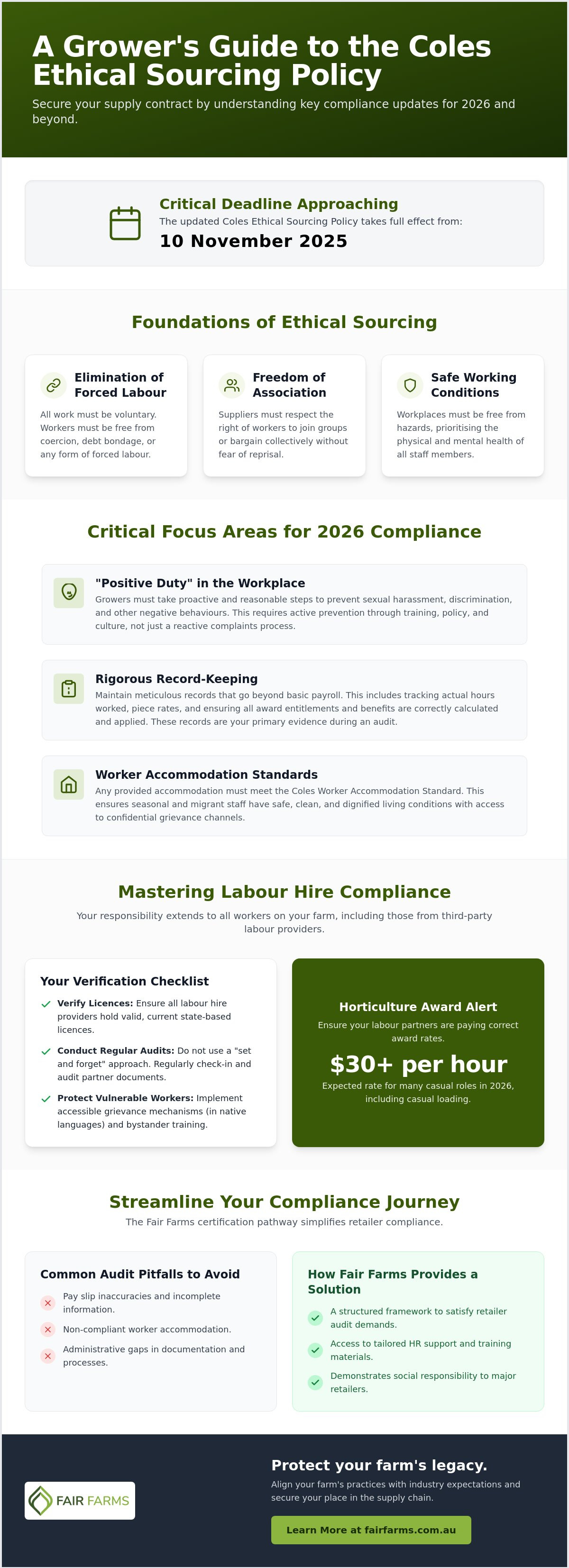
You'll learn about the core requirements of the policy update taking effect on 10 November 2025 and how industry-led certifications can help you meet these expectations without duplicating your efforts. We'll also examine the practicalities of the Horticulture Award's 2026 rate increases and the necessity of robust grievance mechanisms. By the end of this article, you'll have a clear roadmap to protect your business from legal and reputational risks while maintaining a strong, profitable partnership with one of Australia's largest retailers.
Key Takeaways
- Gain a clear understanding of the Coles ethical sourcing policy for growers to secure your supply contract and prepare for the 2025 policy updates.
- Master the complexities of third-party labour hire compliance by implementing robust oversight of licensed agencies and sub-contractors.
- Align your farm operations with modern standards for worker welfare, including the "Positive Duty" requirements for preventing workplace harassment.
- Streamline your compliance journey using the Fair Farms certification pathway to satisfy retailer audit demands while accessing tailored HR support and training.
Decoding the Coles Ethical Sourcing Policy for 2026
The Coles Ethical Sourcing Program represents a shift toward higher accountability across the Australian agricultural landscape. For those managing fresh produce operations, the Coles ethical sourcing policy for growers serves as the definitive framework for protecting human rights and ensuring worker welfare. This policy is built on a foundation of integrity, requiring suppliers to demonstrate that every person in their chain is treated with dignity and respect.
- Elimination of forced labour: All work must be voluntary, and workers must not be subject to any form of coercion or debt bondage.
- Freedom of association: Suppliers must respect the right of workers to join groups or bargain collectively without fear of reprisal.
- Safe working conditions: This includes providing a workplace that is free from hazards and prioritises the physical and mental health of all staff.
Central to managing these standards is the Coles Quality Academy (CQA). This platform is the primary tool for suppliers to access training and manage their compliance documentation. In 2026, transparency is no longer optional. Detailed visibility into your operations is a non-negotiable requirement for maintaining a long-term supply relationship with Coles Supermarkets.
The 2026 Compliance Landscape
The updated policy, effective from 10 November 2025, places a heavier emphasis on identifying modern slavery risks within deeper tiers of the supply chain. You're expected to maintain rigorous records that go beyond basic payroll. This includes tracking actual hours worked against award requirements and ensuring all benefits are correctly applied. These records form the evidence base for ethical audits. Understanding how to navigate these certification pathways is essential for farm stability.
Common Audit Non-Conformances
Most issues identified during ethical evaluations stem from administrative gaps rather than intentional misconduct. Pay slip accuracy remains a primary concern, alongside the management of worker accommodation. Coles uses independent, third-party audits to assess your farm against the Coles ethical sourcing policy for growers. Identifying these gaps early through internal reviews allows you to rectify issues before they impact your certification status or supply contract.
Critical Requirements: Labour Hire and Worker Welfare
Under the Coles ethical sourcing policy for growers, your responsibility doesn't end at your farm gate. It extends to every person who picks, packs, or processes your produce, regardless of who signs their paycheque. Coles maintains a strict stance on third-party labour providers, necessitating the use of licensed agencies that uphold the same rigorous standards you do. Aligning with these expectations ensures your business remains a trusted partner in a competitive market.
A critical shift for 2026 is the focus on "Positive Duty." This requires growers to take proactive steps to prevent sexual harassment and discrimination in the workplace. It's no longer enough to have a policy tucked away in a drawer; you must demonstrate active prevention through training and culture. Similarly, worker accommodation must meet the Coles Worker Accommodation Standard, ensuring seasonal and migrant staff have safe, dignified living conditions and access to confidential grievance channels.
Vetting Your Labour Hire Providers
Relying on a labour hire firm's word is a significant business risk. To protect your supply contract, you must verify that partners comply with the Fair Work Act and hold valid state-based labour hire licences. A "set and forget" approach often leads to compliance gaps. Regular check-ins and document audits are essential to ensure your partners are paying the correct Horticulture Award rates, including the casual loading that brings many roles to over $30 per hour in 2026.
Protecting Vulnerable Workers
Migrant workers and backpackers are often at higher risk of exploitation. Coles' framework demands specific protections for these groups, including accessible grievance mechanisms provided in their native languages. Implementing bystander training and respectful behaviour inductions helps build a culture of accountability. Many growers find that achieving Fair Farms certification provides a structured way to manage these complex human rights requirements while demonstrating social responsibility to retailers.
If you're unsure where to start with your labour hire audit, you can contact our team for guidance on aligning your farm's practices with industry expectations.
How Fair Farms Simplifies Coles Compliance
Meeting the Coles ethical sourcing policy for growers doesn't have to be an administrative nightmare. Fair Farms acts as a bridge between high-level retail expectations and the daily realities of an Australian farm. By adopting the Fair Farms Version 4 standards, you move away from a reactive, "complaint-based" approach. Instead, you build a proactive, "prevention-based" model that identifies risks before they become legal or reputational crises.
Upskilling your team is a central part of this transition. Using Fair Farms online training allows you to educate supervisors and managers on ethical standards. This ensures that the people managing your crews every day understand the nuances of the Horticulture Award and worker rights. A Fair Farms membership provides more than just a certificate; it offers ongoing HR support tailored specifically for the horticulture sector. This specialist advice is invaluable when interpreting complex industrial relations changes or preparing for your next audit.
The Certification Advantage
One of the most significant benefits of this pathway is the reduction in "audit fatigue." Because Fair Farms is recognised by major Australian retailers, a single audit can often satisfy multiple supply chain requirements. Holding a verified, industry-recognised social compliance certificate demonstrates to Coles that you are a leader in ethical production. This proactive stance positions your business as a reliable, low-risk partner for the long term.
Next Steps for Growers
Your journey begins with a simple self-assessment. This process helps you identify gaps in your current workplace relations and safety protocols without the pressure of an external auditor. It's a chance to organise your records and refine your induction processes. Once you've reviewed your internal systems, contacting Fair Farms is the next logical step to formalise your commitment to ethical sourcing and secure your farm's future in the Coles supply chain.
Securing Your Future in the Australian Supply Chain
Aligning with the Coles ethical sourcing policy for growers is about more than just passing an audit. It's a strategic move to build a resilient business that values its workforce and meets the high expectations of modern retail. By addressing the 2026 compliance updates and rigorously vetting your labour hire partners, you protect your farm's legacy and its reputation in the marketplace.
Moving toward a prevention-based compliance model is easier with the right support. As an industry-led initiative by Queensland Fruit & Vegetable Growers (QFVG), Fair Farms provides a pathway that is deeply rooted in Australian workplace laws. Members benefit from comprehensive HR support and training, ensuring your team is equipped to handle evolving standards with confidence.
Join Fair Farms today to secure your place in the Coles supply chain. Proactive steps now will ensure your farm remains a stable and respected part of the Australian agricultural landscape for years to come.
Frequently Asked Questions
Does Coles accept Fair Farms certification as proof of ethical sourcing?
Yes, Coles recognises Fair Farms certification as a valid pathway for fresh produce suppliers to demonstrate compliance with their social standards. The program is specifically designed to align with Australian workplace laws, making it a practical choice for domestic operations. By achieving this certification, you satisfy the core requirements of the Coles ethical sourcing policy for growers while streamlining your audit processes.
What happens if a non-conformance is found during a Coles ethical audit?
If an auditor identifies a non-conformance, you must implement a Corrective Action Plan (CAP) within a specified timeframe to remain compliant. Minor issues typically require evidence of a procedural update, whereas critical breaches, such as safety risks or wage theft, demand immediate remediation. Consistency is key; failure to address these gaps can lead to the suspension or termination of your supply agreement.
Do I need to audit my labour hire providers if I am a Coles supplier?
Yes, you are responsible for ensuring that any third-party labour hire agencies you engage meet the same standards required by the Coles ethical sourcing policy for growers. This involves verifying their state labour hire licences and conducting regular checks to ensure workers receive correct Horticulture Award rates. Coles expects direct suppliers to maintain active oversight of their entire sub-tier supply chain to prevent exploitation.
What are the Coles requirements for worker accommodation on-farm?
On-farm accommodation must meet the Coles Worker Accommodation Standard, which ensures workers have access to safe, clean, and dignified living conditions. This includes providing adequate floor space, secure storage for personal belongings, and compliant fire safety measures. You must also ensure that any rental charges are fair, transparent, and don't result in the worker's take-home pay falling below the national minimum wage.