
The True Cost of Bad Hires in Agriculture: A Guide for Australian Growers
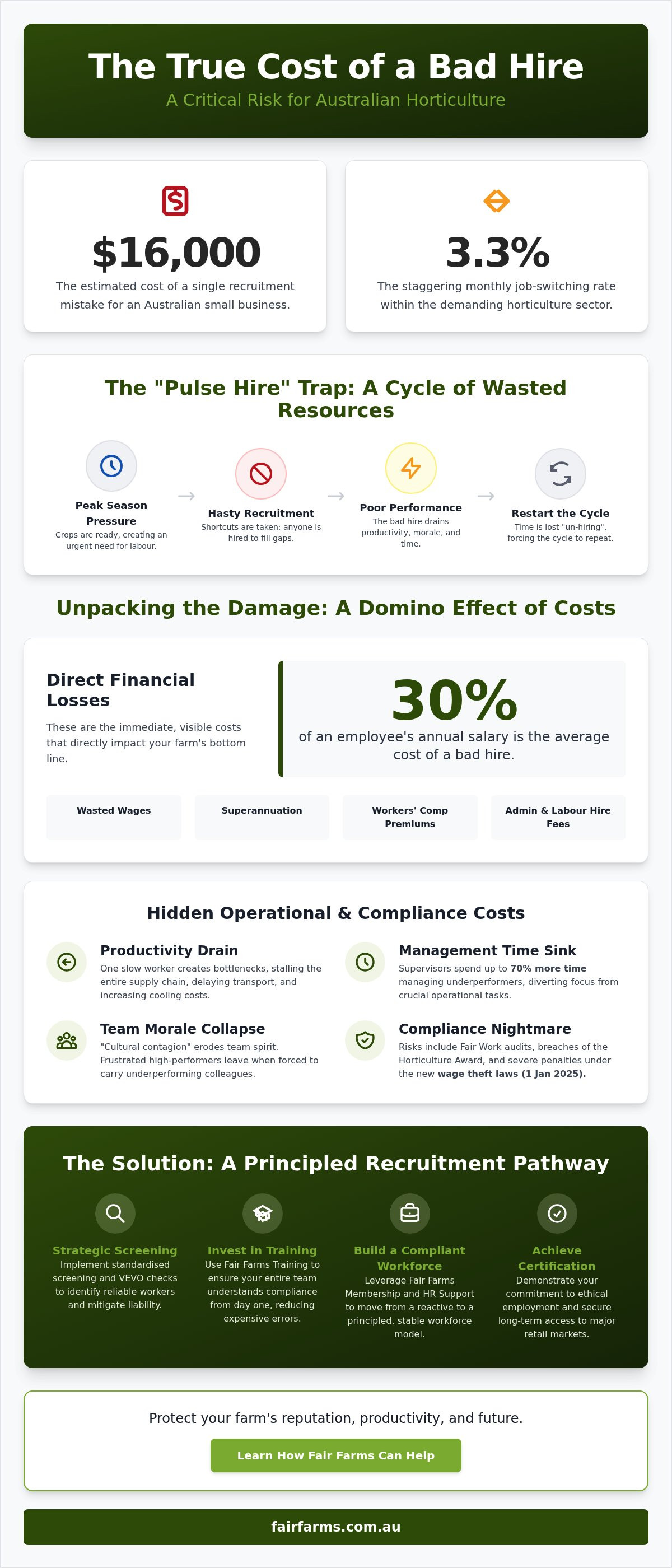
Did you know that a single recruitment mistake can cost an Australian small business roughly $16,000? In the demanding world of horticulture, where the monthly job-switching rate is a staggering 3.3 per cent, the true cost of bad hires in agriculture often extends far beyond a simple line item on your balance sheet. You likely already feel the weight of high seasonal turnover and the exhaustion of managing underperforming staff while trying to keep your harvest on track. It's a heavy burden to balance daily farm operations with the constant worry of a Fair Work audit or a compliance breach.
We understand that your farm's reputation and productivity are built on the integrity of your team. This guide will help you uncover the hidden financial, operational, and compliance-related risks that threaten your business's future. You'll learn how to move away from reactive hiring and protect your farm through principled recruitment practices. We'll explore the impact on your productivity, the serious implications of the 1 January 2025 wage theft laws, and how tools like Fair Farms Training and Certification can help you foster a stable, compliant, and ethical workforce.
Key Takeaways
- Understand why hiring out of desperation during harvest is a false economy that drains your productivity and exhausts your management team.
- Quantify the true cost of bad hires in agriculture, from immediate production bottlenecks to the severe financial penalties of breaching the Horticulture Award.
- Learn how to implement standardised screening and VEVO credential checks to identify reliable workers and protect your farm from vicarious liability.
- Discover how Fair Farms Membership and HR Support can help you move from reactive recruitment to a principled, compliant workforce model.
- See how achieving Fair Farms Certification demonstrates your commitment to ethical employment and secures your long-term access to major retail markets.
Beyond the Paycheque: Defining the Cost of Bad Hires in Agriculture
In the Australian horticulture sector, a bad hire isn't merely an inconvenience; it's a systemic risk. We define a poor recruitment outcome as any individual who fails to meet the rigorous safety, productivity, or ethical standards required on a modern farm. While it's easy to spot a worker who lacks the physical stamina for picking, the more dangerous bad hire is the one who disregards food safety protocols or creates a toxic environment for your reliable team members. In 2026, with the Fair Work Commission announcing new award rates and the introduction of Payday Superannuation from 1 July, the cost of bad hires in agriculture has reached a critical tipping point for farm profitability.
The distinction between direct and indirect costs is vital for any grower looking to protect their bottom line. Direct costs are the visible losses, such as wages paid for substandard work. Indirect costs are the "hidden" drains on your resources, like the mental toll on supervisors who must constantly correct mistakes. These hidden factors often do the most damage to your farm's future. If you're struggling with these challenges, exploring a Membership for Growers can provide the framework needed to professionalise your recruitment and avoid these pitfalls.
The "Pulse Hire" Trap
Growers often fall into what we call the "warm body" syndrome. When the crop is ripening and the weather is turning, the pressure to get fruit off the vine leads to dangerous shortcuts. This "pulse hire" approach, recruiting anyone with a heartbeat just to fill a gap, is a false economy. Hasty decisions during peak periods inevitably lead to a cycle of constant turnover. The time spent "un-hiring" an unsuitable worker and restarting the search often costs more than the initial harvest delay. You're effectively paying for the costs of employee turnover twice: once in lost time and again in diminished crop quality. It's a exhausting cycle that prevents your business from ever moving beyond basic survival mode.
Direct Financial Losses
The visible drain on your bank account is only the beginning. When you tally up wasted wages, superannuation contributions, and the inevitable rise in workers’ compensation premiums following a safety incident, the numbers are sobering. You must also account for the administrative burden of processing new paperwork, advertising on job boards, and the fees paid to labour hire providers. Research indicates that the average cost of a bad hire is approximately 30 per cent of that employee's annual salary. For an agricultural business operating on thin margins, this financial hit can be the difference between a profitable season and a significant loss. Investing in proper Fair Farms Training ensures your team understands compliance from day one, reducing the likelihood of these expensive errors.
Quantifying the Damage: Productivity, Time, and Team Morale
While the immediate financial sting is painful, the operational cost of bad hires in agriculture manifests most clearly in day-to-day farm rhythms. One slow picker or a careless packer doesn't just reduce their own output; they create a bottleneck that stalls the entire supply chain. If fruit isn't moving through the packing shed at the expected rate, transport schedules slip and cooling costs rise. This ripple effect turns a single recruitment error into a systemic failure that can compromise your entire harvest window.
There is also the "cultural contagion" to consider. Your reliable seasonal crew members take pride in their efficiency and teamwork. Introducing a toxic or lazy individual into this environment quickly erodes morale. High-performing workers become frustrated when they have to pick up the slack, often leading them to seek work on neighbouring properties. According to research from recruitment specialist Robert Half, the loss of productivity and reduced staff morale are among the most significant hidden costs of a poor hiring decision. Protecting your farm's culture is just as vital as protecting your crop.
The Management Time Sink
Supervisors are your most valuable on-ground asset, yet a bad hire creates a massive time sink. Industry reports suggest that farm managers spend up to 70 per cent more time managing underperformers than they do supporting their top-tier workers. This is a significant opportunity cost. Every hour spent "babysitting" a worker who refuses to follow instructions is an hour lost to improving farm infrastructure or refining harvest strategies. This constant friction eventually leads to burnout among your best managers, which creates a leadership vacuum that is even harder to fill.
Operational Inefficiency and Crop Loss
The physical costs are equally daunting. Poorly trained staff lead to bruised fruit, incorrect sorting, and missed harvest windows, which directly impact your pack-out rates. Equipment damage is another factor; a careless operator can easily cause thousands of dollars in damage to tractors or packing lines through simple negligence. Beyond the immediate machinery repairs, poor adherence to Work Health and Safety (WHS) standards leads to avoidable downtime and potentially lengthy investigations. To help mitigate these operational risks, many growers find that Membership for Growers provides the necessary resources to better vet and train their workforce before the first crate is even filled.
The Compliance Nightmare: Legal Risks and Loss of Market Access
The regulatory environment for Australian growers has shifted dramatically. As of 1 January 2025, intentional wage underpayment became a criminal offence. This means the cost of bad hires in agriculture now includes the very real threat of criminal prosecution and massive financial penalties. If an underperforming hire or an unethical labour hire provider mismanages pay rates under the Horticulture Award, the legal responsibility often rests with you through vicarious liability. You can't simply point the finger at a third party; the Fair Work Ombudsman holds the host employer to a high standard of oversight. You are responsible for the people on your land.
Beyond pay, a bad hire can expose your farm to modern slavery risks. A single individual who is being exploited, or who is exploiting others in your team, can trigger a federal investigation. These investigations are exhaustive. They are expensive. They often lead to "name and shame" publications that permanently tarnish your brand's reputation in the local community. Once your farm is associated with labour exploitation, attracting quality workers becomes nearly impossible.
Fair Work and Regulatory Penalties
The financial fallout from a compliance breach is rarely limited to back-paying wages. You must also account for interest, significant litigation fees, and the administrative cost of a full payroll audit. These costs can easily spiral into six figures. To protect your business, you can Contact Fair Farms to discuss a compliance gap analysis. This proactive step helps you identify risks before they catch the attention of regulators. It's about building a fortress around your farm's future.
Market Access and Supply Chain Integrity
For many Australian growers, the biggest threat isn't a fine; it's the loss of a contract. Major retailers like Coles, Woolworths, and Aldi require rigorous ethical standards from their suppliers. They have zero tolerance for labour exploitation or systemic award breaches. The cost of losing a supply contract because of a single ethical breach or a bad hire in your supply chain is often terminal for a farm business. Achieving Fair Farms Certification provides a clear pathway to demonstrate your commitment to ethical employment. This certification acts as a shield. It prevents the "compliance trap" and ensures your revenue remains secure by meeting the high expectations of the modern supply chain.
Strategic Recruitment: How to Screen for Skills and Cultural Fit
To mitigate the financial and legal risks discussed in previous sections, growers must transition from reactive "pulse hiring" to a structured, principled recruitment strategy. A standardised approach ensures you aren't just filling a seat but are selecting individuals who align with your farm's ethical and operational standards. By refining your screening process, you can drastically reduce the long-term cost of bad hires in agriculture and build a more resilient workforce that withstands the pressures of harvest.
Verification of credentials is a non-negotiable step in this process. In an era of increased regulatory oversight, failing to conduct VEVO status checks or neglecting to call previous employers is a risk no farm can afford. These checks serve as your first line of defence against vicarious liability and compliance breaches. Beyond technical skills, you should look for soft skills like resilience and communication. A worker who communicates clearly and works well in a team is far less likely to cause the "cultural contagion" that drives away your best staff.
Effective Interviewing for Horticulture
Moving beyond basic questions about experience allows you to uncover a candidate’s true attitude toward safety and ethics. Use behavioural questions such as, "Tell me about a time you noticed a safety hazard and what you did about it." This reveals whether a candidate takes personal responsibility for workplace health and safety. It is also vital to provide clear job descriptions that honestly outline the physical demands and seasonal nature of the role. To assist with this, you can browse our member resources for recruitment templates and interview guides designed specifically for the horticulture sector.
Leveraging Technology and Training
Digital onboarding tools can significantly reduce the administrative burden and associated costs of bringing on new staff. By using induction modules, you can set clear expectations on day one regarding pay rates, rest breaks, and farm conduct. This transparency builds trust and reduces the likelihood of future disputes. Some industry professionals report that implementing pre-employment training can reduce turnover by up to 40 per cent by ensuring candidates fully understand the role before they set foot on the farm. Utilising Fair Farms Online Training as a pre-qualification tool helps you filter for candidates who are serious about their employment and committed to ethical standards.
Safeguarding Your Farm with the Fair Farms Certification
Reducing the cost of bad hires in agriculture requires more than just better interviewing; it demands a fundamental shift toward a culture of compliance and ethical responsibility. Fair Farms provides the structured framework necessary to make this transition. Through our Membership for Growers, you gain access to dedicated HR support and resources specifically designed for the Australian horticulture context. This support helps you navigate complex award requirements and implement robust recruitment policies that filter out high-risk candidates before they impact your operations. By professionalising your approach, you ensure that every person on your property contributes to a productive and safe environment.
Our certification programme serves as a supportive partner in your farm's journey toward excellence. By following a clear, continuous improvement framework, you can identify and resolve potential issues in your labour supply chain long before they escalate into costly legal disputes or harvest disruptions. This proactive stance ensures your team is prepared for the realities of modern farming while protecting your bottom line from the hidden expenses of poor recruitment. It's about moving beyond simple compliance and toward a model of leadership that benefits everyone from the paddock to the plate.
The Benefits of Ethical Certification
Farms that hold ethical certification often find they attract a higher calibre of worker. In a competitive labour market, reliable seasonal staff prefer employers who can demonstrate a commitment to fair pay and safe conditions. This preference leads to significantly lower turnover rates, which directly reduces the recurring costs associated with advertising and training new staff. By extension, being certified protects your brand from the financial fallout of supply chain investigations. You can learn about the Fair Farms certification pathways to see which level of engagement best suits your current business needs. Achieving this standard is a powerful way to signal your integrity to both workers and retailers.
Joining the Fair Farms Community
Choosing to join Fair Farms means becoming part of an industry-led initiative developed by growers, for growers. We understand the unique pressures of the Australian harvest and the regional challenges you face daily. Whether you are navigating the Audit Pathway or engaging with our educational resources, the value lies in the collective strength of our community. Membership effectively pays for itself by preventing even a single costly bad hire or a Fair Work fine. It provides the peace of mind that your farm's reputation is secure and your employment practices are beyond reproach. Secure your farm’s reputation and bottom line today by embracing a principled approach to your workforce management.
Securing the Future of Your Farm’s Workforce
Protecting your farm's profitability requires a shift from survival-mode hiring to a disciplined, ethical recruitment framework. We've explored how the true cost of bad hires in agriculture encompasses everything from lost harvest efficiency to the severe legal risks of vicarious liability. By implementing standardised screening and embracing transparent onboarding, you don't just fill gaps; you build a stable foundation for your business's long-term growth.
Fair Farms was developed by Queensland Fruit & Vegetable Growers (QFVG) to provide the industry-specific HR support and training you need to thrive. Our programme is recognised by major Australian retailers, giving you a clear advantage in a competitive marketplace. It's time to move beyond the stress of high turnover and the persistent fear of compliance audits. Join Fair Farms today and protect your business from costly hiring mistakes. With the right tools and a commitment to ethical standards, you can foster a workplace that attracts the best talent and secures your farm's legacy for years to come.
Frequently Asked Questions
What is the average cost of a bad hire in the Australian agriculture industry?
Research suggests that a bad hire costs an Australian small or medium enterprise approximately $16,000. In a broader context, a poor recruitment decision can cost a farm business between 30 per cent and 150 per cent of that employee's annual salary. These figures account for wasted wages, recruitment fees, and the significant time supervisors spend on remedial training rather than productive farm management.
How can a bad hire affect my farm’s compliance with the Horticulture Award?
A bad hire often results in systemic breaches of the Horticulture Award through the mismanagement of piece rates, overtime, or mandatory rest breaks. Under the wage theft laws that commenced on 1 January 2025, even unintentional payroll errors can lead to criminal prosecution and heavy fines. These mistakes create a liability that puts your entire business at risk of a Fair Work Ombudsman investigation.
Can a bad hire cause me to lose contracts with major retailers like Coles or Woolworths?
Yes, major Australian retailers have zero-tolerance policies for ethical breaches and can delist growers who fail to maintain compliant labour standards. A single bad hire involved in an ethical violation or a safety incident can trigger a full supply chain audit. If the audit reveals that your recruitment and oversight processes are lacking, you risk losing permanent access to these vital market channels.
What are the hidden costs of hiring seasonal workers without a proper vetting process?
The most damaging hidden cost is "cultural contagion," where the poor attitude or low productivity of an unvetted worker erodes the morale of your reliable crew. You also face the administrative burden of constant turnover and the risk of vicarious liability for the actions of workers on your land. Without a structured vetting process, you're likely to experience higher equipment damage and increased workers' compensation premiums.
How does Fair Farms certification help reduce the risk of bad hires?
Fair Farms certification provides a structured framework that professionalises your recruitment and HR systems to filter out high-risk candidates. By following our certification pathway, you implement the rigorous standards required to attract higher-quality, reliable workers who value ethical employment. This proactive approach reduces the cost of bad hires in agriculture by ensuring your team is built on a foundation of compliance and mutual respect.
What should I do if I discover a compliance issue with a current employee?
You should immediately document the issue and take transparent steps to rectify any underpayments or award breaches. It is vital to consult with professional HR support to ensure your corrective actions align with the Horticulture Award and Fair Work requirements. Promptly addressing errors and updating your internal processes demonstrates a commitment to continuous improvement, which is looked upon more favourably by regulatory bodies.
How much time does it typically take to recover the costs of a bad hire?
It often takes several months of peak productivity from a replacement hire to recover the financial losses incurred by a previous recruitment mistake. This timeline includes the period spent re-advertising the role, conducting new inductions, and the replacement worker's initial learning curve. The most effective way to shorten this recovery period is to invest in robust screening tools that prevent the initial mistake from occurring.
Is it cheaper to use a labour hire agency than to hire directly?
Labour hire may appear more expensive due to agency margins, but it can be more cost-effective if the provider manages the heavy lifting of compliance and vetting. However, you must remember that you remain vicariously liable for the treatment of these workers on your property. Regardless of the hiring method, the cost of bad hires in agriculture remains a threat if you don't ensure that your chosen provider adheres to strict ethical standards.