
On-Farm Accommodation Standards in Australia: The 2026 Compliance Checklist for Growers
Providing a roof over a worker's head is no longer just a logistical necessity; it's a high-stakes pillar of your farm's social compliance and market access. As we look toward 2026, the expectations for on-farm accommodation standards Australia have shifted from basic shelter to rigorous, audit-ready environments. You likely feel the pressure of balancing conflicting state and federal regulations while trying to avoid the heavy hand of the Fair Work Ombudsman. It's a complex landscape where a single oversight in housing quality can jeopardise your reputation and your ability to attract a reliable workforce.
We understand that managing the costs of facility upgrades while staying compliant feels like a moving target. This guide provides a comprehensive roadmap to help you meet the physical, legal, and ethical housing standards required for seasonal workers. We'll walk through the exact 2026 compliance checklist you need to ensure your facilities are ready for inspection and explain how these standards directly impact your journey toward Fair Farms Certification.
Key Takeaways
- Understand the complex hierarchy between local council planning and national Fair Work requirements to ensure your site meets all legal obligations.
- Learn the specific physical requirements for sleeping and dining areas to align with the updated on-farm accommodation standards Australia for 2026.
- Discover why meeting the bare legal minimum may no longer satisfy major retailers and how to bridge the gap using ethical industry benchmarks.
- Master the management of written occupancy agreements to ensure rent and utility costs remain transparent and separate from employment contracts.
- Explore how Fair Farms Membership and targeted online training can help your business maintain audit-ready facilities and a resilient workforce.
Understanding the Regulatory Framework for On-Farm Housing
Ensuring your facilities meet on-farm accommodation standards Australia involves more than just a sturdy roof and a solid foundation. Growers must manage a overlapping hierarchy of local, state, and federal regulations. While local councils focus on the Building Code of Australia (BCA) and land use permissions, federal bodies like the Fair Work Ombudsman (FWO) scrutinise the "reasonableness" of the housing provided. This dual layer of oversight means that being legally compliant with building codes is only half the battle. In 2026, the focus has shifted toward a holistic view of worker welfare, where housing is viewed as a fundamental human right rather than a mere business expense.
Substandard housing is frequently identified by regulators as a primary risk flag for modern slavery and broader labour exploitation. If workers are living in cramped, unhygienic, or unsafe conditions, it suggests a lack of oversight that often extends to payroll and safety protocols. By adopting Ethical Benchmarks in Worker Welfare, you demonstrate a commitment to the dignity of your workforce. This proactive approach doesn't just satisfy the FWO; it builds a culture of communal progress and trust that makes your farm a preferred workplace in a competitive labour market.
Planning Approvals vs. Workplace Standards
It's a common misconception that a council-approved building permit is a "get out of jail free" card for ethical audits. Building codes ensure structural safety, but they don't always account for the privacy, temperature control, or communal space requirements found in modern ethical standards. A building might be structurally sound yet fail an audit if it lacks adequate personal storage or if the sleeping quarters don't meet minimum floor space per person. To stay ahead, your facilities must be "fit for purpose" in a way that respects the worker's need for a private, restorative space after a long day in the field.
The Impact of the Horticulture Award
The Horticulture Award contains specific clauses that dictate how accommodation and travel should be handled. If you intend to deduct housing costs directly from a worker's wages, you must follow strict rules. Any deduction must be authorised in writing and, crucially, must be "principally for the benefit of the employee." This means the rent must be at or below market value and the facilities must be maintained to a high standard. Transparency is your best defence here. Keeping detailed records of how costs are calculated will help you navigate the Fair Farms Certification process and avoid costly penalties from the Ombudsman. Compliance isn't a one-off event; it's a steady, methodical commitment to fair treatment.
The Essential Physical Standards Checklist for 2026
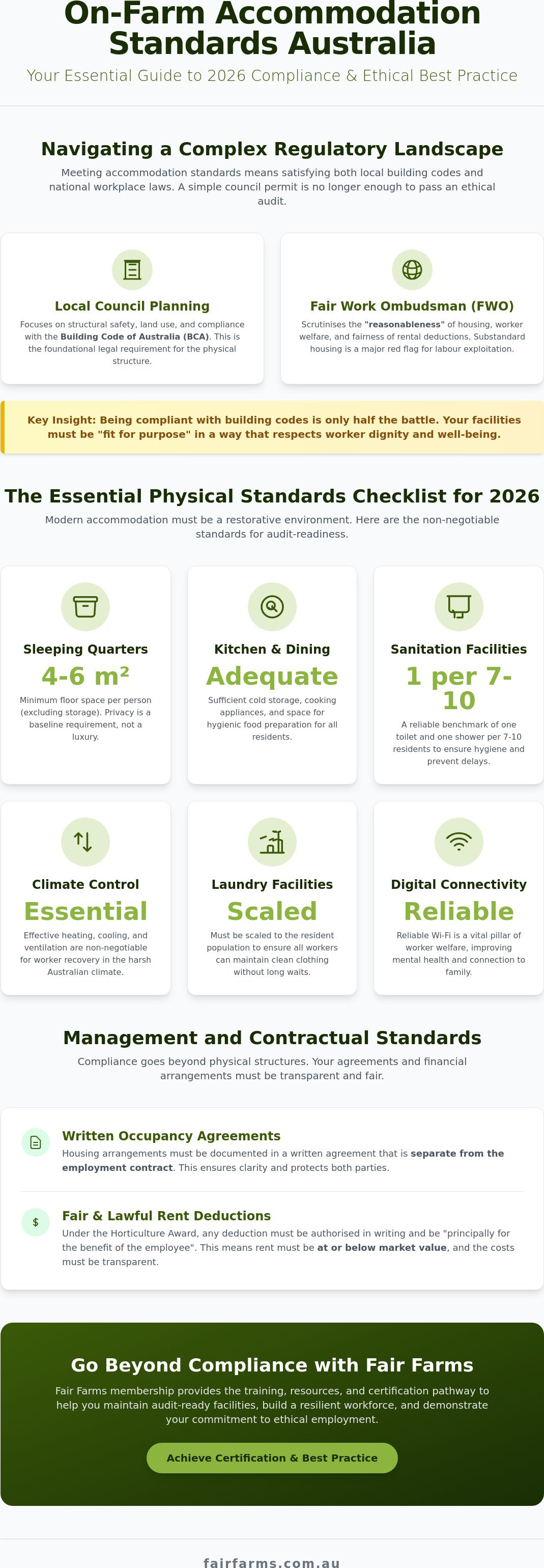
Meeting the 2026 on-farm accommodation standards Australia demands a move beyond the "bare minimum" mindset. Modern housing must function as a restorative environment that supports the physical and mental health of your workforce. Sleeping quarters must provide more than just a mattress. Current expectations dictate a minimum floor space per person to ensure comfort and movement, typically around 4 to 6 square metres excluding personal storage. Privacy is no longer a luxury; it is a baseline requirement for ethical housing.
Kitchen and dining areas must be equipped with sufficient cold storage and cooking appliances to prevent overcrowding during peak meal times. For growers looking to monitor facility usage and ensure communal spaces remain safe and compliant, you can visit Footfall Australia to explore automated occupancy monitoring solutions. Each worker needs adequate space to prepare and store food hygienically. Sanitation is equally critical. Maintaining a ratio of one toilet and one shower for every seven to ten residents is a reliable benchmark for hygiene. Laundry facilities must also be scaled to the population size to ensure workers can maintain clean clothing without long wait times.
Climate control is a non-negotiable factor in the harsh Australian landscape. Effective ventilation, heating, and cooling systems ensure workers can recover from physically demanding shifts. These infrastructure improvements are echoed in initiatives like the Victorian Government's New Accommodation Plan, which seeks to modernise housing to boost workforce stability. Digital connectivity has also emerged as a vital pillar of welfare. Reliable Wi-Fi allows seasonal workers to maintain essential links with their families overseas or interstate, which significantly improves mental health and retention rates.
Safety and Fire Compliance
Safety is a foundational responsibility. All communal areas and sleeping quarters must have functioning smoke alarms, with fire extinguishers and blankets serviced every six months. Egress paths must remain completely unobstructed at all times. Clear evacuation maps should be displayed in multiple languages to suit your diverse team. Additionally, all electrical equipment in communal zones should undergo regular testing and tagging to mitigate fire risks in high-use kitchen and laundry areas.
Privacy and Personal Dignity
Dignity is maintained through thoughtful design. This includes providing gender-segregated toilets and change areas to ensure all participants feel safe and respected. Secure, lockable storage for personal documents and belongings is essential for worker peace of mind. We are seeing a distinct industry shift away from open dormitories toward modular, private units that offer workers their own space. To help your business implement these changes, becoming part of the Fair Farms Membership community provides access to detailed physical site templates and peer support from other growers.
Comparing National Standards with Ethical Benchmarks
While meeting the legal on-farm accommodation standards Australia sets the foundation, there's a significant difference between basic compliance and industry best practice. The law provides a baseline to prevent exploitation, but ethical benchmarks aim higher. They focus on the long-term well-being of the worker. For many growers, sticking to the bare legal minimum is no longer enough to secure a spot in the modern supply chain. Major retailers now view worker housing as a direct reflection of a farm's corporate responsibility.
Investing in quality housing isn't just about ticking a box for an auditor. It's a strategic move for business stability. High-quality facilities act as a powerful tool for worker retention. When seasonal workers feel respected and comfortable, they're more likely to return season after season. This reduces your recruitment costs and ensures you have an experienced team ready to go. The initial cost of facility upgrades is often offset by the decrease in staff turnover and the increase in overall productivity.
The Retailer Perspective
Australian supermarkets have implemented strict social compliance requirements that go beyond building codes. They're acutely aware of the reputational risk associated with poor worker treatment. It's now standard practice for supply chain audits to include detailed inspections and even photographs of on-farm housing. A single negative headline about substandard living conditions can lead to immediate contract reviews. By exceeding the standard requirements, you protect your market access and build a resilient brand that retailers trust.
Benchmarking Your Facilities
Moving from basic compliance to industry leadership starts with an honest self-assessment. You need to identify where your current facilities might fall short of ethical expectations. This is where a structured approach becomes invaluable. By following the Fair Farms certification pathway, you can verify your standards against a framework designed specifically for the Australian horticulture sector. This process helps you transition from simply following rules to demonstrating true leadership in ethical employment, ensuring your business remains competitive and respected.
Management and Contractual Standards for Housing
While the physical state of your facilities is the first thing an auditor sees, the underlying management systems are what determine the longevity of your compliance status. Effective management of on-farm accommodation standards Australia requires a clear separation between the worker's role as an employee and their role as a resident. This distinction is vital for maintaining transparency and ensuring that housing arrangements remain legally sound. Documentation is your shield; it protects your business from claims of exploitation and ensures that every participant understands their rights and responsibilities from day one.
A core principle of modern ethical standards is the "No Compulsion" rule. Workers must remain free to choose their own housing without fear of losing their job. If they decide to live on-farm, the arrangement must be entirely voluntary. Transparency in pricing is equally critical. You must itemise rent, utilities, and any transport costs clearly. Bundling these into a single, vague figure is a major red flag during audits. By providing a breakdown of costs, you demonstrate that the housing is offered fairly and is not being used to artificially deflate wages.
Drafting an Occupancy Agreement
Every resident should sign a written occupancy agreement that is separate from their employment contract. This document must outline essential terms such as notice periods, bond arrangements, and what is included in the rent. To ensure genuine understanding, provide these agreements in the worker's native language whenever possible. House rules are permitted to ensure safety and harmony, but they must be reasonable. For example, rules regarding noise or cleanliness are standard; however, restrictions that prevent workers from leaving the premises or receiving visitors may be seen as unlawful restrictions on personal freedom.
Record Keeping for Audits
Your ability to pass an audit depends on the quality of your records. You must document every deduction from a worker's pay with their explicit, signed consent. Maintain a comprehensive log of all maintenance requests and the steps taken to resolve them. This shows a proactive commitment to facility standards. We also recommend building a "compliance portfolio" that includes dated photographs of your facilities. This visual evidence provides a clear history of your investment in worker welfare. If you need assistance with documenting these processes correctly, our HR Support for Growers offers practical templates and guidance to help you stay ahead of regulatory changes.
How Fair Farms Supports Growers with Accommodation Compliance
Meeting the evolving on-farm accommodation standards Australia requires more than just capital investment; it demands a shift in management culture and a commitment to communal progress. Fair Farms operates as a principled mentor for growers navigating these changes. We provide the tools and framework necessary to ensure your housing isn't just a place to sleep, but a verified asset to your business reputation. By moving away from a "compliance for compliance's sake" mindset, you can build a stable, loyal workforce that feels valued and respected.
Our HR Support for Growers provides clear, instructional guidance on interpreting the complexities of the Horticulture Award. This support is vital when you're organising housing deductions or drafting occupancy agreements that need to stand up to scrutiny. Additionally, Fair Farms Online Training modules are designed to educate farm managers on the practicalities of ethical housing. These resources help your team understand the "why" behind the rules, fostering a workplace culture rooted in integrity and accountability. The Fair Farms Certification process then acts as a steady, methodical verification of your efforts, providing a clear signal to the industry that your facilities meet high ethical benchmarks.
Collaboration is one of the most effective ways to stay ahead of regulatory shifts. Joining our network of Fair Farms members allows you to connect with a community of regional stakeholders who share a commitment to equitable labour standards. This network provides a platform for sharing best practices and practical solutions to common housing challenges. It's a supportive environment where growers can learn from one another's experiences, ensuring the entire sector moves forward together.
The Certification Advantage
Achieving Fair Farms Certification is about more than just passing an audit. It's a strategic business advantage that demonstrates your due diligence to regulators and supply chain partners. In a market where major retailers are increasingly focused on social compliance, being an "Ethical Employer of Choice" gives you a distinct edge. It proves that you've taken proactive steps to manage on-farm accommodation standards Australia, mitigating the risk of reputational damage and securing your market access for the long term.
Next Steps for Growers
The journey toward full compliance starts with a honest look at your current facilities. We recommend conducting an internal walk-through audit using the 2026 checklist to identify any immediate gaps in safety, privacy, or sanitation. Once you've identified areas for improvement, our team is here to help you refine your processes and prepare for the certification journey. Ready to verify your standards? Contact Fair Farms today to start your journey toward becoming a certified ethical employer.
Securing Your Farm's Future Through Ethical Housing
Navigating the shift toward more rigorous on-farm accommodation standards Australia requires a methodical approach to both infrastructure and management. Meeting basic building codes is simply the starting point for modern growers. True compliance involves creating a restorative environment that respects worker dignity and ensures total transparency in contractual arrangements. By aligning your facilities with these 2026 benchmarks, you don't just avoid penalties; you build a resilient business that is ready to meet the high expectations of major Australian retailers.
Fair Farms is proud to be an industry-led initiative by Queensland Fruit & Vegetable Growers (QFVG). Supported by Federal funding, we're dedicated to helping you implement national ethical standards that are recognised across the supply chain. You don't have to navigate these regulatory waters alone. Our team is here to act as a steady partner in your journey toward professional excellence and communal progress.
Become a Fair Farms Member to access our full Compliance Library and ensure your housing is audit-ready for the seasons ahead. We look forward to supporting your commitment to a fair and sustainable future for the Australian horticulture industry.
Frequently Asked Questions
Can I deduct rent directly from a seasonal worker's wages?
Yes, you can deduct rent directly from wages, provided you have the worker's written authorisation. Under the Horticulture Award, these deductions must be principally for the worker's benefit. This means the rent should reflect fair market value and the housing must be maintained to a decent standard. It's essential to itemise these costs on the payslip to maintain transparency and ensure you meet the on-farm accommodation standards Australia requires.
What is the minimum number of toilets required for on-farm housing?
A standard benchmark is one toilet for every seven to ten residents. This ratio ensures hygiene and reduces wait times during peak periods. You should also provide a similar ratio for showers and hand-washing basins. Maintaining these facilities is a core part of your daily management routine. Proper sanitation is a key indicator of a well-managed farm and a primary focus during social compliance audits.
Do I need a separate contract for accommodation and employment?
Yes, keeping your occupancy agreement separate from the employment contract is a legal and ethical necessity. This separation ensures that housing is not used as a tool for compulsion. The agreement should clearly state the terms of residency, including notice periods and bond rules. Providing these documents in the worker's primary language is a recommended step toward achieving Fair Farms Certification.
Are caravans considered 'standard' accommodation for seasonal workers?
Caravans are generally viewed as temporary or supplemental housing rather than a long-term solution for seasonal workers. While they may be used in some contexts, they often struggle to meet the rigorous on-farm accommodation standards Australia sets for space, privacy, and climate control. If you use caravans, they must still meet all local council safety requirements and provide residents with full access to communal kitchen and laundry facilities.
What happens if a worker refuses to live in the provided housing?
Workers are free to choose their own housing under the "No Compulsion" rule. You cannot make employment conditional on living in on-farm accommodation. If a worker chooses to live elsewhere, you should respect that decision without any impact on their job security or treatment. This freedom of choice is a fundamental pillar of ethical labour standards and a key requirement for maintaining your reputation as a fair employer.
How does on-farm accommodation affect my FBT obligations?
Providing housing can trigger Fringe Benefits Tax (FBT) obligations, depending on your specific circumstances and location. Because tax laws are complex and vary based on your business structure, we recommend consulting with a qualified tax professional. They can advise you on how housing benefits are treated by the ATO and whether any exemptions or concessions apply to your rural operations.
Does Fair Farms provide the actual audit of the buildings?
Fair Farms does not conduct the physical site audits of your buildings. We provide the certification framework, online training, and the standards you must meet. The actual site inspection is performed by an independent, third-party auditor. Our role is to act as a supportive mentor, providing the HR support and tools you need to ensure your facilities are ready for that inspection.
What are the fire safety requirements for seasonal worker bunkhouses?
Bunkhouses must have functioning smoke alarms in every sleeping area and communal zone. You are also required to provide fire extinguishers and fire blankets that are professionally serviced every six months. Clear, multilingual evacuation plans must be displayed prominently. Ensuring that all exit paths remain completely unobstructed at all times is a critical safety requirement that auditors will check during their visit.