
How to Build a Robust Farm Workplace Health and Safety Plan for 2026
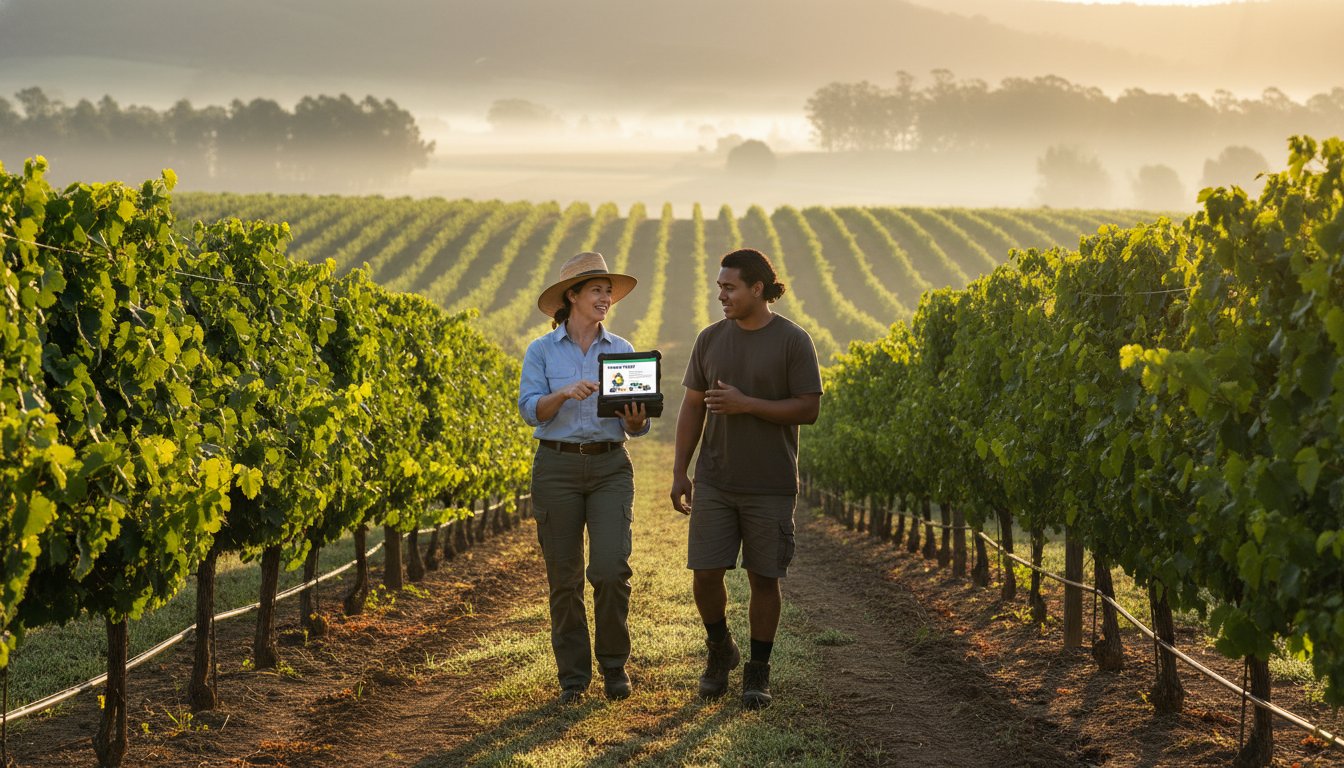
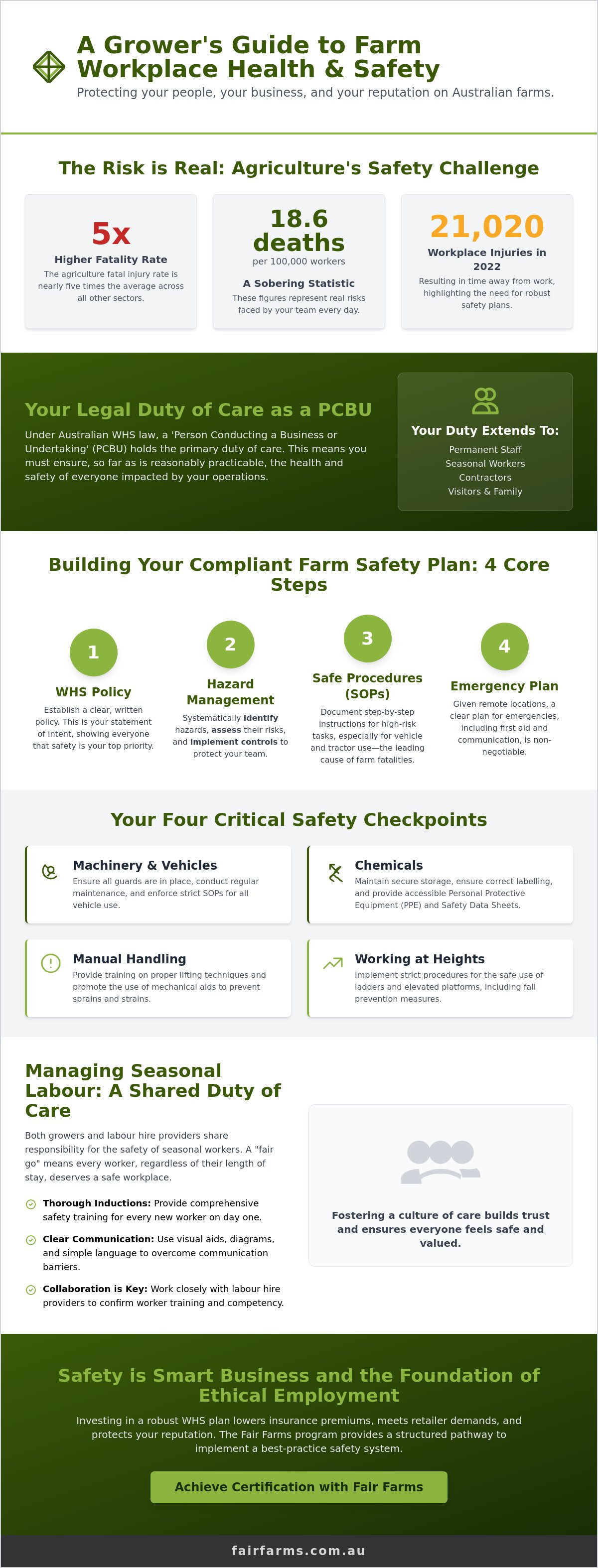
Did you know that the agriculture industry recently recorded a fatal injury rate of 18.6 deaths per 100,000 full-time workers, which is nearly five times the average across all other sectors? For Australian growers, these figures aren't just statistics; they represent the real risks faced by your team every day. You likely find it challenging to keep up with shifting legislation while managing a transient, seasonal workforce. It's natural to feel a sense of unease regarding potential accidents or the heavy fines that follow a failed audit.
This article provides a comprehensive guide to developing a compliant farm workplace health and safety plan that protects your people and your reputation. You'll learn how to implement a robust safety framework that fosters a culture of care and secures a "fair go" for every worker on your property. We will walk through the essential 2026 updates, including the new federal Heat Illness Prevention standards and the move toward faster electronic incident reporting, to ensure your business remains a leader in ethical horticulture.
Key Takeaways
- Understand your legal obligations as a Person Conducting a Business or Undertaking (PCBU) to ensure every individual on your property remains protected.
- Learn the essential steps to develop a robust farm workplace health and safety plan that prioritises systematic hazard identification and clear management policies.
- Navigate the "shared duty" of care between growers and labour hire providers to ensure seasonal workers receive thorough safety inductions, regardless of their length of stay.
- Discover how to foster a safer culture by genuinely involving your team in safety decisions and maintaining the rigorous records needed for successful compliance audits.
- See how a commitment to workplace safety forms the foundation of ethical employment and helps your business achieve recognised certification through the Fair Farms program.
What is a Farm Workplace Health and Safety Plan?
A farm workplace health and safety plan is more than just a stack of papers tucked away in a filing cabinet. It's a dynamic, documented system designed to identify hazards, assess risks, and implement controls that protect everyone on your property. In the Australian context, the law revolves around the Person Conducting a Business or Undertaking (PCBU). Whether you're a sole trader or a large corporate grower, you hold the primary duty of care. This means you must ensure, so far as is reasonably practicable, that the health and safety of workers and others are not put at risk by your operations.
Horticulture presents unique challenges compared to broadacre cropping or livestock. The high intensity of manual tasks, frequent use of seasonal labour, and specific chemical applications require a tailored approach. Agricultural safety and health standards must reflect these nuances to be effective. At its heart, a robust plan embodies the Australian "fair go." Safety isn't a perk; it's a fundamental right for every worker, from your permanent farm manager to the backpacker picking fruit for a fortnight.
Legal Obligations for Australian Growers
The Work Health and Safety (WHS) Act provides a national framework, though it's administered by state-based regulators like SafeWork NSW or WorkSafe Victoria. Ignorance isn't a defence when an inspector arrives. If an incident occurs, you'll need to prove you took active steps to prevent it. This duty extends beyond your payroll. You're responsible for the safety of contractors, visitors, and family members who live or work on the land. In 2022, the agriculture sector saw 21,020 injuries that resulted in days away from work, highlighting why strict adherence to the Act is vital.
The Business Case for Safety Compliance
Investing in a farm workplace health and safety plan makes strong financial sense. A safe farm experiences fewer disruptions and lower insurance premiums; many providers offer incentives for proven risk management. Beyond the back pocket, major retailers increasingly demand high safety standards as a condition of supply. Demonstrating compliance through Fair Farms Certification can secure your place in the supply chain. The cost-benefit ratio is clear: the expense of implementing a safety framework is a fraction of the millions potentially lost to workplace injury litigation and long-term reputational damage.
Core Components of a Compliant Agricultural Safety Strategy
Setting the foundation for a robust farm workplace health and safety plan begins with a clear WHS Policy. This document is not merely a formality; it serves as a statement of intent from farm management. It signals to every worker that their wellbeing is the primary focus. By clearly outlining responsibilities, you create a culture where safety is everyone's business, rather than a secondary thought. This top-down commitment is essential for building trust with a seasonal workforce.
Hazard identification must be the next step in your strategy. You need to systematically spot risks before they lead to an incident. This involves walking the paddocks, inspecting the packing shed, and reviewing any previous near-misses. Once you identify a hazard, a risk assessment determines the likelihood and potential severity of an injury. High-risk tasks require Standard Operating Procedures (SOPs). These are step-by-step instructions that ensure tasks are performed the same safe way every time. Given that transportation incidents are the leading cause of death in Australian agriculture, having strict SOPs for vehicle and tractor use is a non-negotiable requirement for 2026.
Developing Your Farm Safety Checklist
A practical checklist is your most effective daily tool. It should cover four critical areas: machinery guards and maintenance, chemical storage and PPE, manual handling techniques, and working at heights. To make these checklists accessible to workers from diverse backgrounds, use photos and diagrams. Visual aids bridge language gaps and ensure instructions are unmistakable. Regular tool-box talks provide an opportunity to update these lists based on real-world feedback from the field. For growers looking to refine these processes, Fair Farms Certification provides a structured pathway to ensure your documentation meets industry standards.
Emergency Planning and First Aid
Remote farm locations demand meticulous emergency planning. Your plan must include clear maps showing exit points, muster areas, and the location of fire extinguishers. Communication protocols are vital; ensure every worker knows how to call for help in areas with poor mobile reception. First aid kits must be fully stocked and tailored to specific agricultural risks, such as snake bites or chemical exposure. You must also ensure that trained first aid officers are on-site during every shift. Having the right equipment is only half the battle; your team must have the confidence to use it during the critical minutes following an accident.
Managing Seasonal Labour and Labour Hire Risks
Managing safety becomes significantly more complex when your workforce fluctuates with the seasons. In the Australian horticulture sector, the relationship between a grower and a labour hire provider is defined by a "shared duty" of care. You cannot simply contract out your safety obligations. Both parties are considered a Person Conducting a Business or Undertaking (PCBU), meaning you must consult, cooperate, and coordinate activities to ensure worker protection. If a labour hire worker is injured on your property, the regulator will examine how well both entities communicated regarding the farm workplace health and safety plan.
Language barriers present a significant hurdle during peak harvest periods. When a large percentage of your team speaks English as a second language, providing safety information in multiple languages is an ethical and legal necessity. Visual aids, translated Standard Operating Procedures, and bilingual supervisors help ensure that every worker understands the risks. This is particularly vital in 2026 as OSHA and Australian regulators move toward more transparent, documented evidence of worker competency. Without clear comprehension, your safety protocols are merely words on a page that offer no real protection.
Fatigue management is another critical factor during high-pressure windows. With 2026 crop prices for wheat reaching approximately $6.19 per bushel, the temptation to push for longer hours is high. However, fatigue remains a leading contributor to farm accidents. Your plan must include mandatory break schedules and maximum shift lengths to prevent exhaustion-related errors. A culture that prioritises worker wellbeing over short-term speed ultimately leads to better retention and fewer costly disruptions.
Coordinating with Labour Hire Providers
Success depends on a clear, written agreement that specifies who manages which safety tasks. Don't assume the agency has handled the heavy lifting; you should actively audit your provider's safety and HR standards. Aligning these expectations is easier when you partner with organisations that value transparency. For instance, encouraging your partners to take up a Labour Hire Membership ensures they are working toward the same ethical and safety benchmarks as your own business.
Effective Safety Inductions for Seasonal Staff
A 30-minute induction is the bare minimum for any new starter. This session must cover your emergency muster points, PPE requirements, and specific machinery hazards. Most importantly, you must empower every worker with "Stop Work" authority. This gives them the confidence to halt any task they feel is genuinely unsafe without fear of reprisal. Verbal instructions alone are never a valid defence during a legal inquiry; you must maintain signed, written records of every induction to remain compliant.
How to Implement and Review Your Safety Procedures
Implementation is the stage where your farm workplace health and safety plan shifts from a theoretical document to a lived reality. It requires more than just distributing a handbook; it demands active engagement from every person on the property. Consultation sits at the heart of this process. When you genuinely involve your team in safety decisions, you tap into their first-hand knowledge of daily hazards. This collaborative approach doesn't just satisfy legal requirements; it builds a culture of mutual respect and shared responsibility.
Effective record keeping is your primary defence during a SafeWork inspection or a compliance audit. You must maintain detailed logs of training, equipment maintenance, and hazardous substance use. Training registers are particularly vital. They allow you to track at a glance who is qualified to operate specific plant or equipment, such as telehandlers or sprayers. In 2026, with the move toward more rigorous electronic recordkeeping across the industry, having this data readily accessible is essential for avoiding administrative penalties.
Encouraging a "no-blame" culture for incident reporting is equally important. When workers feel safe reporting near-misses without fear of reprisal, you gain the opportunity to fix a problem before it results in a serious injury. These reports are early warning signs that your current controls might be failing. By prioritising transparency, you ensure that safety remains a proactive habit rather than a reactive chore.
The Consultation Process on Farm
Practical consultation doesn't always need to be a formal boardroom meeting. For many Australian growers, a dedicated WhatsApp group or a centrally located notice board provides a quick way to share daily safety updates or weather warnings. These informal channels should be supplemented by Health and Safety Representatives (HSRs). An HSR acts as a bridge between the workforce and management, ensuring safety concerns are voiced and addressed. To prove compliance, ensure you keep minutes of these discussions or log the outcomes of your daily tool-box talks.
Annual Reviews and Continuous Improvement
Your safety procedures shouldn't remain static. You must set a schedule to review your entire farm workplace health and safety plan at least annually, or immediately following any significant workplace incident. Use your performance data to identify recurring trends. If you notice a spike in manual handling strains during a specific harvest, it's time to reassess your SOPs. This cycle of review and refinement is a core component of the Fair Farms certification pathway. By consistently measuring your progress against industry benchmarks, you demonstrate a long-term commitment to fostering fair and responsible employment practices.
Ready to formalise your commitment to a safer workplace? You can contact our team today to learn how our certification supports your safety journey and protects your business's future.
Fostering a Culture of Ethical Employment with Fair Farms
Physical safety is the non-negotiable starting point for any ethical business. A farm workplace health and safety plan ensures you are meeting your primary duty of care, but it also signals to your workers that you value their lives as much as your harvest. Fair Farms was established to help Australian growers navigate these complex social and legal responsibilities. By integrating safety into a broader framework of ethical employment, you move beyond mere compliance toward true industry leadership. This holistic approach ensures that every person on your property, regardless of their role or background, receives the "fair go" that defines our national character.
Managing the overlap between safety protocols and employment law is a significant task for any farm manager. Our HR Support for Growers provides the tools needed to manage this intersection effectively. Whether it's ensuring your employment contracts clearly reflect safety duties or managing the performance of staff regarding WHS breaches, having professional guidance ensures you remain on the right side of the law. In 2026, as regulations around heat illness and electronic recordkeeping become more stringent, this support is vital for maintaining a compliant and productive workplace.
The benefits of being a Fair Farms certified grower extend into the modern marketplace. Major retailers and consumers are increasingly looking for social compliance markers before they make a purchase. They want to know that the produce they buy is grown under fair conditions. Your farm workplace health and safety plan serves as the foundation of this proof. It demonstrates that you aren't just ticking boxes, but are actively fostering a culture where worker wellbeing is a core business value.
Beyond the Checklist: Building Trust
A safe workplace is a productive one. When workers feel secure, morale improves and staff turnover drops. In a sector where seasonal labour is highly competitive, being known as a safe, fair employer is a powerful recruitment tool. Certification also helps you stand out to ethical-minded retailers who are looking for reliable partners in their supply chain. It's an investment in your reputation that pays dividends through improved worker loyalty and market access. Join the movement for a fairer industry and show your team that their safety is your priority.
Next Steps for Your Farm Safety Journey
Start your journey by conducting a honest self-assessment of your current safety plan. Look at your 2026 protocols for heat stress and incident reporting to see where you might be falling short of the new standards. If you identify gaps, seeking professional support is a proactive step toward protecting your business and your people. We invite you to contact the Fair Farms team for guidance on how to begin your certification journey and build a more resilient, ethical farm for the future.
Securing Your Farm's Future Through Safety
Building a robust farm workplace health and safety plan is the most effective way to protect your team and your business reputation as we move into 2026. We've explored how coordinating shared duties with labour hire providers and maintaining rigorous training registers creates a safer environment for everyone. These practices ensure your operations meet the high standards expected by modern retailers and regulators while fostering a genuine culture of care on the land.
Fair Farms is an industry-led program developed by Queensland Fruit & Vegetable Growers (QFVG). It's supported by federal funding to ensure national standards are accessible to all horticulture businesses. Hundreds of Australian growers already trust this framework to demonstrate their commitment to ethical practices and social compliance. By formalising your safety and HR procedures, you're not just ticking a box; you're joining a movement that values a "fair go" for every worker.
Join Fair Farms today to access expert HR support and start your certification journey. Taking these proactive steps today builds a more resilient and respected industry for tomorrow. We look forward to supporting your progress.
Frequently Asked Questions
Is a written farm workplace health and safety plan legally required in Australia?
Yes, you must have documented evidence of your safety systems to meet your primary duty of care under the WHS Act. While the legislation focuses on outcomes, a farm workplace health and safety plan serves as the essential proof that you've identified hazards and implemented controls. Without this written documentation, it's nearly impossible to demonstrate compliance during a SafeWork inspection or a social compliance audit.
Does my labour hire agency take full responsibility for worker safety?
No, you share a legal "duty of care" with the labour hire provider as both entities are considered PCBUs. You must consult and coordinate with the agency to ensure workers remain protected while on your property. You're specifically responsible for site-specific inductions and daily supervision, while the agency manages broader safety training. Relying solely on the agency is a significant legal risk for your business.
What are the most common safety hazards in the horticulture industry?
The most frequent hazards include vehicle rollovers, chemical exposure, and manual handling strains. In 2026, heat-related illness is a primary focus due to new standards requiring formal prevention programs for high-risk outdoor work. Additionally, working with moving machinery parts and falls from heights remain high-risk activities. Identifying these threats allows you to create targeted Standard Operating Procedures that protect your team during intense harvest periods.
How often should I update my farm safety plan?
You should review and update your safety procedures at least once every 12 months or immediately following any workplace incident. Significant changes to your operations, such as purchasing new machinery or shifting to a different crop variety, also trigger a mandatory review. Constant refinement ensures your farm workplace health and safety plan remains relevant to current risks rather than becoming an obsolete document that fails to protect your workers.
Can I use a generic safety plan template for my orchard or vegetable farm?
Generic templates can be a helpful starting point, but they rarely cover the specific hazards of your unique property. An orchard has different risks compared to a vegetable farm, such as ladder safety versus packing shed conveyor belts. You must customise any template to include your site-specific maps, emergency muster points, and particular machinery. A tailored plan is far more effective during a regulator's visit than a generic folder.
What happens if a SafeWork inspector visits and I do not have a plan?
If an inspector finds you lack a safety system, they can issue improvement notices, hefty fines, or prohibition notices that stop your work immediately. In the most severe cases, failing to manage known risks can lead to industrial manslaughter charges if a fatality occurs. Having no plan suggests a lack of commitment to your legal duties, which significantly increases your liability and damages your reputation with major retailers.
How do I manage safety for workers who do not speak English as their first language?
You must provide safety information in a format the worker understands, which often involves using translated documents and clear visual signs. Using diagrams and photos in your inductions helps bridge the gap for those who speak English as a second language. Appointing bilingual safety champions or using translation apps for daily tool-box talks ensures that critical instructions aren't lost in translation, maintaining a "fair go" for every team member.
Is mental health and well-being part of a farm WHS plan?
Yes, managing psychosocial risks is now a legal requirement under Australian WHS laws. Your plan should address factors like excessive work pressure, bullying, and fatigue, particularly during high-stress harvest windows. Promoting a culture of mental well-being is part of being an ethical and responsible employer. It helps reduce staff turnover and ensures your farm remains a supportive environment where workers feel safe both physically and mentally.