
Farm Labour Compliance Checklist: The 2026 Guide for Australian Growers
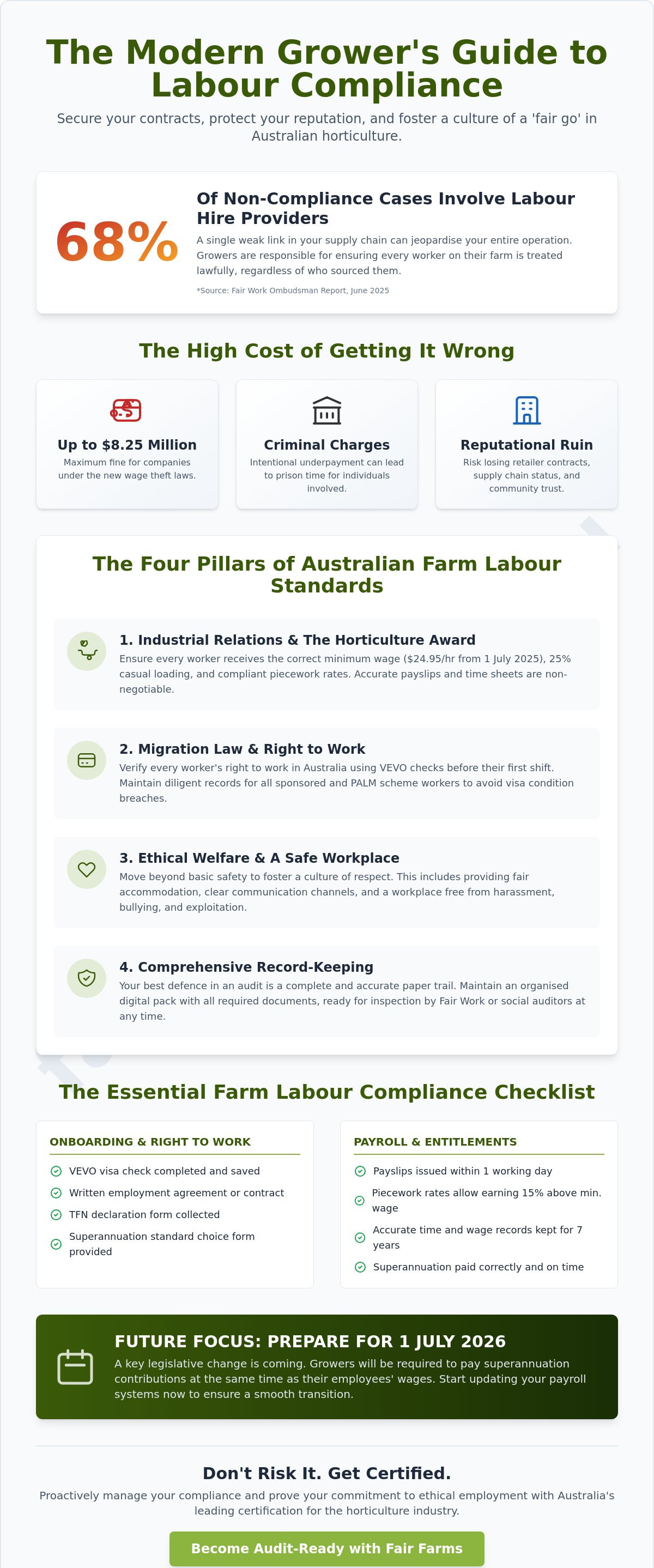
Did you know that labour hire providers were responsible for 68% of non-compliance cases in the horticulture sector according to the Fair Work Ombudsman’s June 2025 report? For Australian growers, this statistic highlights a precarious reality. Even if your own house is in order, a single oversight in your supply chain can jeopardise your reputation and your contracts with major retailers. Staying ahead of the Horticulture Award and the latest wage theft laws, which now carry penalties up to $8.25 million for companies, requires more than just good intentions. It demands a robust farm labour compliance checklist that transforms your operations from a "safety-first" mindset into a culture of holistic ethical employment.
We know that managing seasonal staff and PALM scheme documentation often feels like a moving target. This is especially true with the 1 July 2026 requirement to pay superannuation at the same time as wages. You shouldn't have to guess if you're meeting your obligations or risk losing your "preferred supplier" status. This guide provides a clear roadmap to mastering current labour laws and ethical standards. You'll gain a clear list of required documents to ensure you're always audit-ready while fostering a workplace that truly embodies the Australian spirit of a fair go.
Key Takeaways
- Safeguard your retail contracts by transitioning from a basic safety focus to a comprehensive ethical employment culture.
- Navigate the complexities of the Horticulture Award and piecework rates to ensure your payroll data remains accurate and transparent.
- Streamline your record-keeping with our farm labour compliance checklist, covering everything from VEVO visa checks to TFN declarations.
- Prepare for the July 2026 superannuation reforms and learn how to organise an audit-ready digital pack for Fair Work inspections.
- Leverage grower-led certification pathways and dedicated HR support to foster responsible employment practices across your entire operation.
Beyond Safety: Why Labour Compliance is Critical in 2026
Since 2019, the goalposts for horticulture have moved significantly. While physical safety was once the primary focus for most growers, 2026 demands a holistic approach to ethical employment. This evolution reflects a broader shift in Agriculture in Australia, where social responsibility is now as vital to business success as crop yield. A "she'll be right" attitude no longer cuts it when dealing with complex industrial relations. Today, a modern "fair go" means ensuring every worker is paid correctly, treated with dignity, and protected by transparent systems. This is why a comprehensive farm labour compliance checklist has become an essential tool for every farm office.
Fostering fair and responsible employment practices isn't just about being a good boss; it's about risk management. The regulatory environment is tighter than ever, and the gap between "doing your best" and meeting the legal standard is where many businesses stumble. By moving beyond basic safety and embracing ethical standards, you protect your workers and your bottom line simultaneously.
The Cost of Non-Compliance
Ignoring the finer details of the Fair Work Act is a gamble with incredibly high stakes. New wage theft laws that commenced on 1 January 2025 have turned intentional underpayment into a criminal offence. Companies now face fines of up to $8.25 million, while individuals involved can face prison time. Beyond these heavy financial hits, record-keeping failures can trigger a domino effect that ruins your reputation. You risk losing your Supply Chain Membership status and becoming a pariah in the local community. When labour disputes arise, they don't just stay in the office; they disrupt harvest productivity at the most critical times of the year, potentially costing you an entire season's profit.
Retailer Expectations and Social Audits
Major Australian retailers have raised the bar for their suppliers. They don't just want to buy your produce; they want to know it was grown without exploitation. These supermarkets now use rigorous social audits to vet growers, looking for evidence of a genuine ethical culture rather than a "tick-box" approach to compliance. Moving toward a sustainable business model means being prepared for these inspections at any moment. By using a farm labour compliance checklist, you demonstrate to buyers that your farm is a reliable, low-risk partner. Achieving Fair Farms Certification provides the authoritative third-party verification needed to maintain market access and secure your farm's future in an increasingly transparent industry.
The Four Pillars of Australian Farm Labour Standards
True compliance on a modern Australian farm rests on a four-pillar foundation. If one leg of this stool is weak, the entire business structure is at risk during an audit. While many growers traditionally focused on physical safety, a robust farm labour compliance checklist must now address industrial relations, migration law, and ethical welfare with equal weight. This holistic approach ensures you aren't just protecting workers from physical harm, but also safeguarding their rights to fair pay and a workplace free from exploitation. Understanding these pillars is the first step toward moving your farm from a "standard" operation to an industry-leading ethical enterprise.
The regulatory environment is complex, but it doesn't have to be overwhelming. By breaking down your obligations into these core areas, you can systematically address gaps in your current processes. Whether you're managing a small family plot or a large-scale commercial orchard, these standards apply to every worker on your soil, regardless of their visa status or how they were recruited.
Industrial Relations and the Horticulture Award
Staying on top of the Horticulture Award is often the biggest challenge for growers. As of 1 July 2025, the national minimum wage sits at $24.95 per hour, and casual employees are entitled to an additional 25% loading. If you utilise piecework, the rate must be set so a competent worker can earn at least 15% more than the minimum hourly rate. Accuracy is non-negotiable. You must provide clear payslips and maintain precise time-sheets for every shift. For deeper guidance on these requirements, the Fair Work Ombudsman's Horticulture Showcase offers essential tools for classifying workers correctly and calculating entitlements. If you're feeling unsure about your current payroll setup, exploring Fair Farms Certification can help you align your systems with these national standards.
Labour Hire Provider Due Diligence
Using a labour hire provider (LHP) doesn't absolve you of responsibility. Under "host employer" liability, you can be held legally accountable if your LHP underpays workers or breaches safety laws. Before any contractor steps on-site, you must verify they hold a valid labour hire licence in your state. Ask tough questions about their recruitment processes and how they manage PALM scheme or backpacker documentation. A reliable farm labour compliance checklist should include a section for LHP vetting, ensuring they meet the same ethical standards you set for your own direct hires. This due diligence protects you from the 68% of non-compliance cases often attributed to third-party providers in the horticulture sector.
Finally, remember that migration and ethical pillars are equally vital. You're responsible for ensuring every worker has the right to work in Australia via regular VEVO checks. Simultaneously, you must look for "red flags" of modern slavery, such as restricted movement or withheld passports. While the $100 million reporting threshold for the Modern Slavery Act remains in place for 2026, the ethical expectation from retailers is that every grower, regardless of size, actively prevents forced labour within their supply chain.
The Comprehensive Farm Labour Compliance Checklist
A physical audit is won or lost in the farm office long before an inspector arrives at the gate. While safety signs and hi-vis vests are visible indicators of compliance, the true strength of your business lies in your documentation. A robust farm labour compliance checklist serves as your internal shield, ensuring that every worker’s journey from induction to final payment is recorded with precision. This methodical approach is a core component of the Fair Farms certification program, which helps growers move beyond basic legal requirements toward a culture of ethical excellence.
Your records must tell a clear story of fairness. If an auditor asks for proof of a specific worker's entitlements from three years ago, your systems should produce that data within minutes. This isn't just about avoiding fines; it's about proving your commitment to the "fair go" that defines the Australian agricultural spirit.
Essential Documentation for Every Worker
Every person on your property must have a digital or physical "personnel file" that begins on day one. This file acts as the primary evidence for your farm labour compliance checklist. You must ensure the following documents are signed and stored securely:
- Written Agreements: Every casual or part-time employee needs a signed contract. For pieceworkers, this must include the agreed rate and how it relates to the 15% productivity uplift required by the Horticulture Award.
- Right to Work: You must conduct VEVO checks for all non-citizens. Don't rely on a copy of a passport alone; visas can expire or have work hour restrictions that you are legally bound to monitor.
- Induction Records: Signed forms confirming the worker has received a WHS briefing, understands the farm’s code of conduct, and has been given the Fair Work Information Statement.
- TFN and Super: Completed Tax File Number declarations and superannuation choice forms. Remember, from 1 July 2026, you'll need to pay super at the same time as salary and wages.
Payroll and Time-Keeping Requirements
The Fair Work Ombudsman requires employers to keep time and wages records for 7 years. In 2026, manual "guestimates" of hours are a significant liability. Your payroll system must capture daily start and finish times, including the exact timing of unpaid meal breaks. This is particularly vital for pieceworkers, as you must demonstrate that their earnings never fall below the "minimum wage floor" of $24.95 per hour (plus the 25% casual loading where applicable) for the hours they worked.
Beyond the numbers, your site facilities must meet basic human rights standards. This means providing accessible, clean drinking water and hygienic toilet facilities within a reasonable distance of the work area. If you provide worker accommodation, it must be safe, uncrowded, and priced fairly. These site standards are often the first thing a social auditor will check, as they provide immediate insight into the welfare culture of your farm. If you're ready to start organising your records for a formal review, you can begin the Fair Farms certification pathway to ensure no detail is overlooked.
From Checklist to Audit: Preparing Your Farm for Certification
Moving from an internal farm labour compliance checklist to a formal third-party audit is a significant milestone. It marks the transition from self-regulation to industry-recognised excellence. Preparing for this process doesn't have to be stressful if you've maintained a steady, methodical approach to your record-keeping throughout the season. The goal is to build an "Audit Pack" that provides a transparent, chronological account of your employment practices. This pack should include everything from your initial Fair Farms training certificates to your most recent payroll reports and worker induction logs.
Confidence during an audit comes from knowing your systems are robust. It's not just about the paperwork in the office; it's about how your standards are lived out in the field. This is why briefing your supervisors is a vital step. They are often the primary point of contact for workers and auditors alike. Ensure they understand the protocols for auditor interviews and can clearly explain how your farm manages daily breaks, safety concerns, and grievance reporting. When your leadership team speaks the same language of fairness and responsibility, it demonstrates a genuine culture of compliance that goes beyond a simple "tick-box" exercise.
The Fair Farms Certification Pathway
The journey toward ethical certification is designed to be supportive rather than punitive. By following these four clear steps, you can ensure your business meets the gravity required for national recognition:
- Step 1: Register for Grower Membership to access the full suite of support tools and resources.
- Step 2: Complete the Fair Farms online training and the comprehensive self-assessment to identify any hidden risks in your current operations.
- Step 3: Book your third-party audit with an approved body. This independent review verifies that your farm labour compliance checklist has been implemented correctly.
- Step 4: Achieve certification. This allows you to showcase your ethical status to retailers and the wider Australian horticulture community.
Common Audit Gaps and How to Close Them
Even the most diligent growers can have blind spots. One frequent issue is inconsistent record-keeping within payroll software, particularly regarding the 1 July 2026 requirement to pay superannuation alongside wages. You should also verify that any worker accommodation you provide meets the National Employment Standards; overcrowding or poor maintenance are red flags for auditors. Finally, look at your internal communication. Do your workers know how to raise a concern without fear of retribution? Strengthening these grievance mechanisms proves that you're invested in communal progress and the long-term success of your workforce. If you're ready to take the next step in your compliance journey, you can contact our team for guidance on starting your certification pathway.
Fostering a Fair Go: How Fair Farms Supports Your Journey
Fostering a fair go isn't just a catchphrase; it's the standard that keeps the Australian horticulture industry moving forward. While a farm labour compliance checklist provides the necessary structure for your daily operations, true resilience comes from being part of a broader movement committed to ethical responsibility. Fair Farms operates as a principled mentor, guiding you through the complexities of industrial relations with quiet confidence. We understand that the path to social compliance can feel daunting, but you don't have to walk it alone. Our programme is built by growers, for growers, ensuring that the support we provide is practical, grounded, and tailored to the unique challenges of the Australian landscape.
By joining our community, you gain more than just a certificate. You gain access to a wealth of knowledge and a collective voice that advocates for the integrity of our sector. Whether you're dealing with a complicated HR query or preparing for a retailer audit, our team is here to provide the technical weight and steady guidance required to maintain your reputation as a trusted supplier. We believe that when growers are supported, the entire supply chain becomes stronger, more transparent, and more sustainable for future generations.
Why Membership Matters
Being a member means staying one step ahead of regulatory changes. You'll receive our 'Fair Talk' newsletter and regular compliance alerts, ensuring you're never caught off guard by new legislation or award updates. One of the most significant benefits is the access to Fair Farms Online Training for your staff. This resource empowers your team to understand their rights and responsibilities, fostering a workplace culture where everyone feels valued and respected. Additionally, membership connects you with a network of like-minded ethical growers and labour hire providers, allowing for communal progress and the sharing of best practices across the industry.
Join the Movement for Ethical Horticulture
In a market where consumers and retailers are increasingly focused on social responsibility, Fair Farms certification serves as a powerful differentiator. It tells the story of your produce; that it was grown under fair conditions by a workforce that is treated with dignity. This transparency doesn't just protect you from supply chain disruptions; it builds a more resilient business that attracts and retains quality workers. Implementing your farm labour compliance checklist is the foundation, but certification is the goal that secures your farm's long-term success. Contact Fair Farms today to start your compliance journey and demonstrate your commitment to a fair and responsible future for Australian agriculture.
Securing the Future of Your Farm through Ethical Leadership
The landscape of Australian horticulture is changing. By 1 July 2026, new superannuation rules and stricter wage theft laws will be the baseline for all operations. Using a farm labour compliance checklist is no longer just a recommendation; it's a vital part of your risk management strategy. This systematic approach ensures you meet the rigorous expectations of major retailers while protecting your business from the 68% non-compliance rate often seen in third-party labour hire.
As an industry-led initiative developed by QFVG, Fair Farms provides the practical HR support you need to navigate these complexities. Our certification is recognised by major Australian retailers, giving you a clear advantage in a competitive market. Moving beyond a "tick-box" mentality allows you to foster a workplace that truly reflects the Australian spirit of fairness and communal progress.
Take the next step toward a resilient and ethical business. Become a Fair Farms Member and Secure Your Supply Chain today. We’re here to support you in building a legacy of responsible employment that benefits your workers, your farm, and the entire industry.
Frequently Asked Questions
What is the most common mistake on a farm labour compliance checklist?
Failing to record daily start and finish times for pieceworkers is the most frequent error found on a farm labour compliance checklist. Even though these workers are paid by output, the Horticulture Award requires you to prove they earned at least the minimum wage floor for every hour worked. Without these timestamps, you can't demonstrate compliance with the 15% productivity uplift requirement during a Fair Work inspection.
Do I need a separate checklist for seasonal workers under the PALM scheme?
You don't need an entirely separate checklist, but you must include specific PALM scheme requirements within your existing framework. This includes records of minimum work hour guarantees, suitable accommodation standards, and health insurance evidence. Your primary checklist should act as a central hub, with PALM-specific addenda to handle the unique visa conditions and welfare obligations required by the Department of Employment and Workplace Relations.
How often should I update my farm compliance documentation?
You should review and update your farm compliance documentation at least once every 12 months or whenever industrial relations laws change. Significant updates often occur on 1 July each year, such as the 2025 increase of the national minimum wage to $24.95 per hour. Regular reviews ensure your payroll software and contracts reflect the latest superannuation guarantee requirements and modern award classifications before they become a liability.
Can Fair Farms represent me in a legal dispute with Fair Work?
Fair Farms doesn't provide direct legal representation for growers in disputes with the Fair Work Ombudsman or other regulatory bodies. Our role is to act as a principled mentor, providing the training and certification framework to prevent disputes from occurring in the first place. We offer HR support and educational resources to help you maintain ethical standards, but legal matters should be handled by qualified legal professionals.
What is the difference between a WHS audit and a social compliance audit?
A WHS audit focuses on physical hazards like tractor safety and chemical storage, whereas a social compliance audit examines your ethical employment practices. While WHS is about preventing injury, social compliance ensures you're meeting your obligations regarding wages, working hours, and worker welfare. Both are essential, but social audits are increasingly required by major retailers to verify that no exploitation exists within their supply chains.
Is Fair Farms certification mandatory for all Australian growers?
Fair Farms certification isn't a legal requirement under Australian law, but it's often a commercial necessity for supply chain access. Many major Australian retailers now require third-party ethical certification as a condition of their supply contracts. Achieving certification demonstrates your commitment to fostering fair and responsible employment practices, helping you maintain preferred supplier status in an increasingly transparent market.
How long does it take to become Fair Farms certified?
The time it takes to become certified depends on your current level of readiness and the availability of third-party auditors. Typically, growers spend several weeks completing the online training and conducting a self-assessment to close any identified gaps. Once you book an audit with an approved body, the final certification is granted after the auditor verifies that your systems meet the required national standards.
What records do I need to keep for labour hire workers?
You must keep records of the labour hire provider’s valid licence and evidence of your own due diligence as a host employer. This includes verifying that they are paying their workers according to the Horticulture Award and maintaining correct workers' compensation insurance. Under host employer liability, you're responsible for ensuring these third-party workers are treated ethically while they're on your soil, making their inclusion in your farm labour compliance checklist vital.