
Soft Skills in Horticulture: The Key to Ethical Farm Leadership
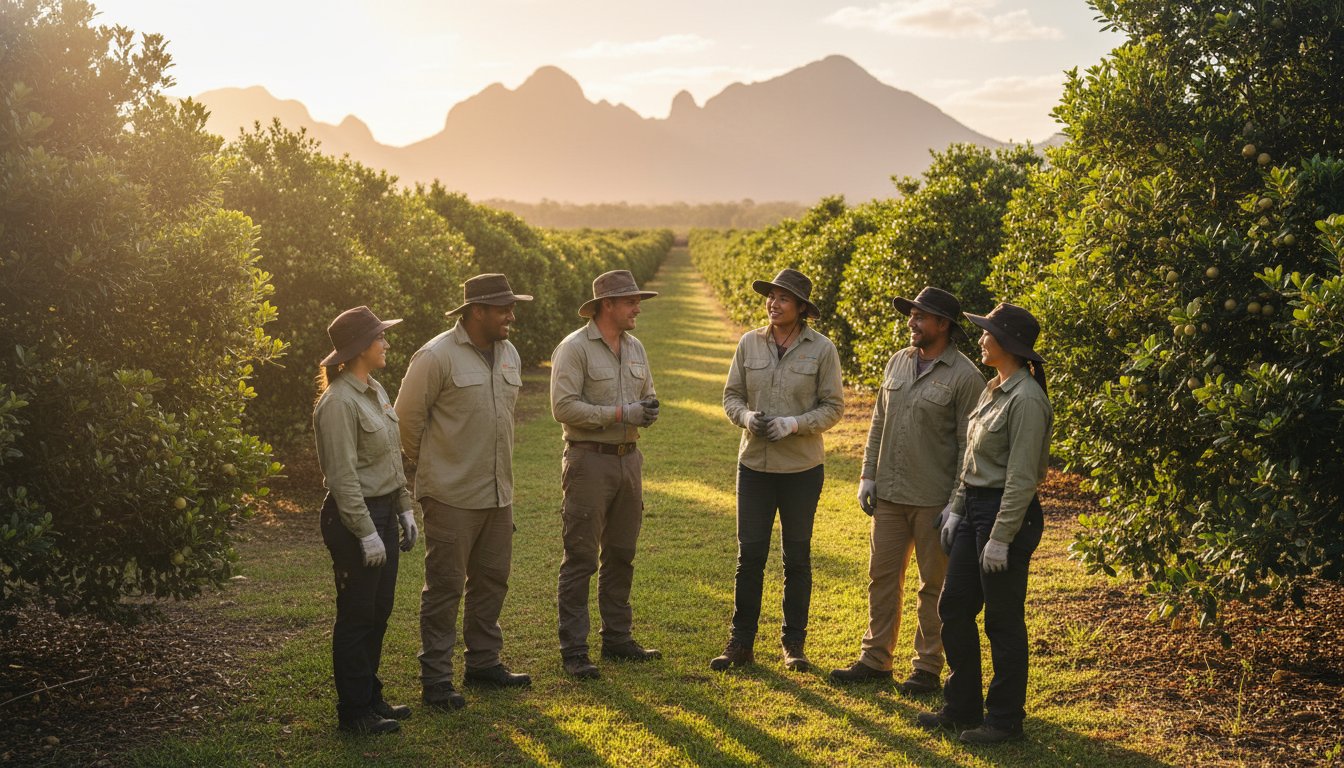
The most effective tools on a modern Australian farm aren't found in the machinery shed; they're found in how a supervisor interacts with their team. While technical expertise remains vital, mastering soft skills has become the defining factor for success in a sector where the gross production value is forecast to reach $19 billion by 2025-26. Many growers find that technical knowledge alone isn't enough to manage the complexities of a seasonal workforce or the nuances of modern social compliance.
We understand that managing the Horticulture Award 2020, particularly with the 3.5% wage increase that took effect on July 1, 2025, creates immense pressure to maintain efficiency while avoiding workplace disputes. It's natural to feel the weight of audit stress or the frustration of high staff turnover when managing part of the industry's 64,650 full-time equivalent workers. This article demonstrates how refining your interpersonal approach can transform your farm management, improve worker retention, and ensure your business remains a leader in ethical employment. We'll examine practical strategies to foster a culture of respect that satisfies both your team and the rigorous requirements of Fair Farms certification.
Key Takeaways
- Distinguish between technical "hard" skills and the interpersonal attributes necessary for leading a diverse farm crew effectively.
- Recognise how soft skills serve as a critical tool for preventing modern slavery and reducing the risk of compliance breaches.
- Learn to manage workplace disputes through conflict resolution before they escalate into formal Fair Work claims or audit failures.
- Identify practical methods for measuring leadership capabilities during performance reviews and when hiring new supervisors.
- Access the HR support and training pathways offered by Fair Farms to build a more professional and resilient farm culture.
What are Soft Skills in the Australian Horticulture Context?
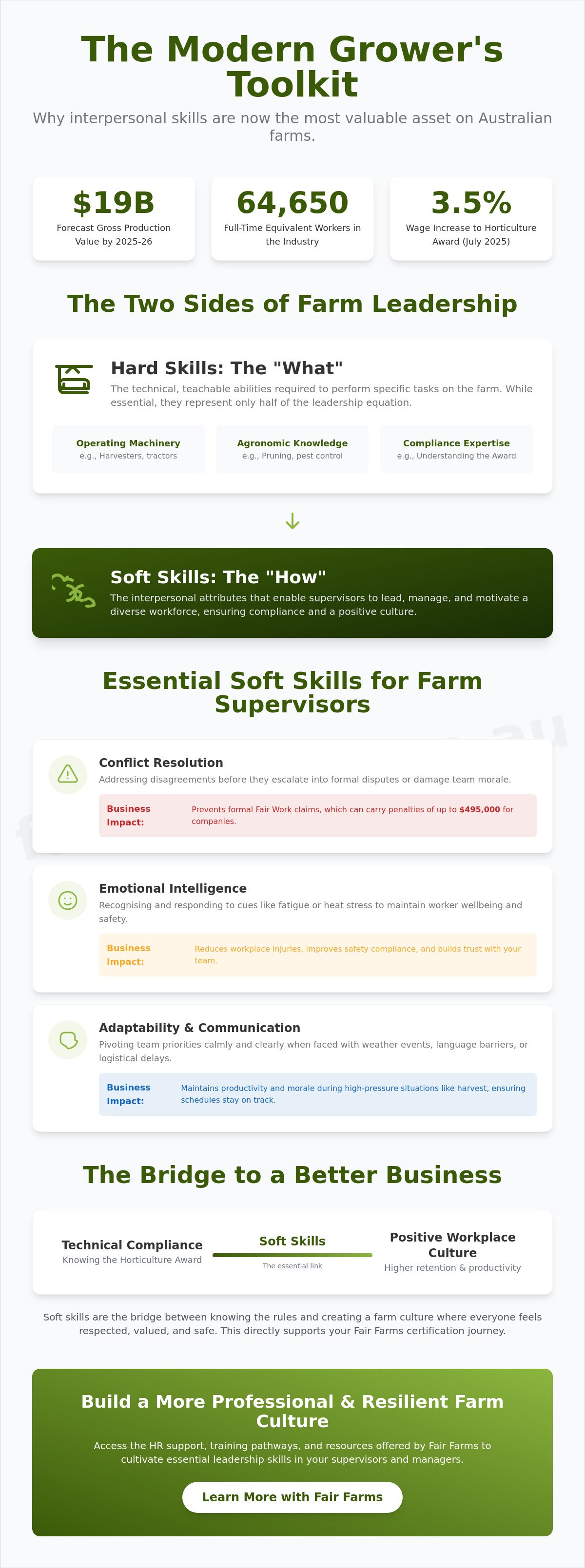
In the demanding environment of an Australian farm, the ability to operate a harvester or prune a vine represents only half of the leadership equation. These are "hard skills," the technical abilities required to complete specific tasks. In contrast, soft skills are the interpersonal attributes and character traits that allow a supervisor to lead a diverse team effectively. While the term originated in U.S. Army research during the 1960s to describe leadership competencies that didn't involve machinery, its relevance to 2026 horticulture is undeniable. Just as a soldier relies on clear communication under pressure, a farm manager must maintain order and morale during the high-stakes harvest window. Understanding What are soft skills? is the first step toward moving beyond mere technical proficiency.
The regulatory landscape in Australia has shifted significantly. Following the Horticulture Award 2020 updates on April 1, 2025, and the subsequent 3.5% wage increase on July 1, 2025, the margin for error in labour management has narrowed. What was once considered a "nice-to-have" personality trait is now an essential business requirement for maintaining social compliance and operational efficiency. It's no longer enough to simply know the rules; supervisors must be able to implement them through positive human interaction.
The Difference Between Technical Ability and Human Capability
A supervisor might possess an exhaustive understanding of the Horticulture Award, yet if they can't explain a pay slip to a worker with empathy, the business remains at risk. Hard skills are about the "what" of the job; soft skills are about the "how." The old "command and control" style of management is increasingly ineffective in a modern, collaborative workforce. Effective leaders now prioritise a suite of human capabilities that include:
- Active listening: Truly hearing worker concerns before they become Fair Work disputes.
- Adaptability: Pivoting instructions calmly when weather or logistics change.
- Cultural awareness: Respecting the diverse backgrounds of the 64,650 full-time equivalent workers in our industry.
Why Horticulture Requires a Unique Set of Interpersonal Skills
Managing seasonal workforces presents challenges that few other industries face. Language barriers and the transient nature of harvest crews mean that instructions must be exceptionally clear and respectful. When pressure peaks during a harvest, it's often the supervisor's ability to remain calm that prevents safety standards from slipping. By fostering these abilities, growers can better manage their Fair Farms certification journey. Soft skills are the bridge between technical compliance and a positive workplace culture.
Essential Soft Skills for Farm Managers and Supervisors
Successful farm leadership goes beyond technical output and agronomic knowledge. Recent research on agricultural workforce skills confirms that non-technical capabilities are now critical for maintaining a resilient business. In the Australian context, these soft skills allow supervisors to navigate the daily pressures of harvest while upholding the "fair go" principle that workers expect and deserve. When a manager masters these attributes, they don't just improve productivity; they build a protective barrier against the high staff turnover that plagues the sector.
Developing a professional culture requires a deliberate focus on several core competencies:
- Conflict Resolution: Addressing minor disagreements between crew members immediately prevents them from escalating into formal Fair Work claims, which can carry penalties of up to $495,000 for companies.
- Emotional Intelligence: This involves staying alert to physical cues in the field. A supervisor with high emotional intelligence can recognise early signs of heat stress or fatigue before they lead to a workplace injury.
- Adaptability: Weather events or logistics delays are constant in horticulture. Leaders must pivot team priorities calmly to keep the picking schedule on track without causing panic or resentment.
- Leadership: True leadership in the paddock means fostering an environment where every worker, regardless of their background, feels respected and valued.
Communication Beyond Words: Clarity and Empathy
Effective communication is the most vital tool in a supervisor's kit. On Australian farms, where teams are often multicultural, non-verbal cues and body language play a massive role in how instructions are received. We recommend using a "feedback loop" where workers repeat back safety instructions in their own words. This simple technique ensures that complex rules are understood, directly reducing the risk of workplace accidents. Clear communication isn't just about being heard; it's about ensuring the message is accurately processed across language barriers.
Problem Solving in the Paddock
When equipment fails or labour supply drops unexpectedly, a manager's critical thinking skills are put to the test. Instead of reacting with frustration, successful leaders involve their workers in finding efficiencies, perhaps by reorganising the packing line or adjusting picking patterns. This collaborative approach encourages a "no-blame" culture. By focusing on the root causes of compliance gaps rather than individual errors, you create a more transparent and honest workplace. Growers looking to formalise these leadership standards often find that becoming a member provides the structured support needed to mentor supervisors effectively.
The Link Between Soft Skills and Ethical Compliance
Most compliance breaches in the Australian horticulture sector don't stem from a deliberate desire to break the law. Instead, they often begin as simple communication failures between supervisors and their teams. When a manager lacks the ability to clearly explain the Horticulture Award 2020 updates, such as the new entry-level classifications introduced on April 1, 2025, misunderstandings regarding tasks and pay rates quickly escalate. Ethical leadership requires more than just a checklist; it demands the interpersonal capability to ensure every worker understands their rights and obligations. This connection is supported by research on essential non-technical skills in Australian agriculture, which highlights that effective communication and teamwork are foundational to maintaining high industry standards.
A culture built on soft skills acts as a powerful safeguard against serious risks like modern slavery. When workers feel empowered to speak up about unfair treatment or safety concerns without fear of retribution, the business gains an early warning system. Empathy plays a practical role here too. A supervisor who genuinely cares for their team's well-being is more likely to ensure that rest breaks are taken during extreme heat and that every individual receives their full entitlements, including the 3.5% minimum wage increase effective from July 1, 2025. Ultimately, a respectful workplace culture is your best defence against a negative social compliance audit.
Managing Labour Hire Relationships with Integrity
Ethical compliance extends beyond your direct employees to your third-party contractors. Using your interpersonal skills to vet labour hire providers is essential. This process involves more than just verifying a licence number; it requires having direct, transparent conversations about your ethical expectations. You must ensure your partners share your commitment to the "fair go" principle. For those looking to strengthen these external ties, you can learn how our Labour Hire Membership supports ethical standards across the entire supply chain.
Soft Skills as an Audit Preparation Tool
During a Fair Farms audit, the atmosphere on your farm is just as important as your paperwork. Auditors are trained to identify the difference between a "fear-based" and a "respect-based" culture. If your team feels respected and valued, they're far more likely to provide honest, positive feedback during confidential auditor interviews. Maintaining a professional attitude also ensures that HR records and documentation are kept accurately and shared transparently. With maximum penalties for company breaches reaching $495,000, the ability to demonstrate a compliant, human-centred management style is a significant commercial advantage.
How to Cultivate and Measure Soft Skills in Your Workforce
Building a team with strong soft skills requires a deliberate strategy that moves beyond the busy harvest season. It starts with identifying gaps in leadership during annual performance reviews or post-harvest debriefs. If a particular crew experienced higher turnover during the 2024/25 period, it's worth examining the supervisor's communication style rather than just technical output. By treating interpersonal capability with the same gravity as technical proficiency, growers can create a more stable and resilient business.
To embed these values into your farm's DNA, follow a methodical five-step process:
- Step 1: Identify skill gaps by reviewing past workplace disputes or feedback from seasonal workers.
- Step 2: Update job descriptions for supervisor roles to include specific interpersonal requirements, such as "demonstrated ability in conflict resolution."
- Step 3: Lead by example. Owners and senior managers must model the respectful behaviour they expect from their field staff.
- Step 4: Provide targeted training. Utilise modules specifically designed for the unique challenges of the horticulture sector.
- Step 5: Track progress. Use metrics like worker retention rates and satisfaction surveys to see if your culture is improving.
Recruiting for Character, Training for Skill
Hiring for "cultural fit" is essential for long-term farm stability. While you can teach someone how to operate a harvester, it's much harder to teach empathy. During interviews, ask questions that reveal a candidate's emotional intelligence. For instance, ask them to describe a time they had to deliver difficult news to a crew, such as a sudden change in picking schedules due to weather. Promoting from within is another effective strategy. It rewards workers who have already shown a commitment to the "fair go" and have the interpersonal potential to lead others. This approach ensures your leadership team understands the farm's values from the ground up.
Integrating Training into the Farm Calendar
The best time to focus on professional development is during the "off-season" when the pressure of the harvest window has subsided. Workshops on leadership and communication help supervisors prepare for the challenges of the next season, including managing the 3.5% wage increase and new Award classifications that took effect in 2025. For managers in regional areas, online, bite-sized learning is an excellent solution. It allows them to upskill without leaving the farm for extended periods. We encourage you to explore Fair Farms Online Training for your team to ensure your supervisors are equipped with the necessary tools for ethical leadership. Measuring the success of these initiatives through improved audit outcomes and fewer workplace disputes will confirm the value of your investment.
The Fair Farms Approach: Fostering Responsible Employment
Fair Farms acts as a dedicated partner for growers who are committed to the "fair go" principle. While technical compliance provides the foundation for any agricultural business, our program emphasises the human element of farm management. By fostering fair and responsible employment practices, we help you translate soft skills into a measurable business asset. This approach moves beyond the basic mechanics of the Horticulture Award to create a culture where workers feel genuinely valued and respected. Ethical farming isn't a destination reached after a single audit; it's a journey of continuous improvement that strengthens the reputation of the entire Australian horticulture sector.
Major retailers, including Coles, Woolworths, Metcash, and Aldi, recognise Fair Farms certification as a benchmark for ethical sourcing. This recognition provides a clear commercial incentive to invest in leadership capabilities. When you demonstrate that your supervisors lead with empathy and clarity, you aren't just meeting a regulatory requirement. You're proving the resilience and integrity of your supply chain to the most significant buyers in the country. This transparency builds trust with both your workforce and your commercial partners.
Professional Support for Australian Growers
Navigating the complexities of workplace relations is a daunting task for even the most experienced farm owner. Our membership provides the specific HR support needed to develop professional farm cultures from the ground up. Whether you're adjusting to the April 1, 2025, classification changes or managing the latest wage review increases, having access to expert guidance provides immense peace of mind. You become part of a national community of ethical employers who share a commitment to industry leadership and communal progress. If you're ready to formalise your commitment to these standards, contact us to start your membership journey and join a network of principled growers.
The Future of Horticulture is Human
The farms of tomorrow will be defined by their ability to attract and retain talent in an increasingly competitive market. In this environment, soft skills are the ultimate competitive advantage. By linking effective leadership with ethical compliance, you create a more profitable enterprise with lower turnover and fewer costly disputes. The gross value of Australian horticulture production is forecast to reach $19 billion in 2025-26. Those who lead with integrity will be best positioned to capture that growth and navigate the challenges of a fluctuating market. Take the first step toward certification today and ensure your business remains a trusted guardian of the Australian "fair go."
Leading the Way Toward a Fairer Future
Mastering soft skills is no longer a peripheral part of farm management; it's the core of a sustainable business. By prioritising clear communication and empathy, you protect your operation from the risks of non-compliance while building a team that actually wants to stay. We've seen how these interpersonal tools help navigate the Horticulture Award 2020 updates and the 3.5% wage increase from July 1, 2025. This isn't just about avoiding penalties; it's about positioning your farm as a preferred employer in a competitive landscape.
Fair Farms is here to support you on this journey. As an industry-led initiative by a national growers' representative body (QFVG), we provide a recognised certification pathway that major retailers like Woolworths and Coles trust. Our tailored HR support is designed specifically for the unique seasonal and regulatory pressures of Australian horticulture. Join Fair Farms today to access HR support and training that builds a stronger, more ethical team. Taking this step ensures your business thrives as a leader in responsible employment.
Frequently Asked Questions
Can soft skills really be learned, or are you just born with them?
Soft skills are measurable competencies that any supervisor can develop through deliberate practice and targeted training. While some individuals naturally possess high empathy, abilities such as active listening and conflict resolution are professional behaviours that can be refined over time. Formal training modules help managers move beyond their natural instincts to adopt proven leadership techniques that work in a high-pressure farm environment.
How do soft skills help with Fair Work compliance?
Effective interpersonal skills prevent the misunderstandings that often escalate into formal disputes or Fair Work claims. When supervisors communicate clearly about the 3.5% wage increase that took effect on July 1, 2025, they reduce the risk of pay-related grievances. A manager who listens to worker concerns can identify and fix compliance gaps before they lead to significant penalties for the business.
What are the most important soft skills for a harvest supervisor?
Clear communication, adaptability, and cultural awareness are the three most critical attributes for leading a modern harvest crew. Supervisors must give precise instructions to a diverse workforce while staying calm when weather events disrupt the picking schedule. These soft skills ensure that safety standards remain high even when the pressure to meet production targets increases during peak season.
Are soft skills as important as technical farming skills?
Interpersonal capabilities are just as vital as technical expertise for the long-term resilience of an Australian farm. While technical skills ensure the crop is grown and harvested, leadership skills protect the business from the financial and reputational damage of labour breaches. With company penalties reaching up to $495,000, the ability to manage people ethically is a critical commercial requirement.
How can I measure if my managers have good soft skills?
The most effective way to measure leadership quality is through worker retention rates and confidential satisfaction surveys. If a particular crew has higher turnover than others, it often indicates a breakdown in supervisor-worker relations. You can also monitor the number of internal disputes and the quality of feedback provided during your annual social compliance audits.
Does improving soft skills actually reduce staff turnover on farms?
Creating a "respect-based" culture through better leadership significantly increases the likelihood of seasonal workers returning for future harvests. Workers in the horticulture sector often prioritise a fair and safe environment when choosing where to work. By fostering a positive workplace, you reduce the costs associated with constantly recruiting and training new staff for each season.
What is the first step to training my team in interpersonal skills?
Start by conducting a thorough skill gap analysis during your next post-harvest debrief to see where communication failed. Once you've identified specific areas for improvement, such as managing multicultural teams or resolving paddock disputes, you can provide structured learning. Enrolling your supervisors in online training pathways is a practical way to build these essential leadership capabilities without disrupting daily operations.