
Performance Data Recorder: A Grower’s Guide to Digital Compliance and Productivity
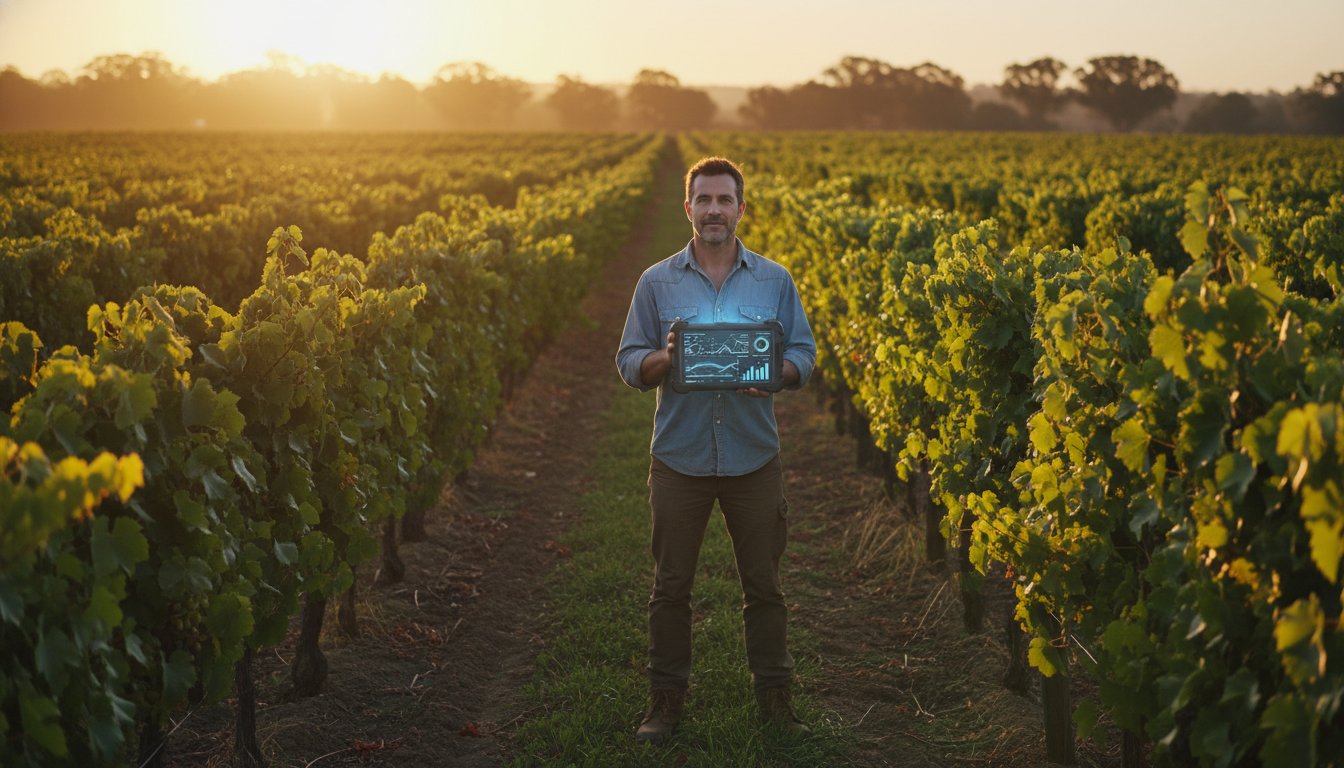
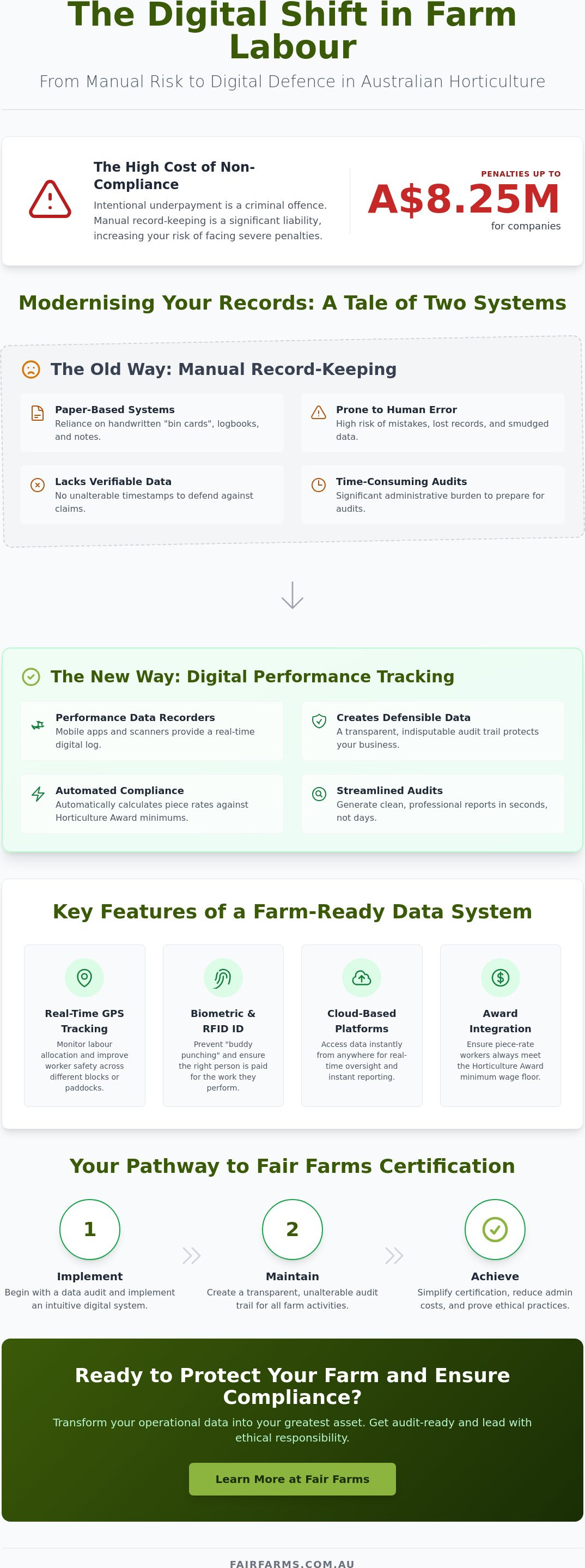
In 2026, a performance data recorder is no longer a luxury reserved for racing cars; it is a critical compliance tool for every Australian grower to prove ethical labour practices. Most growers understand that manual record-keeping is becoming a significant liability, especially when managing large seasonal crews and complex piece rates across the farm. With intentional underpayment now a criminal offence carrying penalties of up to A$8.25 million for companies, the pressure to maintain perfect records has never been higher.
We know you're juggling the demands of harvest with the weight of increasing regulatory scrutiny. This guide shows you how digital farm workforce performance tracking Australia transforms your operational data into a shield of protection, ensuring your business stays ahead of regulatory changes and remains ready for Fair Farms certification. You'll learn how moving away from paper-based systems streamlines audit preparation, provides defensible data for Fair Work Ombudsman enquiries, and creates a transparent labour hire supply chain that protects your reputation and your workers.
Key Takeaways
- Understand how digital telemetry replaces manual "bin cards" to provide a transparent, real-time record of all farm activities and outputs.
- Discover how farm workforce performance tracking Australia automates piece-rate calculations to ensure full compliance with the current Horticulture Award standards.
- Learn to use performance data as a tool for ethical leadership by identifying training gaps and supporting sustainable work paces for your crew.
- Follow a practical implementation roadmap that begins with a thorough data audit and prioritises clear, honest communication with your workforce.
- Simplify the Fair Farms certification process by maintaining defensible digital records that significantly reduce audit preparation time and administrative costs.
What is a Performance Data Recorder in Australian Horticulture?
In the Australian horticulture sector, a Performance Data Recorder (PDR) is more than just a stopwatch. While the term is often associated with high-performance vehicles, its application on the farm is a game-changer for ethical employment and operational clarity. A PDR is a digital system designed to log workforce output, attendance, and compliance data in real-time. By integrating this technology, growers move beyond the era of handwritten notes and "bin cards" into a space of absolute data integrity. This transition is a core component of modern farm workforce performance tracking Australia, allowing businesses to capture critical metrics such as hours worked, units harvested, and mandatory safety intervals with surgical precision. It's about ensuring every worker gets a "fair go" by providing an indisputable record of their hard work.
The Shift from Manual to Digital Record Keeping
Traditional paper logbooks are a significant risk factor during Australian farm audits. Paper records are prone to human error, they're easily misplaced, and they lack the verifiable metadata required by modern regulatory bodies. Digital systems provide unalterable timestamps that serve as a shield against "time theft" and protect growers from unfounded underpayment claims. By creating a transparent audit trail, a PDR ensures that every minute of labour is accounted for and paid correctly. This level of transparency is essential in a landscape where intentional underpayment can result in severe criminal penalties. It aligns perfectly with the principles of Precision agriculture, where data is used not just for crop yields, but for fostering a fair and sustainable workforce. When records are digital, they can't be smudged, lost, or questioned.
Key Components of a Farm-Ready Data System
Implementing a successful data recorder requires a balance between sophisticated software and rugged hardware. Most modern systems utilise handheld scanners or mobile applications that sync directly to cloud-based management platforms. Choosing the right hardware is a vital step in establishing robust farm workforce performance tracking Australia. These tools must be built to withstand the harsh Australian agricultural environment, from red dust to tropical humidity. Beyond durability, simplicity is the most important feature. With a diverse, often non-English speaking seasonal workforce, the user interface needs to be intuitive. Clear icons and simple workflows ensure that workers can log their output accurately without confusion. When the technology is accessible, it empowers workers to take ownership of their performance while providing growers with the defensible data needed for Fair Farms certification.
Core Features of Modern Workforce Data Recorders
Modern technology for farm workforce performance tracking Australia has moved far beyond simple data storage. Today's systems provide a comprehensive oversight of farm operations, combining hardware and software to ensure every worker is accounted for and every task is logged with precision. These recorders offer real-time GPS tracking, which allows managers to monitor labour allocation across different blocks or paddocks instantly. This isn't just about efficiency; it's a vital safety feature that ensures supervisors know exactly where their teams are located in the event of an emergency or extreme weather event. By grounding your operations in the Fair Farms initiative, you're choosing to lead with transparency and ethical responsibility.
To maintain absolute data integrity, many growers now utilise biometric or RFID worker identification. These features prevent "buddy punching" and ensure that the person performing the harvest is the one receiving the payment. All this information is synchronised to cloud-based platforms, allowing for instant reporting. This accessibility is crucial when you need to provide evidence during a Fair Farms audit. Instead of hunting through filing cabinets, you can generate a clean, professional report that demonstrates your commitment to fair work standards in seconds.
Integrating Piece-Rate and Hourly Tracking
The Horticulture Award is famously complex, but modern data recorders handle these calculations automatically. Systems are now designed to sync with the latest award standards, ensuring that piece-rate workers always receive the "minimum wage floor" of A$24.95 per hour. If a worker's output falls below this threshold, the system can trigger an automated alert, allowing for immediate management intervention or training. This automation reduces payroll friction and allows you to export validated data directly to your accounting software, significantly decreasing the risk of administrative errors.
Safety and Incident Recording Features
In the regional heat of Australia, managing psychosocial and physical safety is a priority. Modern farm workforce performance tracking Australia includes features to log mandatory heat stress breaks and rest periods, proving that worker wellbeing is being managed proactively. Digital "pre-start" checklists for machinery ensure that equipment is safe to use before a shift begins. If an incident does occur, supervisors can record it immediately on their handheld device, attaching photos and GPS coordinates as defensible evidence for insurance and regulatory compliance. Taking these steps protects your business and fosters a safer environment for everyone. You can find more resources on best practices by becoming a member of our growing community of ethical growers.
Benchmarking Farm Performance Against Ethical Standards
Benchmarking farm performance isn't about pushing crews to their physical limits. It's about finding a sustainable rhythm that respects the Fair Work Act while maintaining a profitable operation. Within the framework of farm workforce performance tracking Australia, data acts as a sophisticated diagnostic tool. It helps you spot training gaps where workers might be struggling with technique rather than a lack of effort. By identifying these gaps early, you can offer targeted support, which directly improves worker retention. High turnover is a massive hidden cost in horticulture. A "fair go" approach to performance often results in a more stable, experienced crew that feels valued and secure.
Transparency is vital when you're working with third-party providers. A Fair Work Ombudsman report from June 2025 found that labour hire providers were responsible for 68% of non-compliance cases in the horticulture industry. This is a startling figure that growers can't ignore. By requiring digital performance data from your partners, you can identify "red flags" like inconsistent piece-rate earnings or missing rest periods before they become legal liabilities. This data-driven trust ensures your supply chain remains as ethical as your own farm gate. It's about moving away from guesswork and towards a model of shared accountability.
Analysing Productivity Without Compromising Ethics
Setting realistic Key Performance Indicators (KPIs) requires a deep dive into historical harvest data and current seasonal conditions. If the crop is light or the terrain is difficult, your benchmarks must reflect that reality. Digital tracking allows you to recognise top performers while providing a safety net for those falling behind. Instead of disciplinary action, use the data to trigger training sessions that help workers meet the required standards. This evidence-based approach also strengthens your hand during price negotiations with retail partners. You can clearly justify fair piece rates based on actual field data and the mandatory A$24.95 hourly floor.
Supply Chain Transparency for Retailer Requirements
Major Australian supermarkets and retailers are increasingly demanding granular data on how their produce is harvested. They need "proof of harvest" that satisfies their ethical sourcing protocols and ESG requirements. A Performance Data Recorder provides this proof automatically, reducing the administrative burden of manual reporting. By integrating farm workforce performance tracking Australia into your daily routine, you move from reactive compliance to a proactive stance. This level of transparency doesn't just satisfy auditors; it secures your place as a preferred supplier in a competitive market that values integrity as much as quality.
How to Implement Data Recording on Your Farm
Transitioning to digital farm workforce performance tracking Australia is a strategic move that requires more than just a software subscription. It's a fundamental shift in how your farm operates on a daily basis. To begin, conduct a thorough data audit to see where your current manual systems fall short of the evidence needed for Fair Farms certification. Engaging your workforce is the next vital step. When workers understand that digital recording protects their earnings and ensures pay accuracy, adoption rates climb. We recommend starting with a pilot program in a single block or with one crew. This allows you to refine your processes before a full-farm rollout, ensuring your harvest isn't disrupted by technical learning curves. You can streamline this transition by using Fair Farms membership resources to align your data collection with national ethical standards.
Step 1: Assessing Your Infrastructure
Australian regional connectivity is notoriously varied, so your chosen system must handle the reality of your landscape. Evaluate whether you need 4G/5G real-time sync or if the hardware requires robust offline capabilities for remote blocks. Your existing payroll software must also be compatible with digital data imports to prevent the "double-handling" of records; this common mistake often leads to manual entry errors. Hardware needs for supervisors should focus on durability and battery life to ensure they last through a full day in the field.
Step 2: Staff Training and Onboarding
Supervisors are the frontline of your data integrity. They need clear training on how to log breaks and rest periods ethically, ensuring the records reflect the actual work day. For seasonal workers, the "check-in" process should be as simple as a single scan or tap. Addressing privacy concerns is also essential. Ensure your staff know their data is stored securely in line with Australian standards and is used specifically for pay and safety compliance. If you're ready to professionalise your HR systems, contact our team today to discuss how our membership supports your implementation journey.
Step 3: Continuous Monitoring and Refinement
Digital systems are not "set and forget" tools. Establish a weekly review process to catch anomalies in hours or output before they impact payroll. These reviews help you identify if certain crews need more training or if a piece rate needs adjusting due to field conditions. Use feedback loops from your supervisors to improve the system's usability over time. Finally, keep your software updated to ensure it automatically reflects any changes to the Horticulture Award or Fair Work regulations, keeping your business permanently audit-ready.
The Fair Farms Pathway: Turning Data into Certification
Data is the bridge between your daily paddock operations and national recognition for ethical excellence. By implementing farm workforce performance tracking Australia, you move beyond mere hope for a good result and into a position of absolute certainty. This digital foundation simplifies the Fair Farms certification process by providing the objective proof auditors require. It demonstrates a genuine culture of compliance that resonates with retailers and the public alike. When your records are clear and accessible, you aren't just meeting a standard; you're positioning your farm as an employer of choice that values its people as much as its produce.
Reducing the time and cost associated with audits is a primary benefit of this digital shift. Traditional audits can be a drain on management resources, often requiring days of manual document retrieval. Digital performance data changes this dynamic, allowing you to present a professional, organised business model. This level of transparency fosters trust across the entire horticulture sector, ensuring your business remains resilient in a market that increasingly demands social responsibility.
Preparing for Your Next Audit with Digital Records
Audit preparation no longer needs to be a mountain of paperwork. With a digital system, you can perform a "one-click audit" by exporting the exact reports an auditor needs to see. These reports provide a chronological, unalterable history of your labour practices. If you discover data gaps or minor errors during your certification journey, it's an opportunity for growth rather than a cause for alarm. Addressing these issues transparently shows a commitment to continuous improvement. Within the Fair Farms community, members often share best practices on how to refine these data points to ensure the best possible outcomes for their businesses and their workers.
Fostering Responsible Employment Practices
Fostering fair and responsible employment practices means moving beyond simple box-ticking to genuine workforce empowerment. Digital data allows you to tell your farm’s story of ethical excellence to the entire supply chain with confidence. It proves that your piece rates are fair, your safety protocols are active, and your workers are treated with the respect they deserve. This transparency is a powerful tool for building a sustainable brand in the Australian market. Ready to lead the industry? Contact Fair Farms today to start your journey.
Securing Your Farm’s Future Through Digital Integrity
Adopting a digital performance data recorder represents a significant step towards a more resilient and ethical horticulture business. We've discussed how moving away from manual "bin cards" reduces the risk of audit failures and ensures every worker receives a fair go through accurate piece-rate tracking. By integrating farm workforce performance tracking Australia into your daily operations, you create a transparent, unalterable record of compliance that protects you from the rising costs of regulatory non-compliance.
Fair Farms is proud to be an industry-led initiative by Queensland Fruit & Vegetable Growers (QFVG). Our program provides specialised HR support and a certification pathway that is recognised by major Australian retailers. This recognition helps you secure your place in the supply chain while demonstrating your commitment to ethical leadership. It's about more than just data; it's about fostering a sustainable future for your farm and your community.
Join Fair Farms and Start Your Certification Pathway today. We're here to support you in building a business that is both productive and principled. Your journey towards a fairer, more efficient workplace starts with a single digital record.
Frequently Asked Questions
Is a performance data recorder legal under Australian privacy laws?
Yes, using a digital recorder is legal as long as you comply with the Privacy Act 1988 and the Australian Privacy Principles. You must be transparent with your crew about what data is being captured and why it is being collected. It's best practice to include a clear privacy policy in your induction process so workers understand how their personal information is protected and stored securely.
Do I need a performance data recorder for a Fair Farms audit?
While a digital recorder isn't a strict requirement for Fair Farms certification, it's a powerful tool for demonstrating ethical compliance. These systems provide clear, unalterable evidence of hours worked and pieces harvested, which simplifies the auditing process significantly. Using farm workforce performance tracking Australia helps you move through the certification pathway with greater confidence by having all your defensible data ready at the touch of a button.
Can digital records replace paper timesheets for the Fair Work Ombudsman?
Digital records are fully recognised by the Fair Work Ombudsman provided they meet the record-keeping requirements of the Fair Work Act 2009. These records must be in a form that can't be easily altered and should be kept for seven years. Moving to a digital system often improves accuracy compared to paper, as it eliminates messy handwriting and manual entry errors that often lead to non-compliance issues.
How does a performance data recorder help with piece-rate calculations?
These systems automate the complex calculations required under the Horticulture Award to ensure the mandatory "minimum wage floor" is met. The recorder tracks each worker's output and automatically calculates their earnings based on your set piece rate. If their earnings fall below the national adult minimum wage of A$24.95 per hour, the system flags this instantly, allowing you to make the necessary top-up payments and remain compliant.
What happens if the internet goes out while recording data in the field?
Most farm-ready digital systems include offline functionality to handle the realities of regional Australian connectivity. Data is captured and stored locally on the handheld device or mobile app while the supervisor is in the field. Once the device reconnects to Wi-Fi or a mobile network, the information synchronises with the cloud automatically. This ensures no harvest data is lost, even when working in remote blocks with poor reception.
Is it expensive to implement a digital performance recording system?
Implementation costs vary depending on the size of your operation, but the return on investment is often rapid through improved efficiency. Beyond software fees, you should consider the cost of rugged tablets or scanners for your supervisors. However, the reduction in administrative labour and the protection against wage theft penalties, which can reach A$8.25 million for companies, make it a sound financial decision for most professional growers.
How do seasonal workers typically react to digital tracking?
Seasonal crews typically respond positively when they realise the system ensures pay accuracy and transparency. When workers see that their output is recorded in real-time, it builds trust that they'll be paid correctly for every bin or bucket. Clear communication during onboarding is essential to explain that farm workforce performance tracking Australia is a tool for fairness and safety rather than just a surveillance measure.
Can I use performance data to terminate a low-performing worker?
Performance data can be used as evidence in a termination process, provided you follow the Fair Work Commission's guidelines for fair dismissal. You shouldn't rely solely on data for an immediate exit. Instead, use the records to identify underperformance, provide additional training, and document the lack of improvement over time. This creates a defensible trail showing that you gave the worker a "fair go" before making a final decision.