
Creating an Effective Training and Development Plan for Farm Employees in 2026
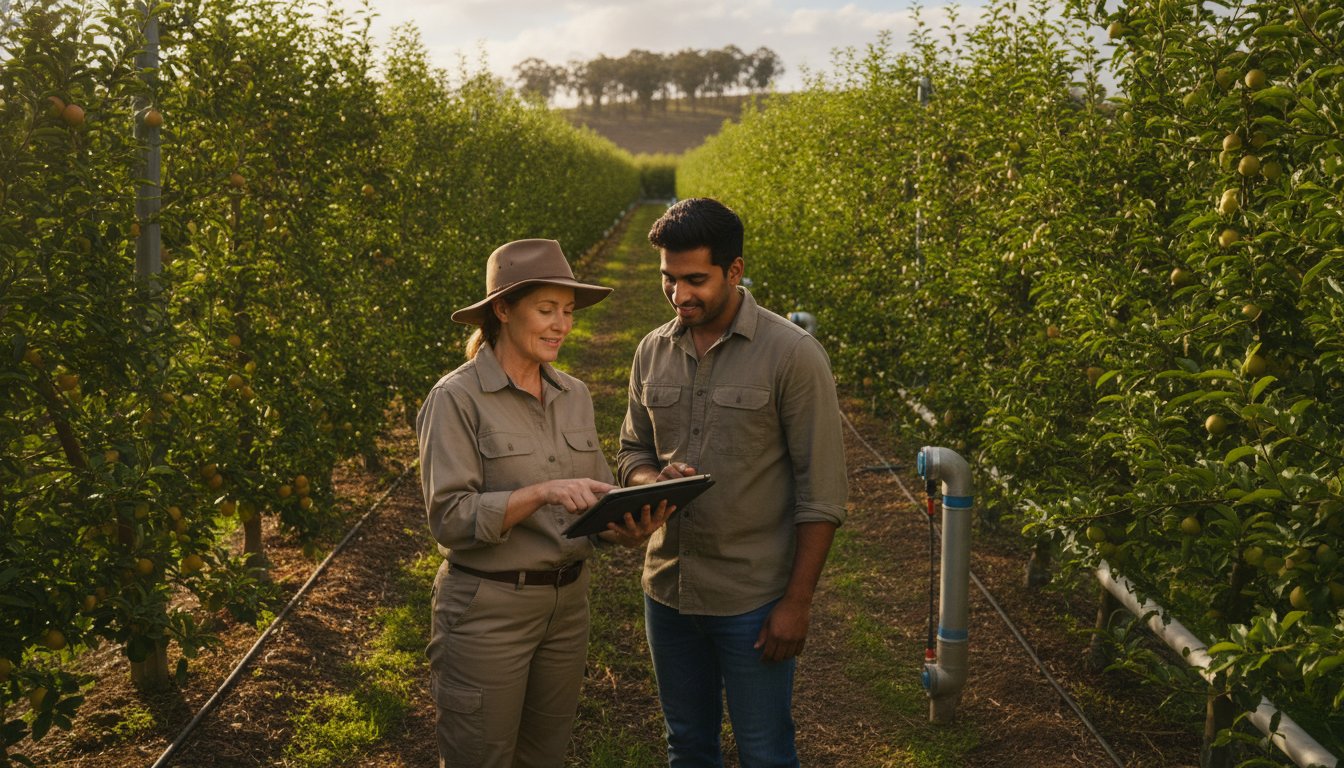
What if your staff development strategy was the only thing standing between a thriving harvest and a devastating Fair Work penalty? In 2026, a robust training and development plan for farm employees has evolved from a simple safety checklist into a critical business asset. With the National Minimum Wage rising to $26.44 per hour this July, every minute of labour counts more than ever toward your bottom line.
We understand that navigating the "Positive Duty" reforms and managing high seasonal turnover can feel like an uphill battle. You want a team that works safely and stays for the long haul, yet the risk of heavy penalties often keeps growers awake at night. This article provides a clear roadmap to building a comprehensive staff development framework that ensures ethical compliance, meets Australian legal standards, and boosts farm productivity.
We'll walk you through the transition to a prevention-based model that offers total peace of mind during ethical audits and significantly reduces workplace incidents. By the end of this guide, you'll have the tools to transform your workforce into a reliable, skilled, and principled team that protects your reputation and your harvest.
Key Takeaways
- Understand why a formalised training and development plan for farm employees is no longer optional but a legal requirement under current Australian workplace reforms.
- Learn how to align your staff induction with the Horticulture Award to ensure accurate pay rates and superannuation compliance from day one.
- Discover how to address both physical safety and psychosocial hazards to meet your "Positive Duty" obligations and protect your workforce.
- Master the Training Needs Analysis process to identify specific skill gaps across different roles, from entry-level pickers to farm supervisors.
- Explore the most effective ways to combine on-farm demonstrations with online training to streamline your journey toward Fair Farms Certification.
What is a Training and Development Plan for Farm Employees?
A training and development plan for farm employees acts as a structured roadmap, charting a worker's journey from their initial induction through to highly specialised roles. It's far more than a simple checklist of tasks. It is a comprehensive framework that organises how your team acquires the skills, knowledge, and ethical mindsets required to thrive in a modern agricultural environment. By integrating training and development into your daily operations, you move beyond reactive management and begin building a culture of excellence.
In the wake of Australian workplace reforms introduced between 2022 and 2026, a written plan has transitioned from a "nice-to-have" to a legal necessity. The shift from a complaints-based system to one of proactive prevention means growers are now expected to identify and mitigate risks before they result in harm. This involves a clear distinction between mandatory compliance training, such as chemical handling or machinery safety, and optional professional development that fosters career longevity and leadership within the sector.
The Business Case for Structured Farm Training
Investing in a formalised training and development plan for farm employees isn't just about ticking boxes; it's about protecting your bottom line. High seasonal turnover is a persistent pain for many growers, yet clear development pathways significantly reduce recruitment expenses by improving staff retention. When workers see a future on your farm, they're more likely to stay. This stability is vital for maintaining consistent production levels during peak harvest windows.
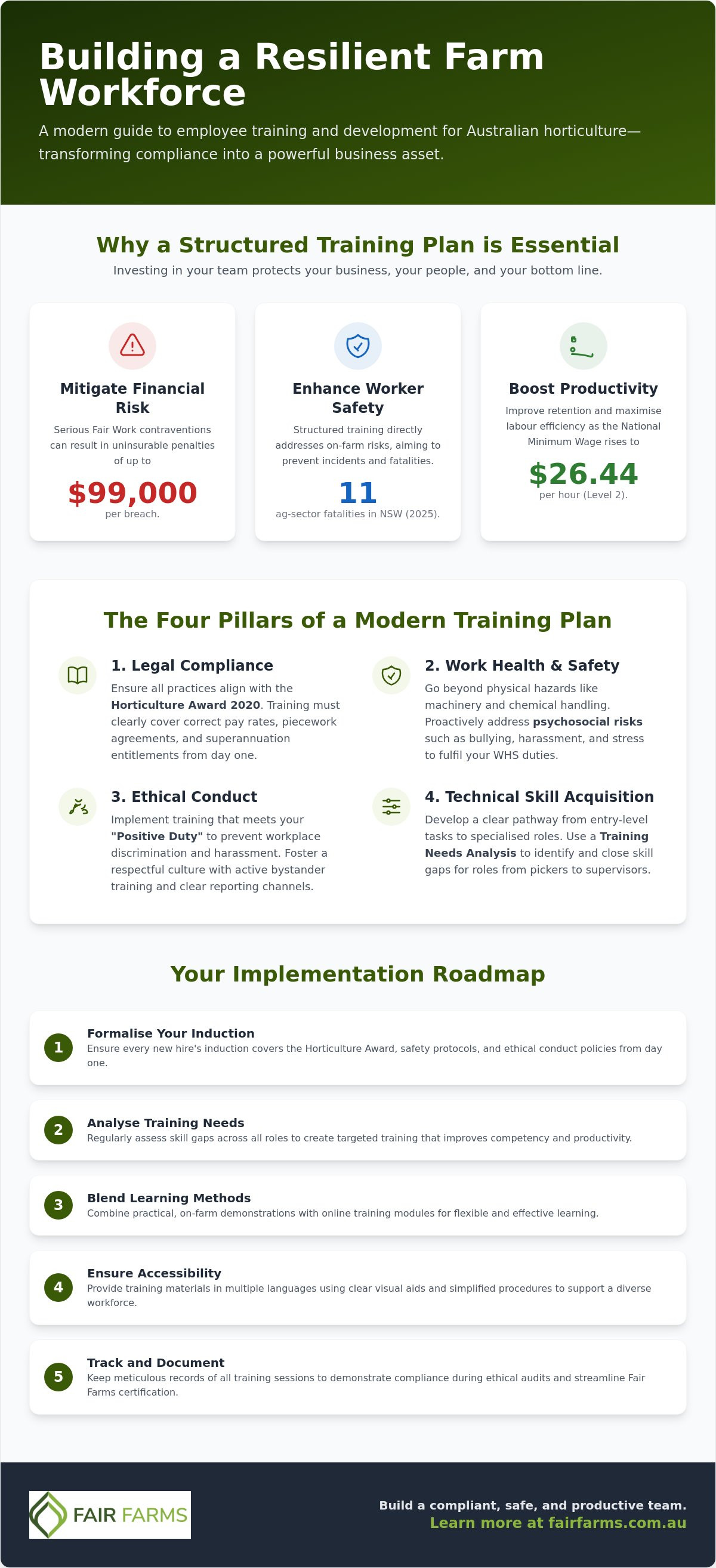
Safety is the most compelling argument for a structured approach. In 2025, SafeWork NSW responded to 11 workplace fatalities in the agricultural industry. A structured plan directly addresses these risks, ensuring every staff member understands their safety obligations. Beyond the human cost, the financial stakes are high. Fair Work penalties for serious contraventions can reach up to $99,000 per breach. Because these fines are often uninsurable, a robust training framework serves as your primary defence against business-ending litigation and reputational damage.
Core Pillars of a Modern Australian Horticulture Training Plan
Constructing a training and development plan for farm employees requires a multi-dimensional approach that balances technical proficiency with rigid ethical standards. It's no longer enough to focus solely on harvest quotas. A modern plan must address four core pillars: legal compliance, work health and safety (WHS), ethical conduct, and technical skill acquisition. This holistic framework ensures that every team member, from seasonal pickers to permanent supervisors, understands their rights and responsibilities within the business.
Legal compliance begins with a deep understanding of the Horticulture Award 2020. With the National Minimum Wage increasing to $26.44 per hour for Level 2 workers on 1 July 2026, transparency regarding pay rates and superannuation entitlements is vital for building trust. Similarly, your WHS strategy must evolve. While physical hazards like heavy machinery remain a priority, psychosocial hazards are now a critical focus. Integrating initiatives like the Farm Safety Training Program into your curriculum provides workers with the baseline knowledge needed to navigate high-risk environments safely while protecting the business from liability.
Addressing Positive Duty and Respectful Workplaces
Positive Duty is a proactive legal requirement under the Sex Discrimination Act that mandates employers take reasonable and proportionate measures to eliminate sex-based harassment. This shift requires more than just a signed policy. Your training and development plan for farm employees must include active bystander training and clearly defined, accessible reporting pathways. These measures are especially important for migrant workers who may face additional barriers to reporting misconduct. Implementing the 2025 National Code of Practice helps establish a culture where respect is the baseline, not the exception.
Cultural Integration and Language Accessibility
Effective communication is the backbone of any successful training regime. Given the diversity of the seasonal and backpacker workforce, providing training materials in the preferred languages of your staff is essential for true comprehension. Utilising visual aids and highly descriptive Standard Operating Procedures (SOPs) helps overcome literacy barriers. This ensures that technical skills, such as irrigation management and quality assurance protocols, are applied consistently across the entire team. For growers looking to formalise these standards, exploring membership for growers offers a principled pathway to achieving industry-leading compliance.
Implementing Your Plan: From Induction to Fair Farms Certification
Turning a conceptual strategy into a functional training and development plan for farm employees requires a methodical, step-by-step approach. Implementation begins with a Training Needs Analysis (TNA). This process allows you to distinguish between the foundational safety skills required for seasonal pickers and the advanced compliance knowledge needed by farm supervisors. By identifying these gaps early, you ensure that training resources are allocated where they'll have the most significant impact on productivity and safety.
Once you've identified the needs, focus on a blended delivery method. Combining practical, on-farm demonstrations with structured Fair Farms Online Training ensures that your team receives consistent information that's easily digestible. This approach caters to different learning styles while maintaining a high standard of education across the entire workforce. Remember the auditor's mantra: if it isn't written down, it didn't happen. Maintaining meticulous records of training dates, signed attendance sheets, and completed modules is essential for proving your commitment to ethical standards during a formal audit.
Success in modern agriculture depends on continuous improvement. Your training and development plan for farm employees should be a living document, regularly reviewed to align with the Fair Farms Version 4 framework and any legislative shifts. This proactive stance protects your business and positions you as a preferred supplier in a competitive market. It shows you're invested in the long-term success and reputation of the entire agricultural sector.
Leveraging Fair Farms Resources for Your Team
Streamlining your compliance journey is much easier when you use established industry resources. Integrating Fair Farms certification into your long-term business strategy does more than satisfy legal requirements; it secures your access to major retail supply chains that demand high ethical standards. We encourage growers to become members to gain immediate access to specialised HR support, policy templates, and technical guidance. This membership provides the principled framework needed to build a resilient workforce while giving you the confidence that your operations meet the highest Australian standards.
Cultivating a Principled Future for Australian Agriculture
Building a resilient agricultural business in 2026 requires more than technical expertise; it demands a steadfast commitment to ethical leadership. A well-structured training and development plan for farm employees serves as the vital foundation for this transformation. By moving from a reactive approach to a proactive model of prevention, you protect your team and your reputation. This alignment with the Sex Discrimination Act 1984 and the 2025 National Code of Practice ensures your farm remains a safe, respectful, and legally compliant workplace.
As an industry-led initiative by QFVG, Fair Farms provides the principled framework needed to navigate these complex regulatory changes with confidence. You don't have to go it alone. Taking these steps today secures your place in the modern retail supply chain and builds a workforce that is skilled, loyal, and safe. Contact Fair Farms today to professionalise your farm’s HR and training standards. Together, we can ensure a sustainable and equitable future for the entire regional community.
Frequently Asked Questions
Is a written training plan mandatory for Australian farms in 2026?
Yes, maintaining a written training and development plan for farm employees is essential for meeting your legal obligations under Australian workplace laws. While the requirement isn't found in a single statute, the "Positive Duty" provisions in the Sex Discrimination Act and WHS regulations mandate that you take proactive steps to prevent harm. Without a documented plan, it's difficult to prove to auditors or Fair Work that you've provided the necessary education to mitigate workplace risks.
How do I train workers who speak English as a second language?
Effective training for culturally and linguistically diverse workers relies on clear, accessible communication. You should provide induction materials and safety guides in the preferred languages of your seasonal staff whenever possible. Using visual aids, such as diagrams and 3D video demonstrations, helps bridge literacy gaps. This ensures that every worker, regardless of their background, fully understands their role and the safety protocols required on your farm.
What is "Positive Duty" in the context of farm employee development?
Positive Duty is a proactive legal requirement under the Sex Discrimination Act that obliges employers to eliminate sex-based harassment and discrimination. In terms of employee development, this means your training and development plan for farm employees must include active education on respectful workplace behaviour and bystander intervention. It shifts the burden from the victim reporting an incident to the employer preventing the incident through continuous staff education and cultural leadership.
Can I use online training for seasonal workers who are only here for three months?
Yes, online modules are an excellent way to provide consistent, high-quality training for short-term seasonal staff. Digital platforms allow you to deliver essential compliance and safety information before a worker even sets foot on the property. This streamlines the induction process and ensures that even those only staying for a single harvest receive the same principled education as your permanent team. It's a practical solution for maintaining standards during peak periods.